Egypt tops Africa in Oxford Insights Government AI Readiness Index 2025, ranks 51st globally
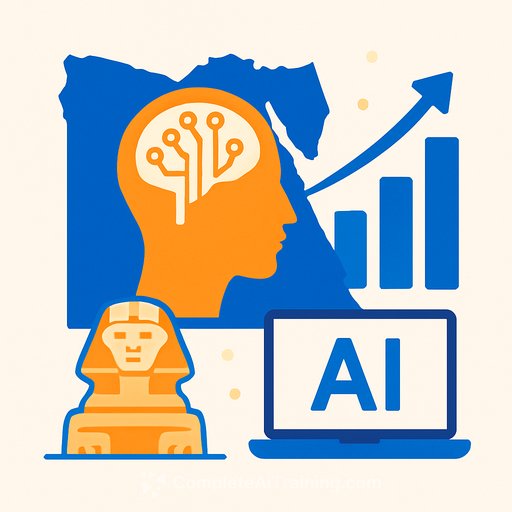
CAIRO - 10 January 2026: Egypt ranked first in Africa in the 2025 Government AI Readiness Index from Oxford Insights, rising 14 places to 51st worldwide out of 195 countries, according to the Ministry of Communications and Information Technology.
Egypt scored 57.5 points in 2025, up from 55.6 in 2024, when it ranked 65th among 188 countries. Regionally, Egypt moved to third in the Arab world, improving from seventh last year.
What drove the jump
Egypt topped the Policy Capacity pillar globally with a perfect score of 100, tied with the United Kingdom, Serbia, and Australia. This pillar evaluates a government's ability to set a clear national AI vision, design practical policies, secure resources, and participate in key international agreements.
Egypt also ranked first in the Arab world in the Resilience pillar. This measures how well a country can manage social, economic, and environmental risks as AI adoption grows, including preparedness for issues that could affect societal security.
Minister of Communications and Information Technology Amr Talaat said the results reflect the country's ongoing efforts to apply AI for public value and deepen partnerships with international institutions and global technology companies.
What this means for government teams
- Refresh or publish a national AI implementation plan with clear ownership, timelines, and metrics per ministry.
- Stand up an inter-ministerial AI governance council to coordinate standards, procurement, and risk oversight.
- Adopt responsible AI policies for data use, model evaluation, and privacy, aligned to international best practices.
- Update procurement rules to require security testing, bias and performance evaluation, and ongoing monitoring for AI systems.
- Prioritize resilience: incident response playbooks, model rollback procedures, red-teaming, and critical-infrastructure safeguards.
- Invest in talent pipelines: train civil servants on AI fundamentals, policy, and safety; certify specialist roles where needed.
- Launch pilots with measurable public-service outcomes (licensing, health triage, customs, call centers) and scale what works.
- Publish transparency measures for AI use in government services, including model purpose, data sources, and contact points.
- Engage academia and industry for research partnerships and sandboxes, with clear evaluation criteria and ethical guardrails.
How to sustain momentum in 2026
- Within 90 days: inventory AI use across agencies; assign a responsible AI lead per ministry; convene a central review board.
- Run a tabletop exercise for AI incidents (model failure, data leak, misinformation) and fix gaps found.
- Set service-level targets for AI-enabled workflows (speed, accuracy, user satisfaction) and publish quarterly results.
- Create a common data layer with interoperability standards to reduce duplication and improve model quality.
- Expand international cooperation to align on safety, testing, and cross-border data governance.
For background on the index and its methodology, see the Oxford Insights Government AI Readiness Index here.
If your department is building capability, explore practical upskilling paths by role: AI courses by job. For IT leaders, consider the AI Learning Path for CIOs, and for policy, compliance, and regulatory teams see the AI Learning Path for Regulatory Affairs Specialists.
Your membership also unlocks: