Egypt Leads UN-Backed Push to Embed AI in Telecommunication Development
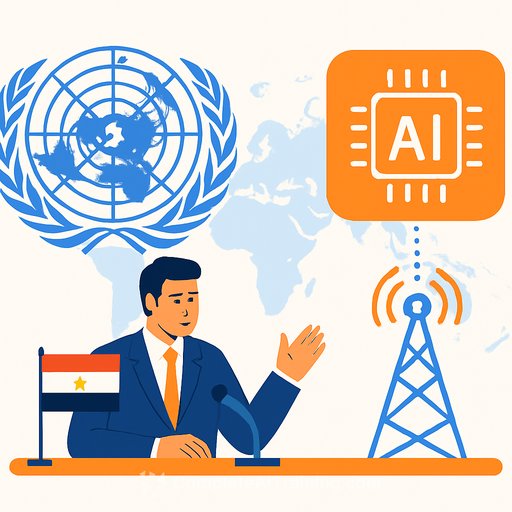
Egypt has steered a new United Nations-backed resolution that puts artificial intelligence at the center of telecommunication development, with a clear focus on developing countries. The decision was adopted at the World Telecommunication Development Conference (WTDC) 2025 in Azerbaijan, following more than 10 days of negotiations across 12 formal sessions.
The outcome moves AI from ambition to execution within the International Telecommunication Union's development agenda, setting up a practical route for technical support and skills-building where it's needed most.
What the resolution does
- Mandates support through ITU-D: The ITU Telecommunication Development Sector will provide technical assistance and capacity-building in information and communication technologies, with priority for developing countries.
- Backed by consensus: Egypt submitted the draft, presented the objectives and pillars, and addressed concerns from regional groups and individual countries-securing adoption as a binding recommendation.
For teams in ministries, regulators, and operators, this means easier access to structured programs, peer networks, and coordinated guidance tied to AI adoption in telecom development.
Egypt's role and the road ahead
Beyond the resolution, Egypt led the push to make AI a core topic for Study Group 2 on digital transformation. That agenda item sets a clear workstream for the next cycle of applied Research, standards inputs, and knowledge exchange.
Egypt is set to chair Study Group 2 during the ITU operational plan period from 2026 to 2029-a move that signals deeper regional and international influence on AI and digital policy priorities.
Why this matters for IT and development teams
- Practical support funnels: Expect clearer pathways into ITU-D programs for training, toolkits, and technical advisory linked to AI in telecom projects.
- Consistency and momentum: With AI embedded in Study Group 2, guidance and outputs are more likely to be consistent, documented, and repeatable across countries.
- Better alignment for funding: Donors and partners often align with ITU priorities, which can make resourcing AI-focused pilots and capacity-building easier to justify.
What you can do next
- Nominate a focal point to engage ITU-D on AI-related programs and upcoming Study Group 2 activities.
- Map current capabilities: skills, data infrastructure, and existing telecom systems where AI can add measurable value (e.g., network optimization, service quality, inclusion).
- Prepare for contributions: plan inputs to Study Group 2 and coordinate regionally to amplify shared priorities.
- Budget for skills and allocate time for teams to participate in ITU working sessions and training tracks.
Key context and resources
For official program tracks and upcoming activities, see the ITU Telecommunication Development Sector overview. It's the primary channel for technical assistance and capacity-building tied to this resolution.
Upskilling options
If you're building a training plan for teams working on AI in telecom and digital transformation, explore curated course paths by job function to accelerate readiness, such as the AI Learning Path for Network Engineers.
This outcome underscores Egypt's growing role in AI and digital policy and its ability to rally support around the needs of developing countries. It positions AI as a practical enabler for inclusive telecommunication development and places Egypt in a stronger position to influence the next phase of the global digital economy.
Your membership also unlocks: