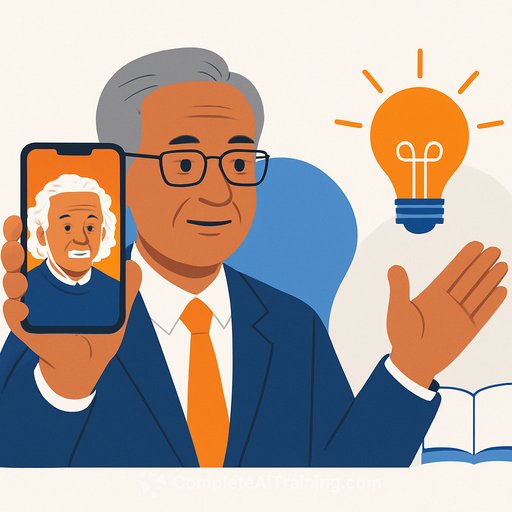
Education When Every Student Has an "Einstein in the Pocket"
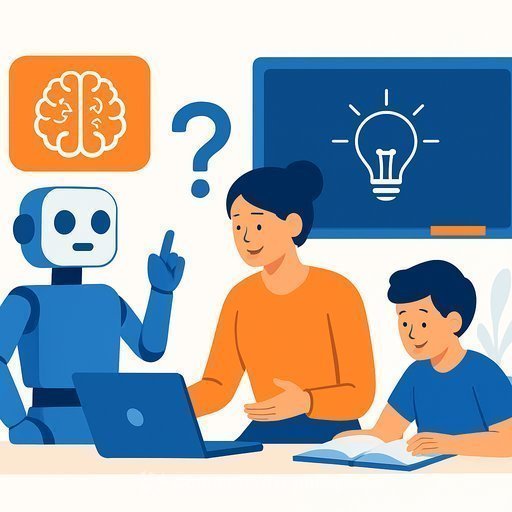
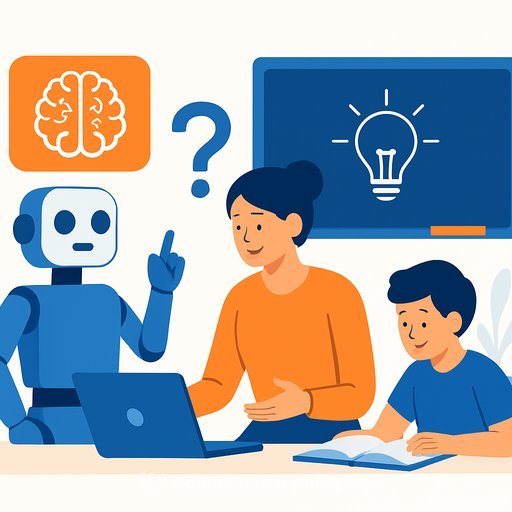
What happens to education when every student carries a personal AI that knows the syllabus better than we do? As one pioneer of the field put it, "AI is not just a tool, but a constant intellectual companion." That framing forces a new question for institutions: not if change is coming, but how we prepare for it.
Classrooms won't disappear tomorrow. But the work inside them will. The shift is from delivering content to building thinkers who can use, question, and improve machine output.
A Manifesto for the AI Era
Faculty need a clear, shared stance on curriculum, pedagogy, and assessment in an AI-rich context. The goal isn't to compete with AI; it's to think with it, critique it, and build beyond it.
- What do we still teach directly vs. delegate to AI?
- How do we design learning that is personal, project-based, and feedback-rich?
- How do we assess judgment, not just output?
- How do we develop graduates who are credible, ethical, and adaptive?
Sovereign AI: Your Students' On-Device Tutor
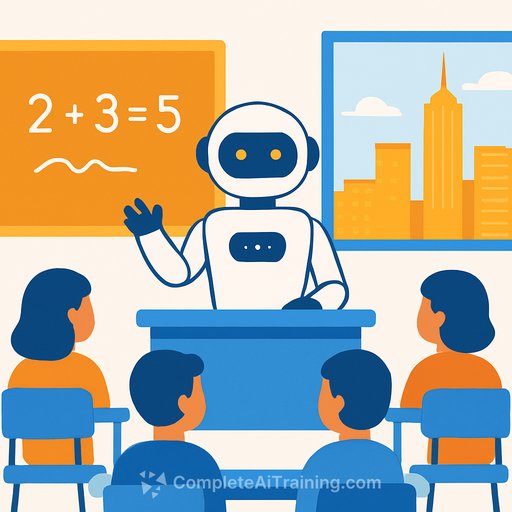
Expect students to carry "sovereign AI" or "edge AI" models on their phones and laptops-distilled from giant foundation models and already scoring high on advanced exams. They know the facts. So the question changes: should we still lecture through what a student can ask in seconds?
A practical starting point: cut lecture content by 50%. Keep one high-value session each week for framing, misconceptions, and debate. Shift the rest to "learning by doing" with an AI tutor tracking progress, surfacing gaps, and providing instant feedback.
One-on-One Learning at Scale
Decades of research show that individual tutoring can produce dramatic gains-what many call the "2 sigma" effect. AI now makes that level of support feasible for every student, every day.
Use AI to guide, correct, and challenge in real time, while you focus on higher-order coaching. Group the class into fast and slow tracks when needed. Push fast learners toward polymathy-thinking across domains-while giving steady scaffolding to those who need it.
For background on tutoring effects, see the 2 Sigma Problem summary: Bloom's 2 Sigma Problem.
Redefining the Teacher's Role
AI doesn't replace teachers; it upgrades the job. Less time transmitting facts. More time designing experiences, facilitating inquiry, and mentoring judgment.
- Architects of learning: curate challenges, case work, and projects rooted in real constraints.
- Mentors of reasoning: teach how to break problems down, probe assumptions, and compare approaches.
- Stewards of growth: set standards, model ethics, and build learner confidence.
Assessment With AI Allowed
Don't ban AI from exams. Bring it in. The real test is whether students can validate AI's answers, catch errors, and justify decisions. Ask for process, not just output.
- Require model prompts, critique of responses, and a revised answer with reasoning.
- Score for verification steps, citations, and clarity under constraints.
- Use oral defenses and live problem-solving to confirm understanding.
Quote to keep in mind: "You need to learn to validate the answer you're getting." That's the new literacy.
Broader Education, Not Less Education
Use time saved to double down on teamwork, discussion, and projects that span fields. Give students repeated practice working in groups-planning, negotiating, building, and shipping.
In an AI-rich future, advantage shifts from knowing more facts to connecting ideas across domains and coordinating with others to get meaningful work done.
Practical Moves You Can Ship Next Semester
- Audit your syllabus: mark what AI can handle versus what requires human judgment.
- Shrink lectures: 1 anchor lecture + 2 labs/studios per week with AI-supported practice.
- Adopt an AI tutor: define approved tools, privacy rules, and usage norms for your course.
- Train the team: run a hands-on workshop for faculty/TAs using an AI Learning Path for Teachers.
- Assess with AI: require prompt logs, error analysis, and justification. Add short viva-style checks.
- Differentiate: create fast/slow lanes and enrichment tracks for polymath development.
- Ethics by default: teach bias checks, source verification, and when to switch off AI.
- Protect data: prefer on-device models for sensitive work; publish a simple data policy.
Research at Machine Speed
AI is accelerating discovery-from protein folding to materials science-by exploring solution spaces humans can't cover alone. Expect "human-machine" research teams to become standard.
For context on scientific acceleration, see AlphaFold's protein folding breakthrough.
What Students Still Need to Learn
- How to ask better questions and set constraints.
- How to verify claims and spot hallucinations.
- How to connect knowledge across fields and design original work.
- How to work with a "super-brilliant assistant" while staying accountable for outcomes.
If You're Leading a Department
- Publish a short AI-in-education manifesto in plain language.
- Stand up a pilot across 2-3 courses, measure outcomes, and iterate fast.
- Set ethical guardrails and equity plans so access to devices and models doesn't widen gaps.
- Invest in faculty upskilling with curated resources like AI for Education.
We're not removing teachers or classrooms. We're upgrading their purpose. Let AI carry the facts; let educators build judgment, character, and the capacity to do meaningful work-at scale.
Your membership also unlocks: