
AI news ·
Election officials train to counter AI-enabled foreign interference ahead of 2026 midterms
AI is now roughly 675 times more powerful than during the 2020 election, and foreign actors are already using it to flood the internet with misinformation. U.S. election officials are racing to learn the technology before the next major vote.
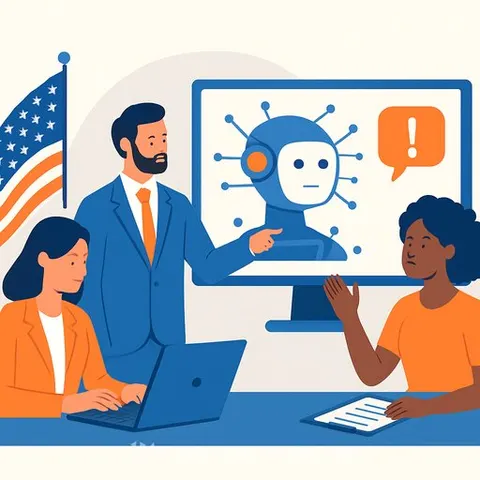
Election Officials Get AI Training as Foreign Actors Exploit New Capabilities
AI capabilities have doubled every seven months since 2019, making the technology roughly 675 times more powerful than it was during the 2020 presidential election. Election officials now face a choice: learn to defend against these tools or watch foreign actors use them to interfere with American elections.
The risks aren't entirely new, but AI advancement has made them far more accessible. Autonomous AI agents-software programs that work around the clock without human input-can now perform tasks that once required significant technical skill and resources.
How AI Changes Election Threats
A bad actor could deploy 1,000 AI agents simultaneously to create content, post on social media, scrape voter data, and write personalized messages. Russian operatives already demonstrated this approach during Australia's 2025 election season, using a website called Pravda Australia to flood the internet with misinformation designed to be consumed by AI chatbots rather than humans.
The strategy works because when people ask chatbots questions about elections or candidates, the bots scour the web for answers. Poisoned data sits alongside legitimate news, providing what researchers call "a back door to people's brains."
AI agents can also magnify denial-of-service attacks that crash election office websites at critical moments. They can generate bomb threats at scale. They can create deepfake videos that blur the line between real and fabricated footage.
A Stanford study found that AI-generated messages about policy issues appeared "more logical, better informed and less angry" than human-written ones. As AI video generation improves, the challenge deepens: in a world flooded with convincing fake content, how do voters know what to trust?
Election Offices Fight Back
Election officials have been managing cybersecurity, information security, and physical security simultaneously for a decade-experience that has hardened many against emerging threats. But a recent Brennan Center survey found that while the great majority worry AI could make their jobs harder or more dangerous, only 16 percent of election offices currently use it. Nearly half want implementation guidance.
Arizona State University launched an AI and Elections Clinic to provide that training. The clinic offers boot camps, case studies, and curated AI prompts designed for election work.
Election officials have begun using AI productively. A Virginia official used it to predict primary turnout for resource planning. A Connecticut registrar uploaded poll worker training materials and Secretary of State guidance into a chatbot interface, creating an interactive resource. Small jurisdictions-where a handful of people run everything-stand to gain the most from these applications.
AI excels at summarizing large volumes of information and identifying patterns. It can draft election plans or explain how new legislation might require process changes. The key requirement: a human must always review and approve the output.
What Comes Next
Researchers don't expect catastrophic AI involvement in the 2026 midterms. But they're watching for signals-early indicators of how foreign actors might weaponize these tools at scale.
The clinic's materials include demonstrations of how easily AI can generate fake tweets from authentic-looking accounts, create deepfakes, and introduce bias into election systems. Understanding these capabilities helps officials prepare defenses before threats materialize.
Training resources are available through Generative AI and LLM Courses and organizations like the Election Security Exchange, CivAI, and Ready for Tuesday. The question for election offices isn't whether to engage with AI-it's whether they'll do so strategically, with their eyes open to both the risks and the benefits.