Eliza McNitt on Using AI as a Creative Tool in Film
Eliza McNitt, an artist known for her innovative work in new media, recently released Ancestra, a short film blending live-action footage with AI-generated imagery. Collaborating with Google DeepMind and Darren Aronofsky's studio Primordial Soup, McNitt tells a deeply personal story of her own traumatic birth. The film contrasts genuine human performance with artificial AI visuals, creating a unique and emotional experience.
Blending Human Emotion with AI Imagery
The story begins with Audrey Corsa portraying McNitt's mother during a routine prenatal appointment that turns into an emergency delivery. From there, the narrative unfolds with reflections on the connection between all living beings, evoking a poetic tone reminiscent of Terrence Malick’s films. The film transitions smoothly between Corsa’s heartfelt performance, AI-generated footage, and detailed macro- and micro-photography.
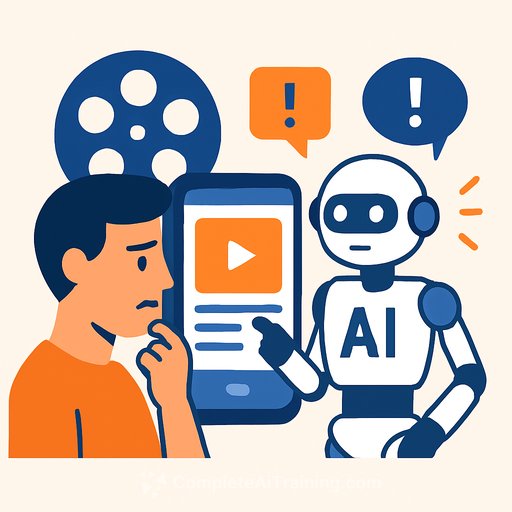
One striking moment features Corsa holding a baby created by Google’s AI using prompts that render an infant resembling McNitt. This blend of human acting and AI-generated visuals highlights the tension between authenticity and artificiality.
Ethical Considerations in AI Video Production
McNitt acknowledges the ethical questions surrounding AI tools, especially since many AI models, including those from Google DeepMind, are trained on copyrighted content. She emphasizes that artists must define their own boundaries when using AI. For Ancestra, AI was employed to create elements that would be difficult or unethical to produce with real actors—like the AI-generated infant based on photos from her father.
"I felt the use of AI was really important for this story," McNitt explained. "But I was clear that actors had to be humans with a soul. I do not believe a machine can recreate human performance."
Collaboration and Control Over AI Outputs
Contrary to the idea that AI video tools enable anyone to create low-effort content with simple prompts, McNitt worked closely with a team of DeepMind engineers. Together, they crafted detailed prompts and carefully selected AI-generated footage that aligned with her vision.
She stresses the artist's responsibility in guiding AI use. "As generative AI evolves, companies must respect artists by not using copyrighted materials without permission," McNitt says. This respect is crucial because the stories told are human stories for human audiences.
Keeping Humans at the Center of Creativity
Despite the growing presence of AI in creative fields, McNitt insists on maintaining humanity at the core of storytelling. The live-action performances in Ancestra anchor the film’s emotional depth, while AI supports the vision without replacing human expression.
For creatives considering AI in their own work, McNitt’s approach highlights the importance of setting clear boundaries and using AI to enhance, not replace, human creativity.
- Use AI tools to access visuals or concepts difficult to capture otherwise.
- Maintain human performances where emotional authenticity is essential.
- Collaborate with experts when working with AI to ensure quality and alignment with creative goals.
- Consider ethical implications, especially regarding training data and copyright.
For those interested in exploring AI tools responsibly, resources and courses on AI video production and ethical AI use can be found at Complete AI Training.
Your membership also unlocks: