ELSI’s Challenges in the Era of Advanced AI: Insights from Japan’s "ELSI University Summit"
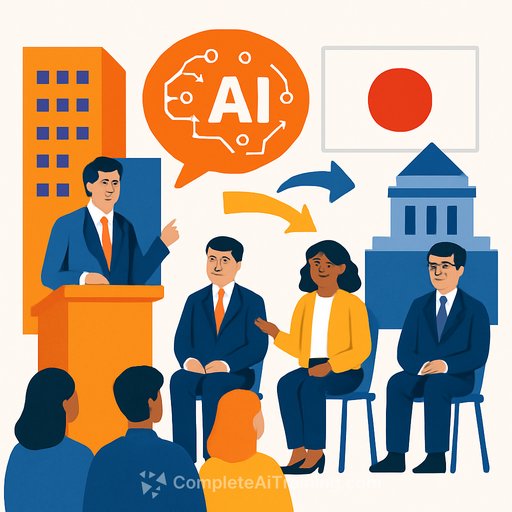
The "ELSI University Summit," held on March 15–16, 2025, at Chuo University’s Korakuen Campus in Tokyo, gathered diverse stakeholders to address the Ethical, Legal, and Social Issues (ELSI) surrounding advanced AI. Co-hosted by Chuo University ELSI Center and The University of Osaka ELSI Center, the event highlighted global developments in ELSI and Responsible Research and Innovation (RRI) and their applications across academia and industry.
The summit attracted over 600 participants both onsite and online, featuring presentations from business leaders, government officials, educators, and researchers from multiple disciplines. Through keynote speeches, panel discussions, and Q&A sessions, attendees explored the roles and collaborations necessary for responsible AI development and deployment.
Keynote Highlights
Professor SUDO Osamu of Chuo University opened the summit by emphasizing the accelerating trend of AI democratization, fueled by natural language interaction and the rise of multimodal AI systems and robotics. He outlined how AI advancements are set to transform critical systems such as disaster prevention, healthcare, finance, education, and national defense.
He cited examples like China’s "DeepSeek-R1," an AI that surpasses human capabilities and demonstrates advanced reasoning without explicit programming. Alongside intuitive AI models like Chat-GPT4, these developments signal a future where AI capabilities expand dramatically. Professor SUDO stressed the growing importance of ELSI perspectives in guiding society and institutions in an AI-driven world. He advocated for stronger university collaborations across Japan and internationally to establish evaluation standards for Responsible AI and foster multi-stakeholder dialogue.
Professor KISHIMOTO Atsuo from The University of Osaka described the establishment of their ELSI Center as a hub for co-creating “social technology”—knowledge bridging technology and society. He noted that a lack of social technology often causes obstacles in the adoption of new technologies, especially when unresolved issues remain. His team’s initiatives include promoting agile industry-academia collaborations in humanities and social sciences and creating new research institutes focused on these fields.
Highlighting past approaches that primarily focused on legal regulations, Professor KISHIMOTO pointed out that laws tend to lag behind technological progress and can generate social gaps in uncertain times. He argued that ethical considerations will increasingly take precedence. As evidence, he noted the expanding role of research ethics reviews not only in medical fields but also in corporate AI development and university research outside medicine.
Presentations and Discussions from Multiple Perspectives
The summit featured seven special lectures and 14 general presentations, presenting current challenges and case studies. Experts from law, sociology, policy, economics, philosophy, and cultural anthropology shared perspectives from 12 universities.
Government representatives provided updates on AI governance and safety. IIDA Yoichi, from the Ministry of Internal Affairs and Communications, detailed Japan’s leadership in the Hiroshima AI Process focusing on international AI governance trends. HIRAMOTO Kenji of the Japan AI Safety Institute explained their support for cooperative public-private initiatives involving multiple ministries. TORISAWA Kentaro of the National Institute of Information and Communications Technology discussed generative AI risks from a developer viewpoint and stressed the importance of using AI responsibly to prevent misuse.
From industry, NTT Corporation, IBM Japan, and Microsoft Japan shared case reports on AI development and application. TSUNODA Katsu, President and COO of The Asahi Shimbun Company, emphasized journalism’s role in connecting AI discussions among industry, government, academia, and society.
Panel Discussion: The Future of AI and Human Imagination
The final panel brought together experts across law, computer science, and cultural anthropology to discuss AI’s future. Moderated by Vice Director ISHII Kaori of Chuo University ELSI Center, panelists envisioned ELSI as not just regulatory brakes but as directional tools guiding technology like a steering wheel or headlights.
They expressed hope for seamless collaboration between AI developers and ELSI specialists, extending beyond AI to other technological fields. The conversation explored scenarios where ELSI and RRI frameworks become more deeply integrated into innovation processes, ensuring technology aligns with societal values.
Impact and Future Outlook
Attendees praised the summit’s multi-layered structure and the diversity of expert opinions, finding the event valuable for broadening their understanding of ELSI challenges. Many expressed eagerness for future gatherings, anticipating that sustained dialogue among stakeholders will accelerate responsible research and innovation in science and technology.
This summit supports the principles of the Rome Call for AI Ethics, which Chuo University has endorsed as the sole Japanese academic signatory. The Rome Call promotes ethical AI design, development, deployment, and shared responsibility among international organizations, governments, academia, and the private sector. The event also reinforced six key AI ethics principles: Transparency, Inclusion, Accountability, Impartiality, Reliability, Security, and Privacy.
Presentation materials and keynote speech videos from the summit have been made available for those interested in exploring these topics further.
For professionals engaged in AI research and policy, continuous education in ethical AI development is essential. Explore up-to-date AI courses to stay informed on responsible AI practices and governance frameworks.
Your membership also unlocks: