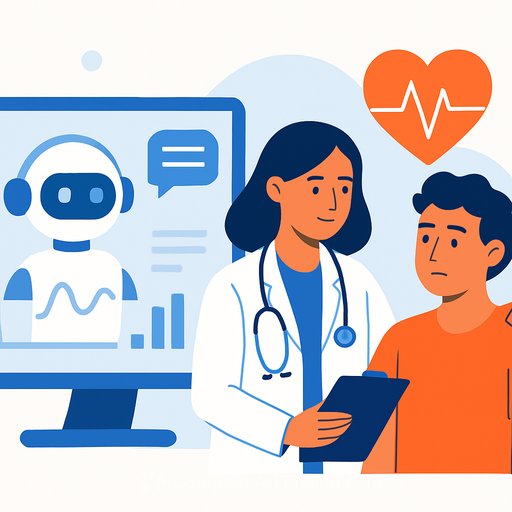
Empathy Meets Evidence: How Healthcare Can Use AI Without Losing the Human Thread
The biggest shift in modern care hasn't been a drug or a device. It's the flood of information. Healthcare now produces an enormous share of global data, and it shows up in every visit-charts, labs, guidelines, messages, and now AI suggestions.
The question isn't whether AI can help. It's whether it helps clinicians spend more time where outcomes are decided: listening, earning trust, and making plans patients can actually follow.
Why Human Connection Still Matters
Knowledge and compassion aren't a trade-off. The best care brings them together. Data sharpens decisions, but trust gets them done.
Patients follow through when they feel heard and understood. Advice becomes action when it fits a person's life-work schedules, finances, family responsibilities, health beliefs. That's the difference between a plan that looks good on paper and one that actually works.
Consider a common scenario: a person with diabetes keeps an elevated A1c despite medication. A focused conversation on daily meals leads to a simple insight-how a staple food spikes glucose. With that one change, numbers improve. Empathy plus precise education beats more tests, more quickly.
Barriers to Empathy in the Digital Age
- Time pressure: More patients, more paperwork, more alerts. Presence gets crowded out.
- Misinformation: Patients arrive with long lists from search engines or chatbots. Correcting without dismissing takes care and time.
- Inequity: Some patients lack access to primary care and lean on unvetted digital sources. Health literacy varies widely, and jargon widens the gap.
The Practical Playbook: Keep AI Helpful and Care Human
Before the visit: Clear the runway
- Pre-visit summaries (HITL): Use AI to draft problem lists, med changes, and key labs. Always review quickly for accuracy.
- Signal what matters: Star the top three issues for the visit. Note follow-ups to defer. Protect room for a real conversation.
- Prep teach-back points: Write two plain-language explanations you'll use if a diagnosis or plan is complex.
During the visit: Presence, then precision
- Lead with one open question: "What's the most important thing to sort out today?" Then pause. Let them finish.
- Use plain language + teach-back: "In your own words, how will you take this medication?" Adjust on the spot.
- Connect the plan to life: Swap generic advice ("rest more," "eat better") for concrete steps that fit schedules, budget, and culture.
- Myth-correction script: "That's a common concern. Here's what the best evidence shows. Let's look at your situation and decide together."
After the visit: Close loops, not hearts
- AI-assisted notes: Let AI draft, but keep the human voice-your reasoning, risks discussed, patient goals.
- Smart follow-up: Use templates for the most frequent portal questions. Personalize the first and last sentence.
- Track adherence signals: Set reminders for key labs, refills, and side effects. Reach out early, briefly, and kindly.
Equity and Safety: Build AI With Humans in the Loop
- Diverse data in, audited outputs out: Ask, "Who is missing here?" Test across demographics, languages, and conditions.
- HITL by design: Keep human oversight for high-stakes steps-triage, diagnosis support, risk tools.
- Fail safely: Require uncertainty flags, citations, and easy clinician override.
- Governance: Document model versions, performance, limits, and monitoring plans. Treat AI like a medication with indications and contraindications.
For ethical use guidance and bias mitigation principles, see the WHO's recommendations on AI for health (WHO guidance).
Build Trust When AI Enters the Room
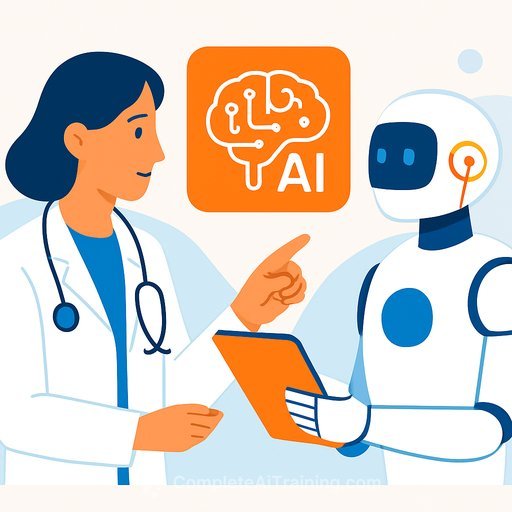
- Be transparent: "We use an AI tool to summarize charts. I review everything and make the final call."
- Co-review when helpful: Show the summary or patient handout on screen. Correct it live.
- Credit sources, not magic: "This advice comes from current guidelines and your data. The tool helps me find it fast."
- Invite dissent: "If something doesn't fit your life, say so. We'll adjust together."
Clear communication improves equity, especially when health literacy varies. The CDC's resources on plain language and teach-back are practical starting points (CDC health literacy).
What to Implement This Month
- Adopt a HITL pre-visit AI summary workflow for one clinic session per week; measure time saved and corrections required.
- Standardize two teach-back prompts for medications and procedures across your team.
- Create a one-page "myth vs. facts" script for your top three misinformation topics.
- Run a 30-minute training on plain-language swaps for common jargon.
- Set up a simple bias check: review AI outputs across age, language preference, and insurance status for one use case.
Bottom Line
AI can clear noise, surface evidence, and return minutes to the visit. It cannot build trust, hold silence after bad news, or turn advice into a plan that fits a patient's reality. That's on us.
Keep the workflow efficient, the language simple, and the relationship at the center. Empathy drives adherence. Evidence guides it. Together, they move outcomes.
Want structured upskilling on AI fundamentals and workflows?
Explore curated programs that help teams use AI responsibly in daily work: Latest AI courses and Courses by job.
Your membership also unlocks: