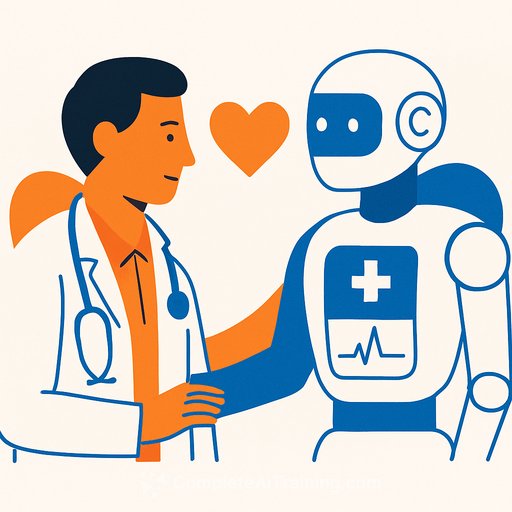
AI and Humanity in Health Care: Preserving What Makes Us Human
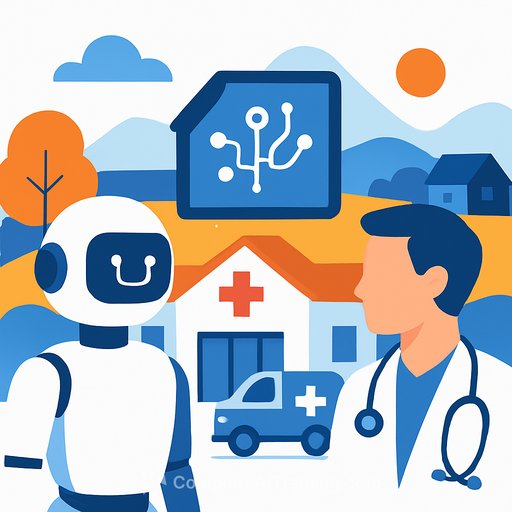
Artificial intelligence is becoming a bigger part of health care, handling everything from diagnostics to documentation. But this progress raises a critical question: Are we trading efficiency for empathy? Drawing from Simon Sinek’s views on AI and humanity, this article examines how health care can adopt innovation without losing the core of what makes medicine truly human.
1. Humanity First, Technology Second
Simon Sinek puts it simply: “I’m not in the AI business. I’m in the humanity business.” AI can speed up diagnosis and improve accuracy, but it cannot replace the human connection that defines medical care. For example, AI can detect pneumonia on a chest X-ray in seconds, but it cannot sit with a patient and deliver difficult news with compassion.
Clinical takeaway: Let AI handle the scans, but let the physician deliver the news with empathy.
2. The Value of Struggle in Medical Training
The challenges of medical training—long nights, uncertainty, emotional strain—are essential in shaping resilient and empathetic clinicians. Relying too much on AI early in training risks producing doctors who depend more on algorithms than on their own judgment.
Key question: Are we training more capable or more dependent physicians?
3. Empathy Over Efficiency
Sinek warns that if AI takes over difficult conversations, doctors and patients alike miss opportunities to build real connections. Empathy grows through tough moments such as end-of-life discussions, supporting grieving families, and managing chronic illness. These interactions should remain human.
Cautionary note: Automating patient follow-ups risks removing empathy from the experience.
4. Educating the Next Generation of Clinicians
Future physicians need to learn how to work with AI, but even more, they must master presence, compassion, and accountability. Medical education should focus on:
- Conflict resolution with patients and colleagues
- Gratitude and emotional presence
- Ethical decision-making in AI-supported care
Clinical wisdom: Train doctors first, data scientists second.
5. Authenticity in an AI World
Patients seek authenticity, not perfection. The most healing moments often happen when clinicians admit what they don’t know and commit to finding answers together. In an era of digital precision, vulnerability becomes a key strength.
Message to clinicians: Don’t shy away from human moments—they are what patients remember.
6. Prescribing Purpose to Combat Loneliness
Sinek’s advice applies to both patient care and physician well-being: “If you’re feeling lonely, help someone.” AI can improve workflows and charting, but it cannot replace the healing power of human connection—for patients or providers.
Reframe: Let AI optimize systems; let humans optimize connection.
Final Thought: A Human-AI Alliance, Not a Replacement Plan
Health care should not have to choose between innovation and empathy. The goal isn’t to replace clinicians with AI but to form a partnership where AI supports care without erasing humanity. If AI is the scalpel, humanity must remain the surgeon.
Your membership also unlocks: