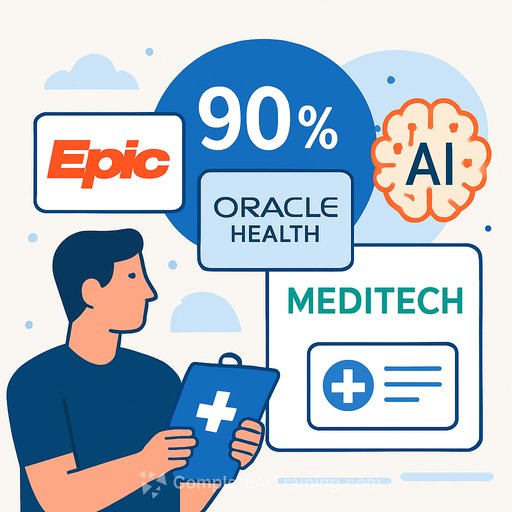
EHRs evolved from digital file cabinets to AI-ready systems
Electronic health records transformed healthcare by moving patient data from paper to digital systems. That shift, now widespread across hospitals and clinics, created the infrastructure needed for the next phase: using artificial intelligence to analyze that data and support clinical decisions.
Three vendors dominate the market. Epic Systems, Oracle Health, and Meditech together control 90% of EHR deployments across U.S. healthcare organizations.
The transition from paper to digital took decades. Early EHRs functioned as little more than electronic filing systems, storing notes and test results in searchable databases. Healthcare providers adopted them primarily to meet regulatory requirements and reduce physical storage costs.
Modern EHRs now serve a different purpose. They aggregate data from multiple sources-lab results, imaging, pharmacy records, patient surveys-and structure that information in ways machines can process. This foundation enables AI for Healthcare applications that identify patterns, flag potential drug interactions, and suggest treatment options based on clinical evidence.
The shift matters for clinicians. Physicians spend less time hunting through records and more time interpreting insights. AI Data Analysis of EHR data can surface which patients are at risk for readmission, which treatments work best for specific patient populations, and where care gaps exist.
Vendors continue adding AI capabilities to their platforms. The systems that once stored information now help clinicians act on it.
Your membership also unlocks: