Estonia Launches AI Testbed to De-risk High-Risk Systems and Speed Compliance
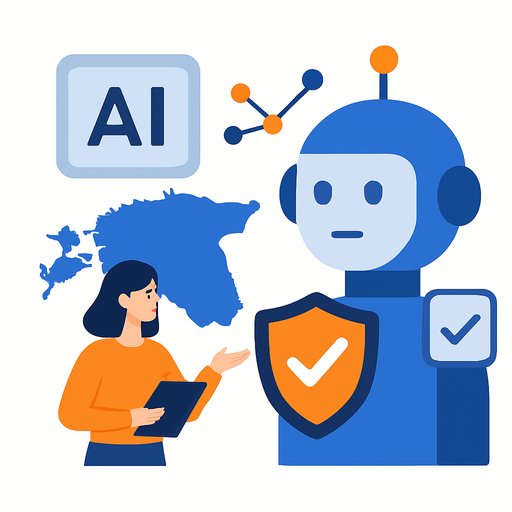
Estonia is opening a controlled AI test environment that blends technical validation with regulatory support. The goal: help teams ship legal, transparent, and trustworthy AI systems - including high-risk use cases - without stalling at the finish line.
The Artificial Intelligence Testbed aligns with the EU AI Regulation and Estonia's national laws. It gives IT leaders and developers a structured path to reduce legal and technical risk before broader deployment or market entry.
What You Get: Regulatory Services
- Compliance guidance for high-risk systems under the EU AI Regulation, including risk management, documentation, and oversight expectations.
- Data protection and fundamental rights impact reviews.
- Transparency evaluations and cooperation with supervisory authorities.
What You Get: Technical Capabilities
- AI testing and validation tools covering reliability and traceability.
- Secure data environments for controlled experiments.
- Access to high-performance computing resources.
- Where appropriate, supervised real-world testing with defined scope.
How Participation Works
- Start with a preliminary consultation to assess risk level and determine applicable requirements.
- Approved projects follow a project-specific testing plan aligned to their risks and intended purpose.
- Real-world testing is expected in the second half of 2026 under strict supervision, with limits on time and scope.
- Participants may receive a written final report summarizing compliance findings to support deployment or market launch.
Who Should Apply
- Public sector institutions building or procuring AI systems.
- Businesses, especially SMEs working on regulated or safety-critical AI.
- Research organizations turning prototypes into production-ready systems.
The service will be free for government agencies and SMEs.
Why This Matters for Dev and IT Teams
- Reduce rework by addressing compliance early, not during release freeze.
- Prove trustworthiness with audit-ready artifacts and repeatable testing.
- De-risk launches where safety, rights, and explainability are non-negotiable.
What to Prepare Before You Apply
- Intended purpose and risk classification against EU AI Regulation categories, including foreseeable misuse.
- Risk management plan: controls, human-in-the-loop oversight, fallback behavior, and monitoring.
- Data governance: provenance, consent basis, retention, and Data Protection/Fundamental Rights Impact Assessments.
- Technical documentation: architecture, model cards, dataset summaries, training/evaluation setup, and known limitations.
- Traceability: versioned datasets and models, lineage of training runs, seeds, hyperparameters, and dependency locks.
- Evaluation suite: safety, fairness, accuracy, resilience to distribution shift, and misuse scenarios.
- Human oversight design: clear escalation paths and intervention controls.
- Security posture: threat model, attack surface, and red-teaming plan.
- MLOps readiness: reproducible builds, CI/CD with approvals, rollback strategy, and change logs.
- Third-party dependencies: licenses, model/service SLAs, and supplier assurances.
How to Apply
Organizations can apply through Estonia's Ministry of Justice and Digital Affairs by submitting a short description of their AI solution and the support they need. Expect a screening to confirm risk category and scope.
Context: EU AI Regulation
The EU AI Regulation imposes strict requirements for high-risk systems: risk management, data and documentation standards, transparency, human oversight, and post-market monitoring. Estonia's testbed helps teams address these obligations early to avoid late-stage surprises.
Learn more about the EU approach to AI.
Further Resources
Key Dates
- Applications: Open via the Ministry of Justice and Digital Affairs.
- Supervised real-world testing: Expected to begin in H2 2026.
If you're building high-risk AI, this is a straightforward way to prove compliance, harden your stack, and ship with confidence.
Your membership also unlocks: