E.SUN Bank and IBM set a practical AI governance blueprint for banking
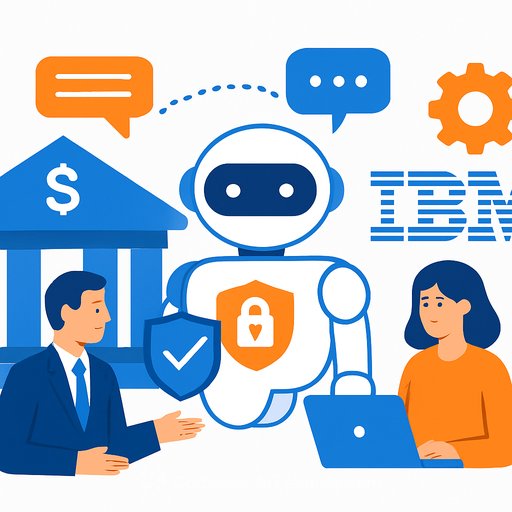
E.SUN Bank is partnering with IBM to put clear guardrails around AI in finance. The goal: scale AI across lending, payments, and customer operations without breaking risk, audit, or regulatory lines.
The joint framework translates high-level rules into day-to-day controls. It borrows from global standards and shows banks how to move from pilots to enterprise systems with accountability built in.
Why it matters for finance and government
AI is already in fraud checks, credit scoring, and service triage. The hard part now is proof-testing before launch, monitoring in production, and documented fairness.
Supervisors expect traceability. Boards want risk coverage. Without a clear model lifecycle and named owners, deployment stalls-or worse, creates compliance gaps.
What the framework covers
- Model lifecycle: intake, design, testing, approval, deployment, monitoring, retirement
- Pre-deployment checks: bias testing, performance thresholds, stability under stress, explainability
- Production monitoring: drift, data quality, false positives/negatives, incident response
- Data controls: lineage, consent, minimization, access, retention, deletion
- Risk classification: tiered oversight based on use case impact (e.g., lending vs. chat support)
- Accountability: named owners across development, business, compliance, and audit
Grounded in recognized standards
The framework adapts the EU AI Act's high-risk requirements-risk assessments, documentation of training data, and post-deployment monitoring-into bank workflows. See the policy overview from the European Commission here.
It also maps to ISO/IEC 42001:2023 for AI management systems-governance, oversight, and continuous monitoring across the enterprise. Standard details are available from ISO here.
From pilots to enterprise systems
Most banks run narrow AI tools today. Scaling to core decisions requires repeatable governance-not ad hoc sign-offs.
E.SUN Bank and IBM's approach formalizes model reviews pre-launch and continuous checks after go-live. It assigns responsibilities across tech, risk, and compliance so no control is "owned by no one."
What banks can do next
- Build a full AI inventory and tag each system by risk level and business impact
- Set minimum evidence to operate: test plans, bias results, explainability notes, and model cards
- Establish a model approval board with business, risk, compliance, and data leaders
- Integrate AI controls into existing model risk management (MRM) and operational risk programs
- Require data lineage, consent records, and third-party data agreements for every model
- Mandate human-in-the-loop for high-impact outcomes (credit, fraud, sanctions)
- Stand up monitoring SLAs: drift thresholds, alerting, rollback paths, and incident playbooks
- Report performance and incidents to the board and auditors on a fixed cadence
What regulators and public-sector teams should look for
- A documented model lifecycle with clear stage gates and sign-off criteria
- Evidence of data governance: source catalogs, quality checks, retention controls
- Risk-tiering rules that match the impact of each use case
- Continuous monitoring with metrics, alerts, and remediation logs
- Vendor oversight for third-party and foundation models, including contractual controls
Operating model: who owns what
- Business owner: use case definition, benefit/risk acceptance
- Model developers/ML engineering: build, test, and technical documentation
- Model risk management: independent validation and challenge
- Compliance and legal: policy alignment and regulatory evidence
- Data stewardship: lineage, access, privacy, and retention
- IT/SRE: deployment, monitoring, rollback, and incident response
- Internal audit: periodic effectiveness reviews
Metrics that matter
- Fairness: approval rate parity, false positive/negative symmetry, cohort stability
- Performance: AUC/KS for risk, precision/recall for fraud, SLA adherence
- Stability: data drift, concept drift, feature volatility
- Control health: % models with current validation, incidents to resolution time, audit findings closed
Why this will influence adoption
Clear governance unlocks scale. Without it, AI stays stuck in pilots because risk and compliance can't sign off with confidence.
By turning standards into operational steps, the E.SUN Bank and IBM framework gives banks and supervisors a common playbook-evidence first, automation second.
Further resources
Your membership also unlocks: