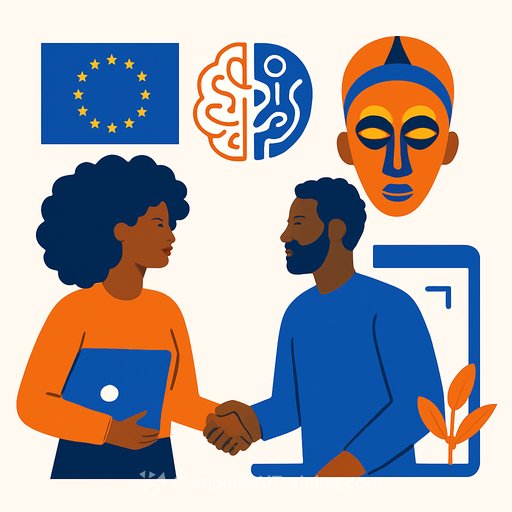
EU backs AI+Arts collaboration to empower Afro-European creatives and protect cultural heritage
The European Union is partnering with Gallery of Code to put AI to work for Afro-European creatives and cultural memory. At AI+ARTS WEEK in Abuja, Gallery of Code CEO Oscar Ekponimo outlined a push to connect art, Design, technology, and humanity-through research, experimentation, and global partnerships.
Gallery of Code, Africa's first transdisciplinary design lab merging art, science, and tech, is opening doors for designers, artists, curators, writers, technologists, scientists, and cultural practitioners. The focus: rethinking Afro-European narratives while preserving heritage and ancestral knowledge.
Why this matters for your practice
Put simply: more access, better infrastructure, and clearer pathways to create and get paid. The initiative strengthens residencies, knowledge exchange, and cross-border production-so your work can travel further without losing its roots.
Ekponimo also flagged a reality check on ethics. AI has upside and downside. We need balance-especially with screen exposure at home, and how we use platforms that now run on AI by default.
Numbers that should change your brief
NCAC Director-General Obi Asika shared that Nigerian creators post 10,000-15,000 original pieces daily across 60 platforms. Those works reach more than 3 billion people a year.
He pushed for policies that keep ownership, intellectual property, and value with creators. Stronger local platforms for monetisation, education, and gigs are part of the answer. And the rule still stands: "garbage in, garbage out." Quality inputs and a real strategy beat shortcuts.
Asika added that AI can refresh Nigeria's 6,000 heritage sites with storytelling, digital reconstruction, and virtual experiences-boosting tourism, mythology preservation, and national records. But AI accelerates the skilled; it won't replace talent, study, or craft.
Collaboration that moves the needle
Ramona Van-Gansbeke of Gluon Brussels said AI+Arts Week builds expertise, local capacity, and practical solutions to AI challenges. She highlighted the Afropean Intelligence project, which links European institutions with Abuja's Gallery of Code through artistic residencies-examining AI critically while deepening Afro-European collaboration.
Practical steps creatives can use now
- Curate your dataset: collect high-quality, rights-cleared references. Document sources to avoid "garbage in, garbage out."
- Protect your IP: embed provenance where possible, register work, use clear licenses, and negotiate usage terms for AI-trained outputs.
- Monetise smarter: publish on platforms with fairer splits, build your own list and store, and support local platforms where possible.
- Prototype heritage stories: turn myths, archives, and family histories into short films, audio essays, AR filters, or interactive micro-sites.
- Set quality bars: keep a prompt notebook, define style guides, and use consented data. Consistency beats random tinkering.
- Protect your attention: time-box screen use, run low-distraction sprints, and keep tech as a tool-not the whole studio.
- Apply for residencies: look for cross-discipline labs and programs tied to Afro-European exchange.
Where policy meets practice
Two resources worth skimming so your process stays compliant and future-proof:
- EU's approach to AI - helps you plan for consent, transparency, and risk.
- UNESCO's Recommendation on the Ethics of AI - a solid baseline for responsible creative use.
Tools and learning for creatives
- AI tools for generative art - explore options for image, video, and 3D workflows.
- AI courses by job - pick learning paths that fit your role and stack.
Quick checklist to start this week
- Pick one project where AI saves you 20% time (storyboards, moodboards, concept passes).
- Write a one-page IP policy for your studio or collab group.
- Assemble a 50-asset, rights-cleared style pack for consistent outputs.
- Draft a two-minute pitch for a heritage-based concept (tourism board, museum, festival).
- Set a "quality bar" for prompts and references; review it monthly.
- Apply to at least one residency or grant tied to Afro-European projects.
This partnership signals something clear: the door is open for creative work that travels across continents while staying true to its roots. The next move is yours.
Your membership also unlocks: