US Employers Face Growing Legal Risk Over AI Hiring Tools in Europe
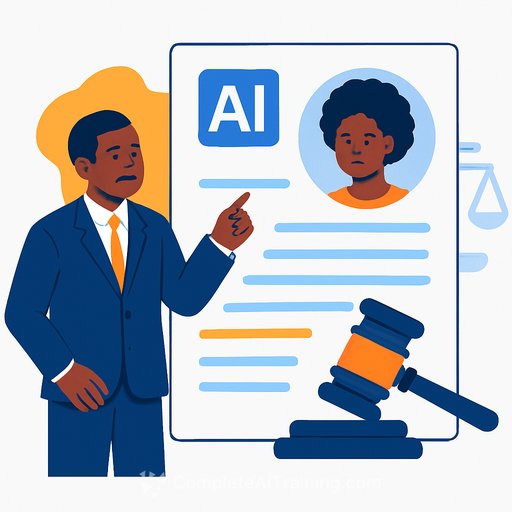
American companies using artificial intelligence to screen job applicants are running into tightening rules on both sides of the English Channel. Employment law firm Fisher Phillips warns that US employers with European operations can no longer treat AI-powered hiring software as a standard vendor product. The penalties for non-compliance are steep.
Regulators in the European Union and United Kingdom have moved aggressively to address automated hiring tools that can discriminate against candidates without detection. The rules differ between jurisdictions, but both require employers to understand how their systems work and prove they don't unfairly disadvantage protected groups.
The EU's High-Risk Classification
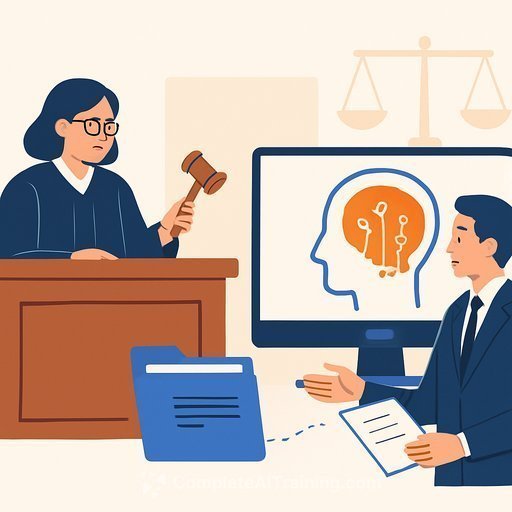
Under the EU's Artificial Intelligence Act, most hiring AI tools fall into the "high-risk" category. This includes software that screens resumes, ranks candidates, or evaluates performance. The classification triggers strict requirements: companies must document how their systems function, test them for bias, and ensure humans genuinely participate in final hiring decisions.
A 2023 European Court of Justice ruling known as the SCHUFA decision created a critical complication. The court found that an automated score itself can count as an automated decision if others rely heavily on it. For hiring, this means an AI-generated candidate ranking could be treated as a binding automated decision under EU law, even if a human manager technically makes the final call.
The UK's Different Path
The UK did not adopt the EU's framework. Instead, it updated existing privacy law through the Data (Use and Access) Act 2025, now being phased in. The law targets "significant decisions" made solely by automated means-a category that clearly covers AI-driven hiring.
The UK's Information Commissioner's Office has signaled it is monitoring closely. The regulator has raised concerns about hiring tools that disadvantage protected groups and expects companies to test for bias, explain their systems, and involve humans in decisions.
Four Steps US Employers Should Take Now
- Map all AI hiring tools. Identify which legal category each tool falls into in each jurisdiction where you operate.
- Demand and conduct bias testing. Require vendors to provide bias testing documentation, then conduct your own testing independently.
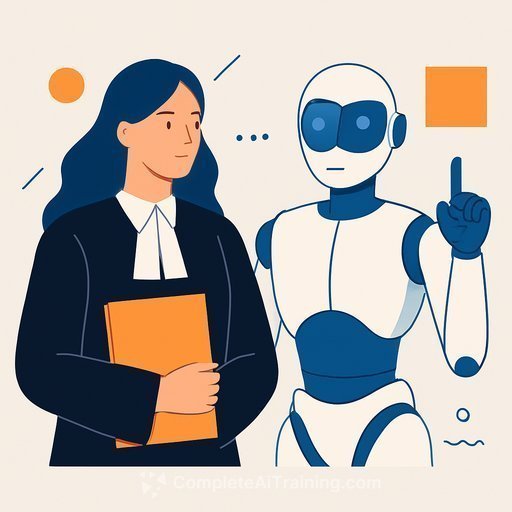
- Ensure genuine human override. Make sure human reviewers can actually override AI outputs rather than simply rubber-stamp them.
- Meet local notification requirements. Comply with transparency and consultation rules in Germany, France, Spain, Italy, Austria, and the Netherlands, many of which require consultation with workers' councils before deploying AI-based HR tools.
Fisher Phillips emphasizes that internal teams must understand how AI models were trained and how fairness is monitored over time. Treating these tools as opaque vendor products applied uniformly across subsidiaries is no longer viable.
Enforcement Is Coming
The UK's data law continues rolling out, with additional provisions taking effect in the coming months. The EU AI Act's obligations for high-risk systems are also being implemented in stages through 2026 and into 2027. Regulators have made clear that enforcement actions are forthcoming.
For US employers, the time to align hiring practices with these rules is now. Waiting until enforcement actions begin will be far costlier than adapting systems proactively.
For those responsible for legal compliance, understanding AI for Legal applications-including how AI compliance automation works-can help your organization stay ahead of regulatory requirements. Additionally, AI Learning Path for CHROs covers recruitment automation and compliance frameworks that HR leaders need to implement these changes effectively.
Your membership also unlocks: