EU opens antitrust probe into Meta's WhatsApp AI policy
At a glance
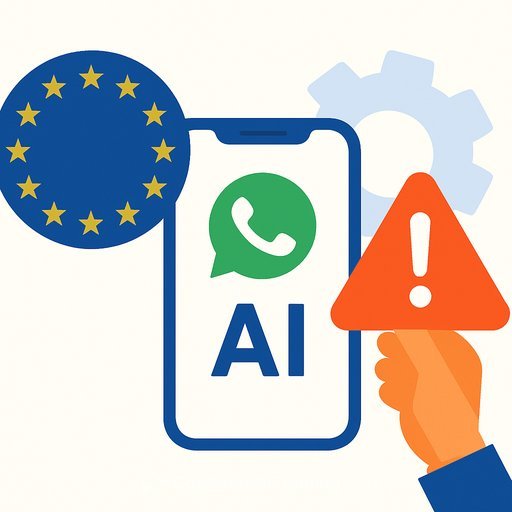
- The European Commission is investigating whether Meta's new WhatsApp policy restricts third-party AI providers in the EEA.
- Fines for antitrust violations can reach up to 10% of a company's annual global revenue.
- WhatsApp says the claims are "baseless," arguing its API isn't built for AI chatbots and adds strain to systems.
- The case excludes Italy due to a parallel national proceeding.
What triggered the case
In October, Meta updated its rules for the WhatsApp Business API. The policy prohibits AI providers from using the tool to contact customers if AI is their main service, though AI can still be used for functions like customer support.
Brussels is testing whether this setup shuts out third-party AI providers from offering services via WhatsApp across the European Economic Area. The question: does a dominant messaging gateway limit market access and tilt the field?
How Meta responds
Meta pushes back. "The claims are baseless," a WhatsApp spokesperson said, adding that the API wasn't designed to support AI chatbots and "puts a strain on our systems."
The company also argues the AI market is highly competitive and that people can reach AI services through app stores, search engines, email, integrations, and operating systems.
Why this matters for public bodies
WhatsApp is a critical communications channel for citizens and businesses. If platform rules restrict which AI services can connect, it can shape market entry, vendor choice, and how public-facing services evolve.
- Procurement and vendor choice: Watch for policies that could lock in specific providers or limit access to innovative tools your teams might trial.
- Interoperability: API terms can become de facto gatekeepers. Ensure contracts and pilots consider alternative channels beyond a single platform.
- Data protection and ethics: If AI is used for support or triage, verify data handling, consent, and audit trails-especially where WhatsApp interfaces with public services.
- Continuity risk: If rules change mid-deployment, services can break. Build contingency plans and avoid single-point dependencies.
The enforcement backdrop
The EU has stepped up actions against large platforms. Recent cases include a €2.95 billion fine for Google over online advertising, a €500 million fine for Apple related to anti-steering rules, and a €200 million fine for Meta over giving users a choice of a less data-intensive service.
Antitrust fines can reach 10% of annual revenue. Timelines are open-ended and often run for years.
This probe covers the whole EEA except Italy, where a national authority is already looking at Meta's conduct.
Political context
Transatlantic tensions have flared before. A previous U.S. administration threatened tariffs over EU actions against American tech firms following a Google fine, highlighting how competition enforcement can spill into trade politics.
What to watch next
- Any Commission requests for information, statements of objections, or interim measures.
- Whether Meta proposes commitments or adjusts WhatsApp API terms to address access concerns.
- Signals for other platforms that host third-party AI services, especially where messaging or APIs act as chokepoints.
- Guidance for public sector procurement to avoid lock-in and ensure multi-channel citizen service options.
Resources
EU competition policy overview: European Commission - Competition
Antitrust enforcement basics: Antitrust - Overview
If your team is evaluating AI for citizen services or internal operations, consider targeted upskilling to handle policy, procurement, and risk. See role-based options at Complete AI Training.
Your membership also unlocks: