EU Bans AI-Generated Content From Official Communications
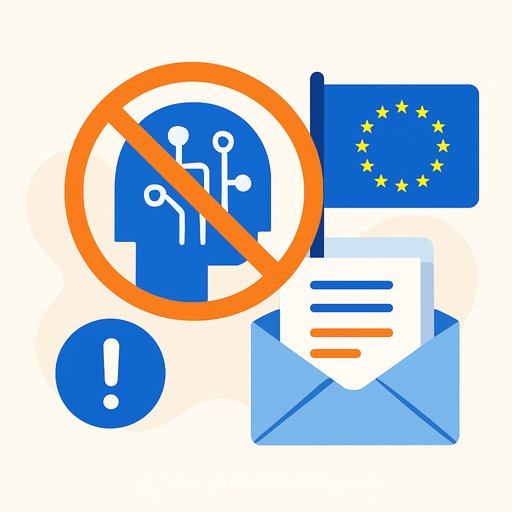
The European Commission, Parliament, and Council have prohibited their press teams from using fully AI-generated videos and images in official communications. AI tools may only be used to enhance existing visual material, such as improving image quality.
Commission spokesperson Thomas Regnier told Politico that maintaining "authenticity" is necessary to "foster citizens' trust." The European Parliament issued guidelines for staff emphasizing caution around generative AI's inherent risks.
A Different Approach Elsewhere
The EU's stance contrasts sharply with current practice in the United States. Donald Trump has used AI in 36 posts on Truth Social since his inauguration, including an image depicting himself as the pope and an AI-generated video about Gaza policy.
Within Europe itself, governments are deploying the technology differently. German Chancellor Friedrich Merz posted a deepfake video of himself dancing on Instagram to discuss AI risks and opportunities. Hungary's prime minister uses deepfake videos to criticize Brussels.
Experts Question the Ban
Several researchers argue the EU is missing an opportunity. Walter Pasquarelli, an adviser to the OECD and AI researcher at the University of Cambridge, said "responsible use beats abstinence." He noted the EU is "missing a leadership opportunity to demonstrate what responsible, transparent use of AI in political communication actually looks like."
Alexandru Voica from video generator Synthesia pointed to a practical concern: "How quickly and effectively you respond is now becoming more important than ever" during fast-moving crises. He also highlighted a regulatory contradiction-the EU's own AI Act requires AI-generated content to be watermarked and labeled. By using labeled synthetic content transparently, the EU could demonstrate to the public what compliant AI use looks like in practice.
For PR and Communications professionals, the debate raises questions about how to balance trust-building with operational efficiency as generative video tools become more capable.
Your membership also unlocks: