
AI news ·
EU proposes energy and water efficiency labels for data centers
EU data centers over 500 kW must disclose energy and water efficiency under proposed rules, as the bloc aims to triple capacity to 28 GW by 2030.
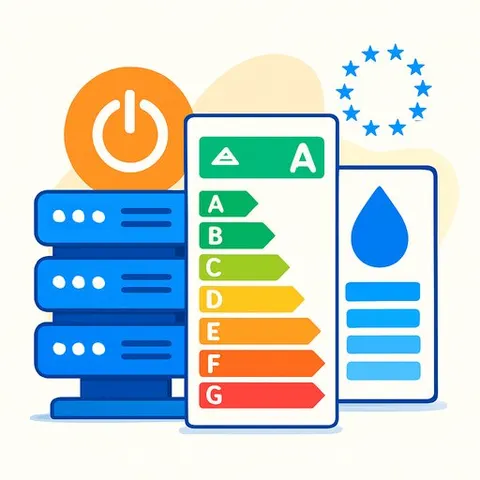
The European Commission proposed rules Monday requiring data centers across the bloc to disclose how efficiently they use energy and water. The labeling scheme targets facilities with capacity of at least 500 kW and arrives as the EU pushes to triple its data center capacity within seven years to support AI development and reduce reliance on US tech firms.
The proposal does not cap energy or water consumption. Instead, it forces operators to publish efficiency metrics through an EU-designed labeling system, making resource use visible to regulators, investors, and the public for the first time at scale.
What the label requires
Operators must disclose energy and water efficiency ratings, along with information on how their water use relates to local water stress levels. Facilities will also need to report whether they can support the surrounding energy system, for example by feeding waste heat into district heating networks.
The Commission said the label could serve as a precursor to mandatory minimum efficiency standards, which the EU is already developing. Data centers currently account for roughly 2.5% of EU electricity consumption, a figure expected to climb sharply as capacity more than doubles to 28 gigawatts by 2030, up from 12 GW last year.
EU countries and lawmakers have two months to object. If no objections are raised, the rules enter into force.
Pressure on grids and water supplies
The push to expand data center capacity comes with direct strain on infrastructure. Without controls, the Commission warned, the buildout risks stressing energy grids, depleting water resources, and raising CO2 emissions. The disclosure rules are the first step toward managing that load.
The scheme deliberately avoids hard limits. It relies on transparency and market pressure to nudge operators toward efficiency, rather than imposing penalties or caps on total power draw.
Why this matters for real estate and construction
Data center developers and the contractors who build for them will face new reporting obligations that affect site selection, design, and equipment choices. Facilities in water-stressed regions will need to document how they mitigate local resource pressure, which could shift project economics toward locations with reliable water access and grid capacity.
Waste heat reuse requirements could also change how data centers integrate with surrounding buildings. Projects designed to feed excess heat into district systems may gain an advantage over standalone facilities, creating new coordination demands between data center developers, municipal utilities, and commercial real estate owners.