
AI news ·
EVS uses video-based technology to track bird activity at solar energy facilities
EVS built an AI system that scans video footage from solar farms to track how birds move through and interact with the sites. The tool automates data collection that human observers couldn't keep up with at scale.
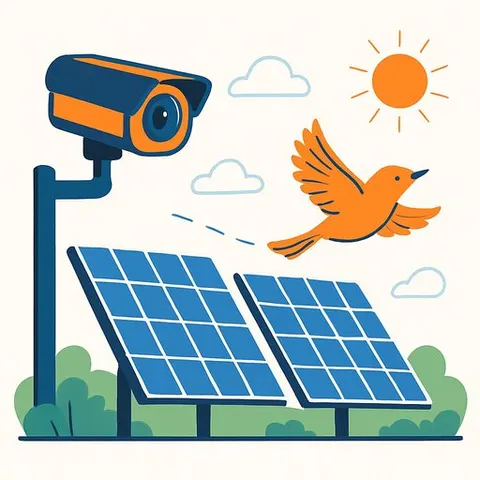
EVS Uses AI to Track Bird Activity Around Solar Facilities
EVS has developed an AI system that analyzes video recordings to monitor how birds interact with solar energy installations. The technology processes footage to identify bird activity patterns and assess potential impacts on bird populations near solar facilities.
Solar farms occupy increasing amounts of land, creating questions about their ecological effects. Birds may collide with equipment, alter flight patterns, or avoid areas where they previously foraged. Understanding these interactions requires collecting data at scale - something manual observation cannot efficiently provide.
The AI system automates this data collection by processing video feeds from solar sites. It identifies individual birds, tracks their movements, and logs behavioral patterns. Researchers can then analyze the aggregated data to determine whether specific solar facility designs or locations pose greater risks to bird populations.
This approach addresses a practical constraint in environmental research: the volume of video that facilities generate far exceeds what human observers can review. Automating the analysis makes continuous monitoring economically feasible for energy companies and researchers studying wildlife impacts.
The work sits at the intersection of renewable energy development and wildlife conservation. As solar capacity expands, data on actual bird interactions - rather than theoretical projections - becomes more valuable for siting decisions and facility design.