AI Is Shrinking the Old Edge of Law Degrees: What Smart Lawyers Do Next
A veteran of Google's early generative AI efforts warns that long academic tracks like medicine, law, and PhDs may not deliver the career security they once did. His point is simple: AI is moving so fast that by the time students finish, core tasks in these fields may look very different-or be done by software.
He isn't arguing against education. He's arguing against time lag. When training takes 7-10 years and tools change every quarter, the math stops working unless you adapt how you learn and work.
What This Means for Legal Professionals
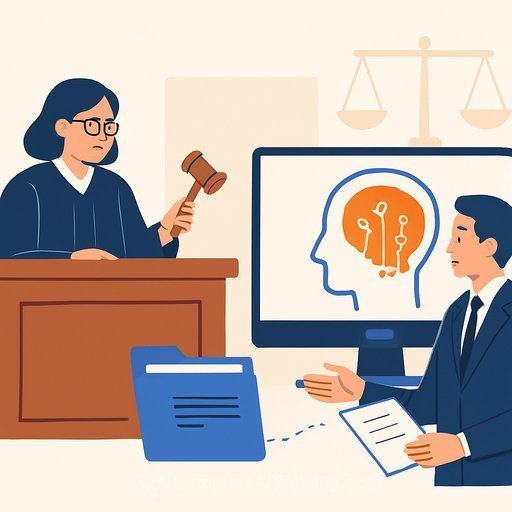
Law is directly in the blast zone. AI already handles large pieces of work that used to train juniors: contract analysis, legal research, document drafting, diligence, discovery review, and even billing audits.
If those rungs on the ladder compress, leverage shifts. Firms and in-house teams will favor fewer people who can set strategy, check AI outputs with precision, and build trust with clients who now expect speed without sacrificing judgment. Consider targeted AI for Legal training to build those supervising and verification skills.
Tasks Most Exposed in Law
- First-pass contract review, playbook tagging, and clause extraction
- Case law search, summarization, and citation suggestions - consider AI Research Courses
- Litigation discovery triage and privilege screening
- Drafting shells for NDAs, MSAs, cease-and-desist letters, and simple motions
- Compliance monitoring and policy comparisons against new regulations - see AI Regulatory Compliance Courses
The Skills AI Struggles to Replace
- Client counseling under uncertainty and reputational risk
- Negotiation that balances incentives, power, and timing
- Legal judgment on ambiguous facts and incomplete data
- Ethical decision-making and accountability
- Narrative building for courts, regulators, boards, and the press
- Cross-functional leadership with finance, product, security, and ops
Upgrade Your Practice in the Next 90 Days
- Audit your workflow: list repeatable tasks, time spent, error sources, and risk level. Mark what can be AI-assisted vs. human-only.
- Pilot 1-2 AI tools on low-risk use cases (e.g., clause comparison, case summaries). Write a one-page SOP for prompts, review steps, and sign-off.
- Create a quality-control checklist: sources verified, citations checked, client constraints applied, confidentiality preserved.
- Set a data policy: what can/can't be pasted into tools, approved vendors, and redaction rules.
- Price for speed: introduce fixed-fee packages for AI-accelerated work, keep hourly for high-judgment matters.
- Measure weekly: turnaround time, accuracy issues caught in review, client satisfaction, realization rate, and margin per matter.
For Law Students and Early-Career Lawyers
- Choose programs and clinics that use live AI systems, not just lectures. Look for real matters, real documents, real stakes.
- Stack modular skills: privacy, data security, prompt quality, tool evaluation, and audit trails.
- Build a small public portfolio: anonymized templates, research briefs, or checklists that show your process and judgment.
- Target employers with a clear AI policy, training plan, and guardrails. If they have none, ask to help build it.
Law Schools and Bar Training Need to Catch Up
Long blocks of rote memorization won't cut it. Curricula should pair black-letter law with system-level thinking: how AI tools generate outputs, where they fail, and how to verify them.
Ethical and technical competence already matter. See the ABA's guidance on technological competence under Rule 1.1 for context and expectations here.
The Counterpoint You Should Keep
Plenty of voices remind us that AI still lacks judgment, ethics, and accountability-the foundation of client trust. That's why oversight, documentation, and risk controls are non-negotiable.
If you're building policy, the NIST AI Risk Management Framework is a useful north star for process and controls. Start with the core functions and adapt them to legal workflows here.
Bottom Line for Legal Careers
The degree isn't the moat anymore. The moat is your ability to pair AI-assisted speed with human judgment, to design workflows clients trust, and to prove your results with clear metrics.
If you want structured upskilling paths that map to legal work, explore curated options by job role here. Keep learning cycles short, keep feedback tight, and keep your standards high.
Your membership also unlocks: