
AI news ·
Experts say healthcare AI failures stem from infrastructure and workflow gaps, not the algorithms themselves
Most healthcare AI tools show strong technical results but fail to deliver real clinical value. The gap isn't the algorithm-it's missing data infrastructure, governance, and workflow integration underneath it.
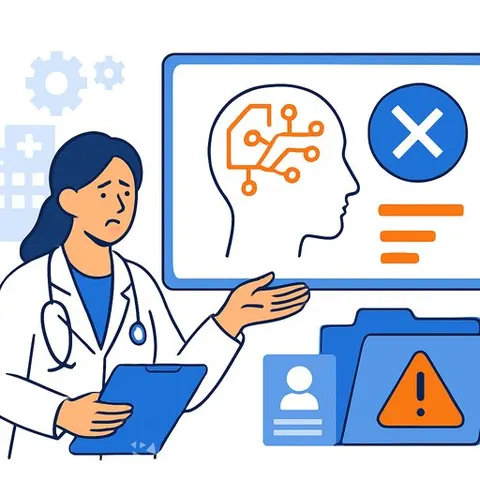
Healthcare's AI Problem Isn't the Algorithms
Healthcare organizations are deploying hundreds of AI solutions. Most show strong technical performance. Few deliver real clinical or operational value.
The gap between what AI can do in a lab and what it does in a hospital floor reveals a consistent pattern: the problem isn't the algorithm. It's everything built around it.
The Infrastructure Gap
Three independent experts identified the same core issue this week: health systems lack the foundational systems AI requires to function at scale.
Data standardization, interoperability, governance, security, and clinical workflow integration sit below the surface. They're invisible until they're missing. When they are, even sophisticated models fail to deliver results.
Models trained on clean datasets encounter very different conditions in live environments. Inconsistent coding, incomplete records, and fragmented data sources degrade performance quickly. Organizations hit a wall not because the AI doesn't work, but because the system around it isn't ready.
Most health systems haven't built the necessary infrastructure-reliable data architecture, governance frameworks, monitoring systems, and workflow integration-that AI requires to operate safely and effectively at scale.
The Workflow Problem
AI fails in healthcare when it arrives as a tool rather than a workflow.
Initial demonstrations create excitement. Pilots show strong results. But when the technology meets the reality of everyday work, output becomes inconsistent. It doesn't meet the requirements it was brought in to solve.
This is where trust erodes-before the technology's full value is proven.
What Needs to Happen
Health systems need to align AI implementation with actual clinical and operational requirements. That means building infrastructure first, then deploying solutions designed to integrate into existing workflows rather than disrupt them.
The work is less visible than algorithm development. It's also less likely to be funded. But without it, isolated proofs of concept remain isolated-and healthcare continues waiting for AI to deliver on its promise.
For healthcare professionals overseeing AI projects, the lesson is straightforward: assess your organization's readiness before assessing the tool. Data quality, governance, and infrastructure determine whether any AI solution succeeds or fails.