
AI news ·
Experts warn against using AI to prepare taxes over privacy and accuracy risks
AI chatbots pose real legal and security risks for tax filers, according to an MSU Denver accounting professor. Errors, data exposure, and wrong rules still leave the taxpayer liable - not the software.
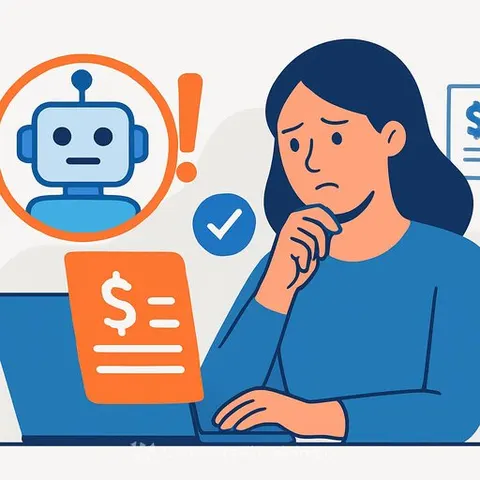
Tax Professionals Should Warn Clients Against Using AI for Returns
As Tax Day approaches, accounting professionals need to alert clients about the legal and security risks of using AI chatbots to prepare tax returns. An accounting professor at MSU Denver identifies three specific problems that could expose taxpayers to IRS liability.
Privacy and Data Security
AI chatbots cannot protect sensitive financial information. When taxpayers upload personal data to these tools, they lose control of that information and expose themselves to potential breaches.
Robert Persichitte, an accounting professor, said: "If you're disclosing information that you want to keep private and the AI can't do that, that's going to be a problem."
Incorrect Application of Tax Rules
Tax law changes annually and varies significantly based on individual circumstances. AI systems struggle to identify which rules apply to a specific taxpayer's situation.
Persichitte said the chatbots are "really bad at determining which set of rules apply." This becomes especially problematic when rules shift from year to year or when a taxpayer's situation is complex.
Fabricated Information and Errors
AI can generate plausible-sounding but completely false information on tax returns. These errors may be obvious or subtle enough to slip past initial review.
Taxpayers bear full legal responsibility for whatever appears on their filed return, regardless of whether AI generated it. The IRS will hold the taxpayer accountable in an audit - not the software vendor or the chatbot.
Persichitte said: "You're still responsible for what it's putting out. It doesn't matter if you have AI or not."
The Legal Bottom Line
A tax return is a legal document. The person who signs it assumes all liability for its accuracy and completeness. Using an AI tool does not transfer that responsibility.
For more on how AI tools function in professional contexts, see AI for Legal professionals and explore the AI Learning Path for Accountants.