Who Decides How America Uses AI in War?
Artificial intelligence has become central to national security decisions, yet the technology remains unpredictable, unregulated, and increasingly powerful. Experts are grappling with fundamental questions about governance as AI moves from research labs into military systems.
The challenge is not theoretical. Military planners are already deploying AI for targeting, logistics, and threat assessment. Unlike other dual-use technologies, AI systems can change their behavior based on training data and operating conditions-making it difficult to predict how they'll perform in the field.
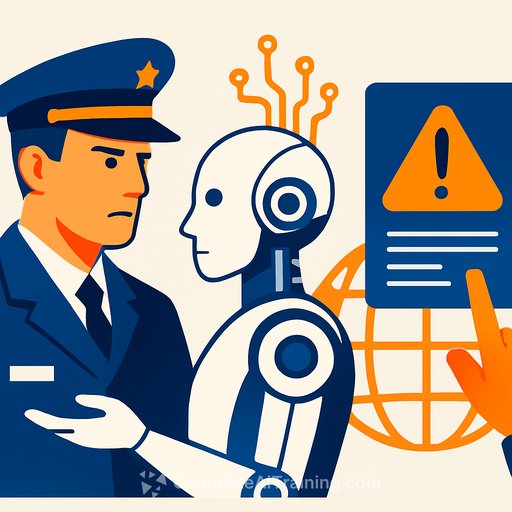
No single agency holds clear authority over how the U.S. military develops and deploys AI. The Department of Defense, Congress, intelligence agencies, and private contractors all have roles, but their responsibilities overlap and sometimes conflict. This fragmented structure means decisions about military AI often happen without comprehensive review.
Researchers working on AI governance say the core problem is speed. AI development moves faster than policy. By the time regulations are drafted, tested, and approved, the technology has already advanced beyond what those rules address.
The stakes extend beyond military effectiveness. Decisions made now about AI in warfare will influence how other nations develop their own systems. If the U.S. establishes norms for human oversight and transparency, other countries may follow. If it doesn't, the alternative is a race to deploy AI with minimal safeguards.
Some experts argue that military AI requires different governance than civilian AI. Others contend that the same principles-explainability, testing, human control-should apply across all high-stakes uses. The disagreement reflects deeper uncertainty about what accountability actually means when an AI system makes a decision.
Congress has begun holding hearings on the topic, but legislative action has been slow. Meanwhile, the military continues developing and testing new systems. The gap between policy and practice keeps widening.
For researchers and professionals working in this space, understanding these governance questions is increasingly important. AI for Science & Research covers how institutions are approaching AI development responsibly, which directly informs how military and national security applications should be managed.
Your membership also unlocks: