
AI news ·
FAA's reliance on spreadsheets slows aircraft certification as aerospace industry adopts AI
The FAA still tracks aircraft certification with spreadsheets and hard copies while Boeing, Airbus, and others use AI to speed development. Staff cuts under DOGE have made the delays worse.
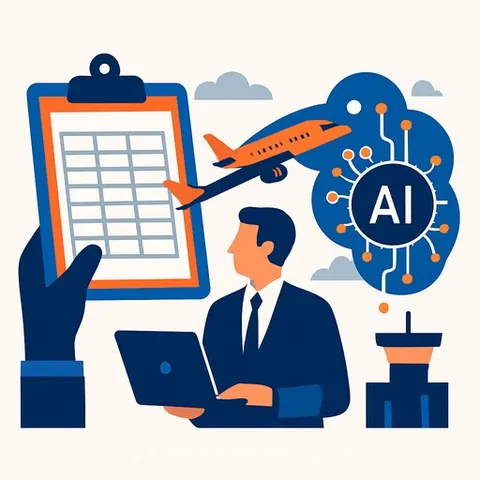
FAA's outdated systems create bottleneck as aerospace industry races ahead with AI
The Federal Aviation Administration lags far behind the aerospace industry in adopting artificial intelligence, creating certification delays that affect Boeing, Airbus, and smaller manufacturers alike. While companies use AI to accelerate aircraft development, the FAA still relies on spreadsheets and hard copies to track certification progress.
Staff cuts under the Trump Administration's DOGE policy worsened existing problems at the agency. The reductions hit not just air traffic control operations but also technical and maintenance teams, further slowing certification timelines.
Delays ripple across programs
Boeing faces the most visible delays, with certification of the 737-7, 737-10, and 777-9 stretched well beyond original schedules. But the problem extends across the industry.
IAI Bedek's 777-300ER passenger-to-freighter conversion ran roughly two years late in certification. Mammoth Freighters, a startup competing in the same space, received its supplemental type certificate in April-behind its 2025 target.
Engineering delays within companies and intellectual property licensing issues contribute to slower timelines. The underlying problem, however, is the FAA's technology gap.
Industry moving faster than regulators
Boeing's VP of Product Development Brian Yutko said the industry sits on the edge of an AI revolution. Pat Shanahan, a 30-year Boeing veteran and former deputy secretary of the U.S. Department of Defense, believes AI will be ready within 18 to 24 months to drive development of the next commercial airliner.
When Boeing, Airbus, GE, and Pratt & Whitney design new aircraft and engines, they count on AI to speed both development and certification. The FAA cannot match that pace with spreadsheet-based processes.
Conflicting regulations create additional problems that delay certification decisions.
Calls for FAA modernization
Delta Air Lines CEO Ed Bastian called on the FAA to adopt AI to address air traffic control problems. The agency faces growing pressure as eVTOL and unmanned aircraft companies seek certification-categories that require new regulations the FAA has not yet developed.
For IT and development teams at aerospace companies, the mismatch between internal capabilities and regulatory capacity creates real project planning challenges. Teams working on generative AI and LLM applications in aircraft design now outpace the certification infrastructure meant to validate their work.
The FAA's technology deficit directly affects how AI for IT & Development teams structure their workflows, forcing engineers to work around regulatory bottlenecks rather than through them.