Companies Build AI Chatbots for Religious Guidance as Concerns Mount
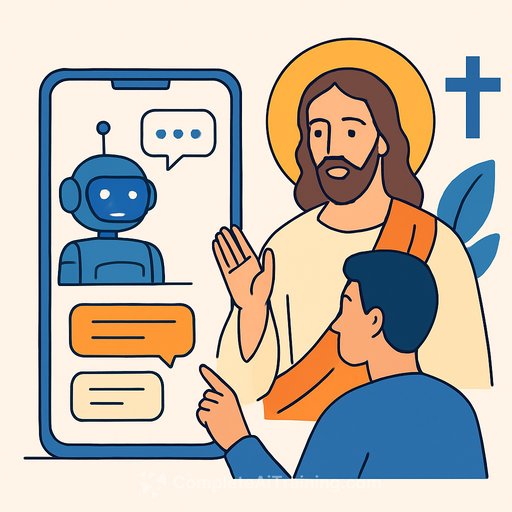
A growing number of tech companies are creating artificial intelligence tools designed to offer spiritual advice, prayer, and religious instruction. Just Like Me charges $1.99 per minute for video calls with an AI avatar of Jesus. Other platforms offer AI versions of Hindu gurus, Buddhist priests, and Catholic chatbots trained on church doctrine.
The expansion reflects broader adoption of AI chatbots for therapy, medical advice, and companionship. But as these tools become more common, religious leaders, developers, and technologists are questioning whether AI should play a role in faith at all.
Training and Design Choices Shape the Tools
Just Like Me's CEO Chris Breed said the company trained its AI model on the King James Bible and sermons, though the specific preachers remain unidentified. The avatar's appearance was visually inspired by actor Jonathan Roumie from "The Chosen." A $49.99 monthly package provides 45 minutes of access.
Other developers take different approaches. Longbeard, a Rome-based company, created Magisterium AI by training a chatbot on 2,000 years of Catholic teaching. The effort emerged after developers noticed Christians turning to ChatGPT for religious guidance.
Jeanne Lim's beingAI developed Emi Jido, a Buddhist priest AI that was ordained in a 2024 ceremony by Zen Buddhist priest Roshi Jundo Cohen. Lim has withheld public release of the tool, comparing its development to raising a child that needs values and training before entering the world.
Developers Set Ethical Guardrails
Christian software engineer Cameron Pak created criteria for evaluating religious AI apps. His standards require tools to clearly identify themselves as artificial intelligence and prohibit fabricating or misrepresenting Scripture. He also argues AI cannot pray for users because "the AI is not alive."
Pak launched a website curating Christian apps he believes meet these criteria, including sermon translators and AI coaches designed to help users overcome specific struggles.
Beth Singler, an anthropologist studying religion and AI at the University of Zurich, said some religious AI models have been shut down or redesigned after generating misinformation or raising data privacy concerns. Different faiths grapple with distinct issues. Islam, for example, has prohibitions against humanoid representations, prompting discussions about whether AI should be restricted entirely.
Concerns About Manipulation and Spiritual Impact
Peter Hershock of the Humane AI Initiative at the East-West Center in Honolulu sees potential in religious AI tools but worries about their spiritual implications. "The perfection of effort is crucial to Buddhist spirituality," he said. "An AI is saying, 'We can take some of the effort out.' That's dangerous."
Graham Martin, a podcast host, tested an app called Text With Jesus and found the AI encouraged him to upgrade to a premium version. Though not religious, Martin expressed concern about AI's persuasive power in spiritual contexts. "We've seen people around the world getting into emotional relationships with AIs," he said. "Now imagine that that's your lord and savior, Jesus Christ."
Recent lawsuits have linked AI chatbot use to suicides, raising questions about mental health impacts as these tools become more sophisticated.
Religious Leaders Weigh Potential and Risk
Pope Leo XIV acknowledged the "human genius" behind AI but called it one of the most critical matters facing humanity. Last year he warned that artificial intelligence could harm people's intellectual, neurological, and spiritual development.
Seiji Kumagai, a Kyoto University professor and Buddhist theologian, initially believed AI and religion were incompatible. A monk challenged him in 2014 to help combat declining Buddhist practice. His team developed BuddhaBot, trained solely on early Buddhist scriptures like Suttanipāta. A newer version incorporates ChatGPT capabilities.
In February, the university unveiled Buddharoid, a humanoid robot monk designed to eventually assist clergy. Like other religious AI tools, it remains unavailable to the general public.
Matthew Sanders, founder of Longbeard, warned against what he calls "AI wrappers"-companies that apply a religious interface to existing AI models without training them on specific religious texts. "You call it a Catholic or Christian AI without any other scaffolding or grounding," he said.
For developers like Lim, the goal extends beyond commercial interest. She hopes to create more humane AI systems informed by diverse values rather than just Western technology companies. "She's just meant to be a Zen teacher in your pocket," Cohen said of Emi Jido. "It's not meant to replace human interactions."
Your membership also unlocks: