
AI news ·
FAMU journalism dean defends AI ethics education as preparation, not fear
FAMU's journalism school teaches students to critically evaluate AI tools, not avoid them. Student skepticism of newsroom AI is a professional asset, not a sign they're unprepared.
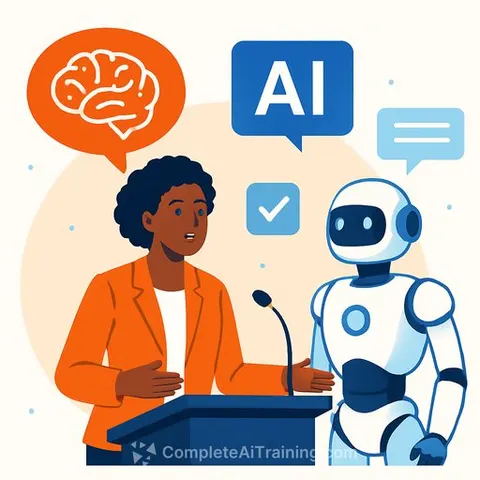
Journalism Schools Teach AI Ethics, Not Fear of the Future
Florida A&M University's School of Journalism & Graphic Communication is preparing students for newsrooms that use AI - not by avoiding the technology, but by teaching them to evaluate it critically.
The approach pushes back against a narrative that journalism education lags behind industry. An editor at the Cleveland Plain Dealer recently argued that journalism schools teach "fear of the future," citing students who question newsroom reliance on AI tools. The reality is different.
How FAMU Teaches AI in Journalism
Fundamentals come first. Verification, research, and reporting remain nonnegotiable. Students produce work across platforms and deadlines that mirror real newsrooms.
When AI tools enter the classroom, they do so with guardrails. Instructors use ChatGPT and other generative AI assistants to support idea generation, structure testing, and analysis. Students learn to trace sources, challenge outputs, and identify hallucinations. The tools assist the work - they don't replace human judgment.
Students also learn AI as interdisciplinary literacy. Journalism now intersects with data, design, and public policy. Graduates must understand not just how tools work, but their civic implications: bias, privacy, labor, and algorithmic reach.
Skepticism Is a Job Asset, Not a Liability
When students question AI in newsrooms, they're not expressing fear. They're exercising the instincts that strengthen journalism.
A recent Poynter.org article found that journalism students are more skeptical of AI than commonly assumed. There's no evidence this skepticism hurts their job prospects. In fact, employers increasingly want journalists who can evaluate AI rather than blindly adopt it.
The skepticism mirrors concerns inside newsrooms themselves: accuracy, bias, transparency, and trust.
What Newsrooms Should Do
Journalism leaders can strengthen this preparation by partnering with schools. Share what works and what doesn't. Co-develop transparency norms. Pilot AI workflows with students in internships and capstones.
The result will be graduates who are tech-literate, ethically grounded, and ready to lead.
Students aren't afraid of the future. They're ready to shape it. The responsibility of both classrooms and newsrooms is to ensure the tools adopted strengthen public trust.
For writers entering the profession, that means learning AI as a tool for better reporting - not as a replacement for the judgment that makes journalism matter.