Where Is the A.I.-Driven Scientific Progress? A Field Guide for Working Scientists
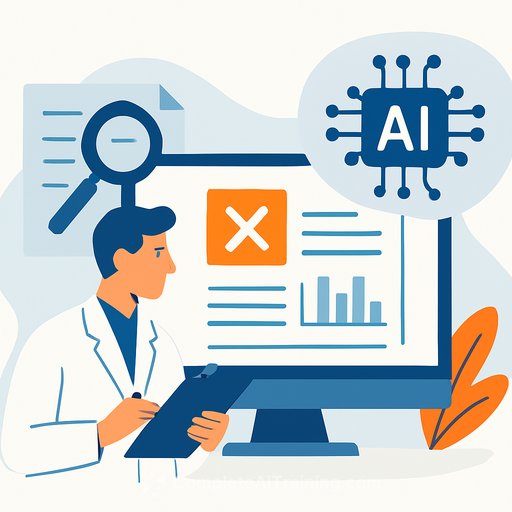
A.I. is finally useful in the lab-but not in the way the keynote slides promised. Tools like Kosmos (from Edison Scientific) can compress months of analysis into a single overnight run. They won't cure disease by themselves. You still need experiments, humans, and time.
What an "A.I. Scientist" Actually Does
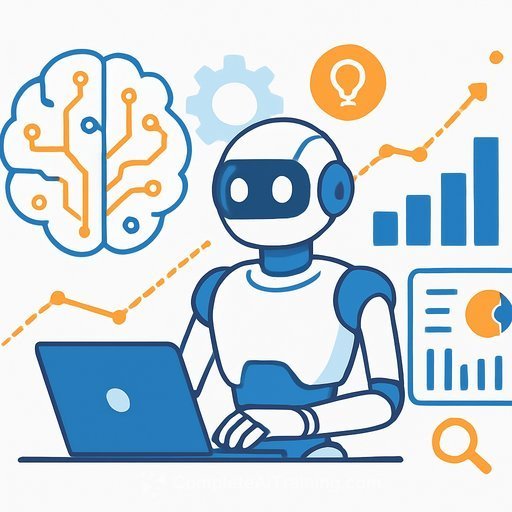
Kosmos takes a clear research objective, disappears for ~12 hours, and returns with code, analyses, and a structured report. Under the hood, it orchestrates many agents across models from several providers plus task-specific models, all writing to a shared "world model" so context isn't lost mid-run.
In one run, it may write ~42,000 lines of code and scan ~1,500 papers. Results land around "smart Ph.D." level: deep, often right, sometimes wrong. Cost per run sits around $200 promotional-small compared to generating a modern dataset.
Where It Helps Today
Most value is in step three of science: reasoning over existing data to find mechanisms, signals, and hypotheses you'd otherwise miss or get to much later. Teams have seen Kosmos replicate months of work overnight and surface entirely new leads.
Example: mechanism finding for a Type 2 diabetes variant outside a gene, mapping a binding protein to gene expression and a plausible insulin secretion link (SSR1). It's the kind of thing a human would find, just much faster. And yes-you still validate.
What It Doesn't Fix
The bottleneck in medicine is still clinical translation. Manufacturing, patient recruitment, site activation, dosing, and waiting for endpoints all take time. Even with no regulation, biology in humans moves on human timelines.
If you want a refresher on why this is slow, see the FDA's overview of clinical trials phases: Clinical Trials: What Patients Need to Know.
What's Actually Hot (and Useful)
Generative models for biology are real progress. Protein structure prediction and design keep improving, and de novo antibody design is moving from promise to practice. The idea: define a target, get candidates that meet spec, iterate in the wet lab.
For a primer on structure work, see DeepMind's summary of AlphaFold: AlphaFold. It's not a cure button, but it's a reliable accelerant for design space exploration.
Reliability: Treat It Like a Smart but Fallible Colleague
These systems get a lot right and some wrong. The fix isn't blind trust; it's a validation pipeline. Checking is cheaper than producing from scratch, so build a loop: propose → test → tighten.
Keep some "noise" in the process. Serendipity still matters. A small dose of off-distribution exploration prevents overfitting to your priors and the model's.
Adoption Reality in Labs
Most labs still run core protocols the same way-they work, and changing them risks breaking experiments. Where adoption is already strong: AI Coding tools (coding co-pilots) for analysis, and literature triage. Agentic systems like Kosmos are early but gaining ground as success stories compound.
A Practical Playbook for R&D Teams
- Start with analysis, not discovery theater: Give agents your toughest, already-funded datasets. Ask for mechanisms, stratifications, and "what did we miss?"
- Define decision-grade outputs: What counts as a "finding"? Predefine effect sizes, controls, and reproducibility checks.
- Build a validation lane: Automate re-analysis where possible, then push to quick-turn wet-lab or orthogonal datasets. Track hit rates per category.
- Codify prompts and SOPs: Standardize research objectives, data schemas, and run templates. Store results in a shared, queryable repo.
- Budget and guardrails: Treat agent runs as experiments with owners and caps. Require a preflight checklist to avoid expensive typos.
- Data governance: Classify datasets, control access, and log model usage. Be explicit about IP handling and publication plans.
- Measure what matters: Time-to-insight, cost per validated finding, replication rate, downstream impact on study design or portfolio decisions.
Benchmarks That Actually Drive Progress
Math benchmarks are clean, and that's why labs love them. Biology is messy, so create your own internal benchmarks that correlate with business and scientific impact.
- Hypotheses generated per dataset, and percent validated
- Reduction in time from data acquisition to preprint-ready results
- Number of trial design changes driven by model insights
- New targets advanced to wet-lab based on agent work
Timelines: Ambitious but Sane
"Cure most diseases in a decade" ignores clinical time constants. A more credible view: huge gains in understanding and design in the next 10 years; bigger translational wins compounding over 20-30. Expect agents to generate a large share of high-quality hypotheses by 2027. Trials will still take the time they take.
Choosing Where to Point A.I. in 2026
- High-signal data mines: Multi-omics, longitudinal cohorts, and high-content screens already on your servers.
- Mechanism mapping: Variant-to-function, pathway inference, and patient stratification where prior attempts stalled.
- Design loops: AI Design for antibodies, binders, and small libraries where you can iterate quickly in the lab.
- Protocol codification: Turn your lab's tribal knowledge into runbooks agents can follow and extend.
Bottom Line
A.I. can turn the analysis bottleneck into a throughput advantage. Use it to choose better experiments, write stronger protocols, and retire weak hypotheses earlier. Keep your validation tight, your metrics honest, and your expectations grounded in biology, not demos.
Further Learning
Your membership also unlocks: