How Artificial Intelligence Is Transforming Legal Research and the Modern Legal Profession
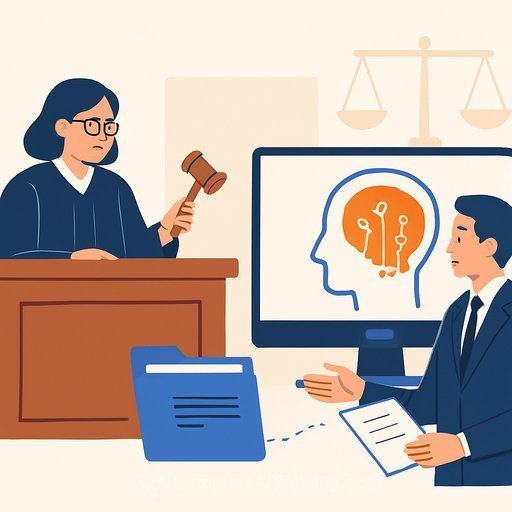
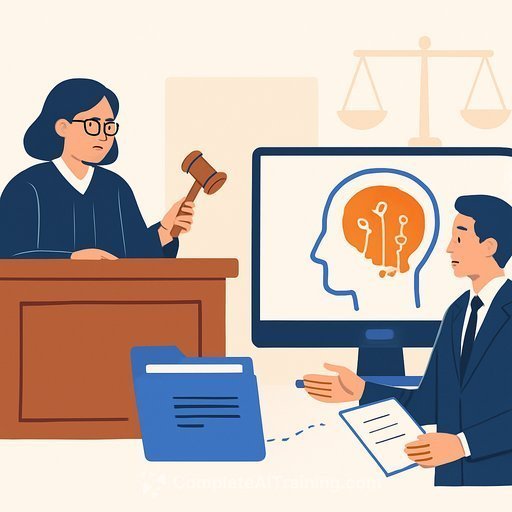
AI is changing how legal teams research, draft, review, and advise. The work gets faster and more consistent, but judgment, ethics, and accountability stay with humans.
For lawyers, the takeaway is simple: treat AI as a capable assistant, not a decision-maker. Use it to improve clarity, speed, and client value-while you remain responsible for the outcome.
Legal research: the foundation, updated
Legal research is the structured process of finding and applying the right authorities-statutes, rules, case law, constitutional provisions-and validating them against the current position of law.
It goes beyond searching databases. The job is to identify controlling principles, select persuasive precedent, and build arguments that stand up in court or scrutiny. Accuracy and clarity win cases and protect clients. For practical courses on AI-enabled research workflows, see AI Research Courses.
What AI actually is (and is not)
AI refers to systems that learn from data, interpret language, and make predictions using methods like machine learning and natural language processing. Tools range from research platforms and classifiers to generative systems that draft and summarize.
AI does not replace a lawyer's role. It speeds up the heavy lifting-pattern-finding, summarization, document review-so you can focus on strategy, advocacy, and ethics.
Where AI is already useful in law
- Legal research and e-discovery: Find relevant authorities and scan large document sets quickly.
- Document drafting and automation: Create first drafts of agreements, notices, and clauses from templates and past matters.
- Predictive analysis: Surface patterns from prior rulings, judge behavior, and fact profiles to assess risk.
- Legal review and summarization: Condense lengthy judgments, depositions, and due diligence packs.
- Case and practice management: Organize tasks, deadlines, and knowledge bases with AI-assisted tagging.
- Client communication: Explain procedures in plain language, triage queries, and schedule with virtual assistants.
- Legal information dissemination: Keep teams current with alerts and curated updates.
How this changes daily practice
Research that took hours can take minutes. First drafts arrive faster and with fewer formatting errors. Document reviews surface red flags early.
The result: better compliance, more consistent advice, and lower costs-especially valuable for smaller firms competing with larger teams.
Practical workflows you can use now
- Research accelerator: Start with an AI search to map issues and key authorities, then verify every citation and holding manually.
- Draft-and-refine: Use AI to generate a draft based on your template and facts, then revise for legal sufficiency, tone, and risk.
- Contract review triage: Run a rapid issue-spotting pass to flag clauses, then perform a human-led review on high-risk sections.
- Litigation planning: Use analytics to estimate timelines and outcomes ranges; set client expectations and budgets accordingly.
- Client education: Deploy a guided Q&A for common processes (filings, onboarding) and keep complex advice human-led.
Benefits worth noting
- Time savings: Faster research, drafting, and review means more time for strategy.
- Cost control: Lower review hours make services more accessible and predictable.
- Quality and consistency: Fewer clerical errors, better version control, and standardized language.
- Access to justice: Basic guidance and intake tools help more people get help sooner.
- Competitive parity: Smaller teams can use advanced tools once limited to big firms.
Limits and risks you must manage
- Lack of human judgment: AI cannot weigh equity, empathy, or context like a lawyer can.
- Bias and fairness: Models can mirror biases in training data; outputs require review.
- Opacity: Some systems are "black boxes," making reasoning hard to audit.
- Data privacy and confidentiality: Sensitive material must stay protected; disable training on client data.
- Skill atrophy: Over-reliance can weaken core research and writing skills.
- Workforce impact: Routine work compresses; training paths for juniors may need rethinking.
Ethics and compliance checkpoints
Competence now includes understanding relevant technology. Review how your jurisdiction interprets this duty.
For reference, see the ABA's guidance on technological competence under Rule 1.1, Comment 8 here, and consider the NIST AI Risk Management Framework here for practical risk controls.
Adopt AI responsibly: a simple playbook
- Set policy: Define approved tools, acceptable use, and review standards. Log tool versions and prompts for significant matters.
- Protect data: Use enterprise plans, turn off training on client inputs, and segregate confidential material.
- Verify sources: Require citation checking and case validation in authoritative databases before filing or advice.
- Evaluate tools: Assess accuracy, auditability, data handling, jurisdictional coverage, and vendor security.
- Train your team: Teach prompt discipline, red-teaming, and common failure modes; pair juniors with reviewers.
- Disclose wisely: Where required or appropriate, inform clients how AI assists your process and how you supervise it.
- Measure ROI: Track time saved, error rates, and client satisfaction; keep what works, drop what doesn't.
If you need structured upskilling for staff, explore AI resources for legal professionals at AI for Legal.
Bottom line
AI improves speed, consistency, and access to legal services. It does not replace human judgment, strategy, or ethics.
The best firms will pair strong legal minds with disciplined AI workflows. Technology supports the work; lawyers remain accountable for justice and outcomes.
Your membership also unlocks: