The F Word: Creatives' Relationship with AI
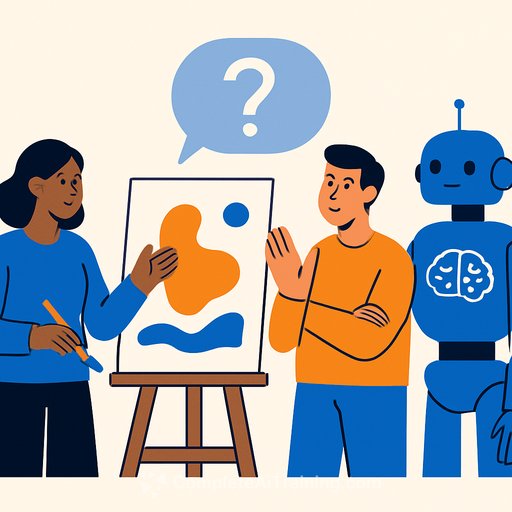
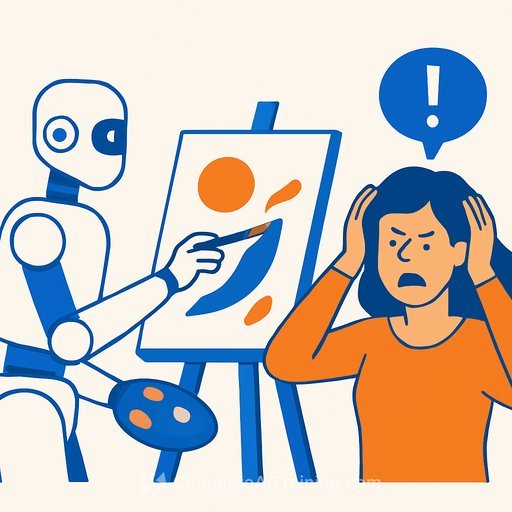
A copywriter once asked in a brainstorm, "If I'm not polite to the robot, am I first to go when they take over?" We laughed, but the subtext was real. Under the jokes sits a quiet tension: will this tech replace me, make me slower, or make me invisible?
Inside agencies like john st. and T&P in Toronto (part of the WPP network), that tension spiked when WPP's Open landed on our desks. Curiosity turned into unease. Unease turned into one clear signal: fear.
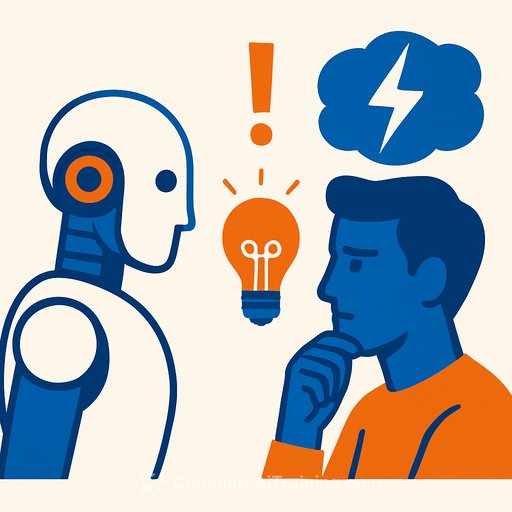
Fear isn't the enemy. It's a creative brief.
The best work often starts with a real risk, a real loss, or a real "what if." Fear, pointed in the right direction, becomes a mechanism. It sharpens the problem, speeds up decisions, and gives your idea something to push against.
- Equality and visibility: PFLAG Canada's "Nobody's Memories" came from the fear of never being seen as equal.
- Climate urgency: HP's "Plant a Tree with Jane Goodall" was a response to the fear that we're running out of time.
- Brand erosion: lululemon's "dupeswap" faced the fear that copycats could overshadow the original.
- Political stakes: Equality California's "The Fight" answered the fear of a future headed in the wrong direction.
- Sports heartbreak: Home Hardware's "Home Team" played with the fear the Blue Jays might fall short.
In each case, fear wasn't a blocker-it was a brief. It gave the creative work urgency and direction.
Turning AI fear into an advantage
Open (or any AI tool) doesn't replace taste, instincts, or craft. It accelerates options and reveals blind spots-if you set the rules and stay in the driver's seat. Here's a simple playbook that teams can use on their next brief.
- Name the fear: Write the worst-case "what if" at the top of the brief. Make it a constraint, not a shadow.
- Set guardrails: Define tone, brand truths, must-haves, and no-gos before you ask the model for anything.
- Treat AI like a sharp intern: Ask for 10 routes, critique them, then request improvements on the top 2. Your taste is the filter.
- Speed up research: Use it to outline audience tensions, cultural references, and category tropes. Then verify with your own sources.
- Externalize the vision: Prompt for moodboard descriptors, shot lists, alt headlines, and story beats to align stakeholders fast.
- Force divergence: Brief for opposing directions (premium vs. playful, macro vs. intimate) to avoid sameness.
- Bias and safety check: Scan outputs for stereotypes, unlicensed IP, and shaky claims. A simple checklist saves you later. For practical guidance, see the NIST AI Risk Management Framework overview.
- Build the loop: Keep a shared prompt library, version ideas, and note what actually shipped.
Prompts you can steal
- "Act as an award-winning strategist. List the top 10 audience tensions for [brand] in [category], with one-line evidence and cultural proof points."
- "Give me 12 headline routes for [idea] in [tone], each with a distinct hook, plus 2 surprising outliers."
- "Write a moodboard description and shot list for a 30s spot that feels [emotion], uses [visual motifs], and avoids [no-gos]."
- "Rewrite this script for [platform] with a 3s hook and a clear CTA by second 12."
- "List the strongest counter-arguments to this idea and suggest fixes without changing the core insight."
Make fear safe-and useful
A creative leader's job is clarity and energy, and to build a culture where people feel safe enough to push. That starts by making fear visible and putting it to work.
- Fear check-in: 60 seconds at kickoff-what are we afraid of? Turn each fear into a question for the brief.
- AI studio hours: Weekly, team-run sessions to test prompts, share wins, and flag risks.
- Decision rules: Define when human judgment overrules AI output. Write it down.
- Win wall: Post examples where AI saved time, revealed a blind spot, or sparked a better path.
Want structured upskilling?
If your team needs a guided path to build these skills without losing your voice, explore curated AI courses by role and skill here: AI courses by job.
The takeaway
Fear isn't going away-and that's useful. Use it to sharpen the brief, speed the work, and keep your taste at the center. Be polite to the robot if you want, but the real edge is clear thinking, tight guardrails, and a team that knows how to turn tension into ideas worth shipping.
Your membership also unlocks: