Federal Agencies Using AI Face Privacy Gaps, Report Finds
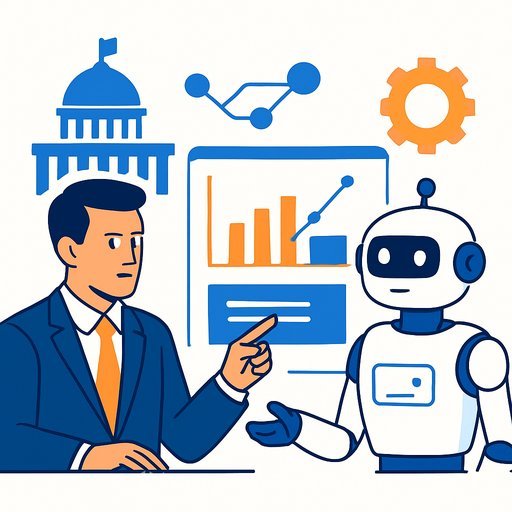
The federal government is deploying artificial intelligence to handle customer service and hiring decisions-the IRS uses AI chatbots to answer tax questions, and the Office of Personnel Management uses AI to match job candidates with positions. But the same tools that speed up government services create new risks to the sensitive personal data agencies collect, according to a recent government report.
Federal agencies hold extensive records on Americans: tax information, bank account details, Social Security data, student loan histories. When agencies feed this data into AI systems, the technology can expose information in ways the original data collection never anticipated.
How AI creates privacy risks
AI can cross-reference multiple datasets to infer sensitive information about people, even when that information isn't explicitly stored. A school district discovered this last year when an AI system designed to monitor devices for threats accidentally exposed thousands of students' private data to reporters because the district hadn't secured the information properly.
Agencies can also repurpose data beyond its original intent. Tax return information, for example, could be used by businesses to target marketing at specific income levels.
AI systems also generate false information-deepfakes and inaccurate outputs known as "hallucinations"-which compounds the risks when handling personal data.
Current protections fall short
The Office of Management and Budget has issued guidance for federal agencies on protecting privacy when using AI. But the guidance doesn't require agencies to assess privacy risks before deploying AI systems with sensitive data, nor does it identify best practices or tools to enhance privacy protections.
Separating sensitive data from the large datasets AI systems use remains a practical challenge. Even when agencies implement protections, they often lack ways to measure whether those protections actually work.
Learn more about AI for Government and how agencies are addressing these issues, or explore how AI Data Analysis affects privacy when processing government datasets.
Your membership also unlocks: