
AI news ·
Federal Reserve outlines AI risks and oversight approach for US banks
The Federal Reserve is building an AI supervision framework for banks, focused on risk management rather than limiting adoption. Regulators are scrutinizing credit decisions, vendor tools, and whether existing guidelines still apply.
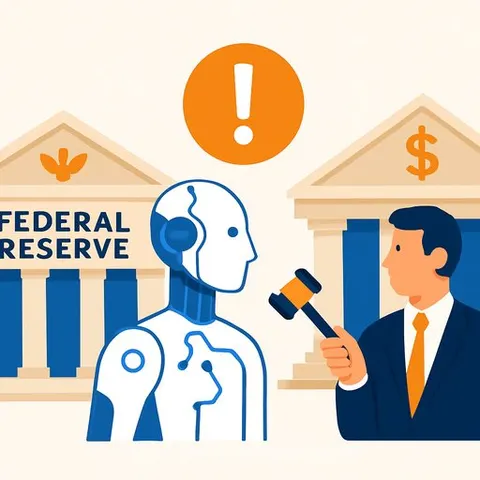
Federal Reserve Maps Out AI Supervision for Banks
The Federal Reserve is developing a supervisory framework for artificial intelligence in financial institutions, focusing on risk management rather than restricting adoption. Michelle W. Bowman, the Fed's vice chair for supervision, outlined the approach at a Financial Stability Oversight Council roundtable in Washington, D.C.
Banks are already deploying AI across operations-from credit modeling to enterprise-wide tools. Bowman acknowledged the efficiency gains but emphasized that supervisors must ensure banks understand and mitigate the risks.
The Dual Nature of AI Risk
AI creates a paradox for financial institutions. The same technology that identifies cyber vulnerabilities can be exploited to attack them. The same tools that improve operational speed can introduce model failures or data quality problems.
"Our approach should support banks in implementing AI tools safely, effectively, and efficiently," Bowman said. The Fed is not blocking AI use; it's pushing institutions to apply existing risk-management frameworks to new tools.
Questions the Fed Is Asking
Supervisors are examining specific deployment details:
- Will AI handle material tasks that directly affect customers, such as credit decisions?
- How many employees will access the system?
- What third-party risks come with vendor-provided tools?
- Which model risk management standards should apply?
These questions matter because AI failures in credit decisions or fraud detection carry direct consequences for consumers and financial stability.
The Supervisory Guidance Gap
Bowman signaled that current regulatory guidance may not be sufficient. Banks are relying on existing frameworks designed before large-scale AI deployment, and the Fed is assessing whether those frameworks need updating.
The challenge is timing. AI capabilities evolve faster than regulatory guidance can. The Fed must balance enabling innovation with preventing institutions from deploying untested systems into critical financial processes.
International Coordination
The Fed is working with international regulators to ensure consistent standards across major financial systems. Bowman chairs the Financial Stability Board's committee on supervisory cooperation, which is addressing how different countries approach AI regulation in finance.
Inconsistent rules could push banks toward jurisdictions with lighter oversight or create competitive disadvantages for institutions in stricter regimes.
For finance professionals, the message is clear: AI adoption will continue, but under closer scrutiny. Organizations should document their use cases, assess third-party vendor risks, and ensure governance structures match the scope of AI deployment. The Fed is signaling that banks demonstrating thoughtful risk management will face fewer obstacles.
Learn more about AI for Finance or explore the AI Learning Path for CFOs to understand regulatory expectations and implementation strategies.