FedEx's AI-Native Bet: Super Humanoid Robots, Data Discipline, and a Leaner Network
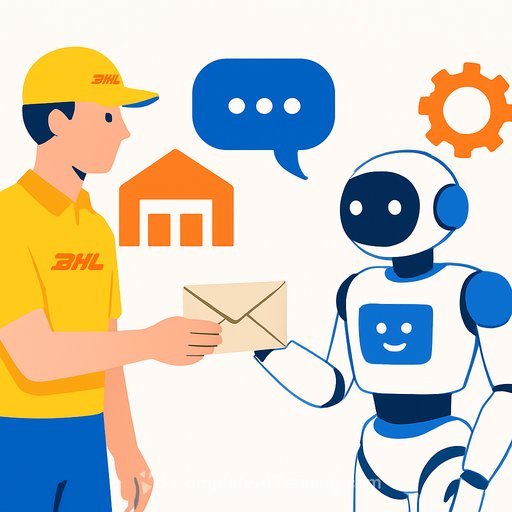
FedEx CEO Raj Subramaniam isn't chasing sci-fi. He's asking for "super humanoid robots" with extra degrees of freedom to load and unload trucks-because packages don't show up uniform, and the dock is where automation usually breaks.
His take is straightforward: demand is high, the network is complex, and the current toolset isn't enough. So he's pushing AI for Operations across the system while admitting the obvious-"We're in the pilot stage. It is not ready for prime time yet."
Why "super humanoid" robots matter
Traditional industrial arms struggle at the dock. Packages vary in size, shape, and weight. The robot needs more "elbows," more joints, more reach, and smarter perception to handle the chaos.
That's the thesis behind Subramaniam's ask. Not just humanoids-super humanoids. More motion options. Fewer edge cases. Better throughput.
Inside the AI-native playbook
FedEx is deploying AI-powered robotics in hubs-systems like those from Dexterity AI-to sort and load with higher consistency. Early results: trailer utilization up to 13% and sorting accuracy above 99%.
In parallel, machine learning models analyze traffic, weather, and constraints in real time. The outcome is simple: tighter ETAs and delivery times cut by up to 20% in some lanes.
If you move 17 million packages a day, small percentage gains compound fast.
Data is the constraint-and the advantage
Subramaniam is blunt: "The fuel for AI is data." The company's network generates multiple petabytes daily. That data only pays off if it's clean, connected, and queryable by design.
That's the quiet work beneath the robots-standardizing data models, building feedback loops, and closing the gap between planning and operations. Teams focused on data pipelines and model ops can benefit from targeted training like the AI Learning Path for Data Scientists.
Operating model shift: efficiency over volume
Since 2022, FedEx has moved from "growth at all costs" to a unified, efficiency-first model. Express, Ground, and Freight are being consolidated to cut duplication, stop redundant routes, and streamline the spine of the business.
The target: up to US$12B in annual savings by 2027, plus an additional US$4B cost-cutting program. The focus is clear-profitable deliveries, fewer handoffs, fewer facilities doing the same job.
Context: automation hype vs. practical rollout
Elon Musk has argued that advanced humanoid robots could reduce the need for a human workforce entirely. Subramaniam is taking the nearer path: automate the bottlenecks that move the P&L, keep pilots tight, and scale what works.
The dock, the sort, the route-fix those and the rest follows.
Executive takeaways
- Target high-variance work first. Loading and unloading are the right proving grounds for AI robotics.
- Make data the product. Without clean, unified data, your AI roadmap hits a ceiling fast.
- Pilot with operating KPIs. Measure trailer fill, error rates, rework, and on-time performance-not just demos.
- Unify the network before you scale tools. Eliminate overlaps so automation lands on a stable footprint.
- Expect staged ROI. Accuracy and utilization gains show up early; labor and facility savings follow consolidation.
Risks and near-term realities
- Robotics at the dock is still maturing. Edge cases will slow deployment until perception and grasping improve.
- Change management is the real tax. New workflows, retraining, and site retrofits take time.
- Data sprawl kills momentum. Invest early in governance and shared models.
Where to go from here
- Audit your highest-friction nodes (dock, sort, pack-out). Define 3-5 metrics and set a 90-day pilot.
- Stand up an AI data backbone: event-streams, standard package schemas, and near-real-time tracking.
- Pick one automation partner and co-develop around your exact SKU/package mix-avoid generic installs.
If you want a quick scan of reputable robotics and AI operations education for your team, see curated options by role at Complete AI Training, including an AI Learning Path for Supply Chain Managers for logistics leaders.
For broader context on FedEx's network and transformation updates, the FedEx newsroom is a useful reference point. For robotics specifics, explore Dexterity AI.
Bottom line
Subramaniam's approach is pragmatic: make the network smarter with disciplined data, automate the messy work with better robots, and simplify the org so gains don't get lost. It's not flashy. It's how you move a 50-year-old logistics machine into its next chapter-one pilot, one percentage point at a time.
Your membership also unlocks: