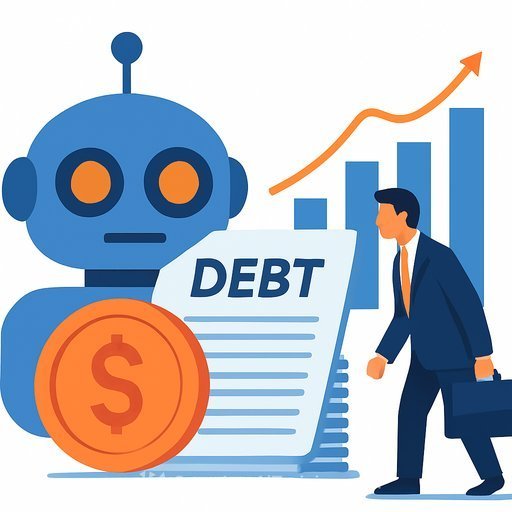
FICCI CFO Summit 2026: Reimagining the Finance Function in the AI Era
On February 28, 2026, the FICCI CFO Summit gathers global finance leaders, policymakers, regulators, and academia to address a simple question: how should finance operate in an AI-first business environment? Expect clear guidance on governance, operating models, and the expanding mandate of the modern CFO.
This is less about hype and more about execution. CFOs are being asked to deliver sharper forecasts, tighter controls, and faster insight-while proving model integrity and cost discipline. AI changes the pace and the expectations. The winners will treat finance as a product, powered by data, automation, and controlled experimentation.
Why this summit matters for CFOs
AI has moved from pilots to P&L. It is touching payables, receivables, forecasting, audit, and capital allocation. That puts finance at the center of both value creation and risk oversight.
The mandate is shifting: from scorekeeper to builder. CFOs now own the data foundation, the control stack, and the operating rhythm that lets AI deliver measurable outcomes-without compromising trust.
Themes to watch in every session
- AI governance and model risk: Ownership, documentation, testing, explainability, drift monitoring, and audit trails that stand up to scrutiny.
- Operating model redesign: Finance-as-a-service pods, centralized platforms, federated delivery, and clear RACI between finance, data, and IT.
- Data foundation: Clean master data, lineage, entitlements, retention, and privacy-by-default. Bad data turns AI into expensive noise.
- Regulatory readiness: Proactive compliance with emerging AI guidance, sector-specific expectations, and internal policy hard lines.
- Talent and skills: Hybrid teams that blend FP&A, accounting, data, and engineering. New roles in MLOps, model validation, and prompt evaluation.
- Measurable value: Automation savings, forecast accuracy, cash conversion gains, risk loss avoidance, and cycle-time compression.
High-impact finance use cases to prioritize
- AP and AR automation with anomaly detection and smart collections
- Driver-based planning with AI-assisted scenarios and narrative generation
- Treasury: cash positioning, liquidity forecasts, and hedging decision support
- Close and consolidation: variance explanations, reconciliations, and policy checks
- Internal audit and controls monitoring with continuous testing
- ESG and regulatory reporting assistance with traceable evidence packs
Five questions to bring to the summit
- What control standards and documentation will regulators and auditors expect for finance AI this year and next?
- Which two to three use cases consistently pay back inside 12 months, and what enables that speed?
- How should CFOs split responsibilities across finance, data, IT, and risk for model lifecycle management?
- What metrics prove value without gaming the numbers-especially for forecasting and working capital?
- How do we scale pilots into platform capabilities instead of scattered tools?
Your 90-day action plan
- Days 0-30: Baseline and guardrails
- Inventory AI in use across finance; classify models and dependencies.
- Stand up a lightweight AI policy: data access, model approval, vendor standards, and human-in-the-loop checkpoints.
- Define value targets tied to your P&L and balance sheet (savings, DSO, forecast accuracy).
- Days 31-60: Prove value on two use cases
- Select one automation use case (e.g., invoice coding) and one analytics use case (e.g., cash forecasting).
- Measure cycle time, touch time, and variance error pre/post; publish weekly scorecards.
- Codify data lineage, model documentation, and approval workflow.
- Days 61-90: Build for scale
- Move pilots onto shared platforms; add monitoring for drift and access logs.
- Create a reuse library for prompts, features, and validation tests.
- Roll out a training plan for finance analysts and model owners.
Governance that actually works
- Single register of finance models with owners, versions, lineage, and approvals
- Standard model cards: purpose, data sources, assumptions, limits, bias checks, fallback
- Pre-production validation, and quarterly revalidation based on usage and drift
- Audit-ready logging: inputs, outputs, overrides, and human decisions
- Clear escalation paths when thresholds are breached
Data principles to hold the line
- Ground decisions on governed data products; no ad-hoc extracts feeding critical models
- PII and sensitive fields masked by default, with least-privilege access
- Reference data ownership in finance for chart of accounts, vendors, customers, and entities
- Quality SLAs: freshness, completeness, and reconciliations tied to close timelines
What good looks like by year-end
- Close cycle cut by 20-30% with fewer late adjustments
- Forecast MAPE improved by 15-25% across revenue or cash
- DSO reduced by 3-7 days through prioritized collections
- Automated controls catching issues before audit finds them
- Documented model governance clearing internal audit without rework
Risk hotspots and how to de-risk them
- Hallucinations and bad outputs: Require human review on material decisions; cap use by risk tier.
- Data leakage: Segment environments; block external sharing; log prompts and outputs for sensitive workflows.
- Shadow AI tools: Whitelist approved vendors; provide sanctioned alternatives with support.
- Model drift: Set performance thresholds; retrain or revert when breached.
- Third-party risk: Contract for data residency, audit rights, uptime SLAs, and incident response.
How to get the most from the summit
- Arrive with your top three value targets and ask each speaker how they would hit them.
- Trade artifacts, not opinions: model cards, RACI charts, control checklists, and KPI scorecards.
- Schedule follow-ups before you leave. Momentum fades; calendar holds it.
Useful resources
- NIST AI Risk Management Framework for practical guidance on AI governance and controls.
- FICCI for event details and policy perspectives.
- AI Learning Path for CFOs to build strategy, forecasting, risk analysis, and automation skills across your team.
- AI for Finance for practical playbooks on risk management, forecasting, and finance automation.
The finance function is being rebuilt in real time. Use this summit to set your standard: clear governance, a scalable operating model, and measurable wins tied to cash, cost, and control.
Your membership also unlocks: