Fidelis Partnership launches consortium to insure AI data center construction
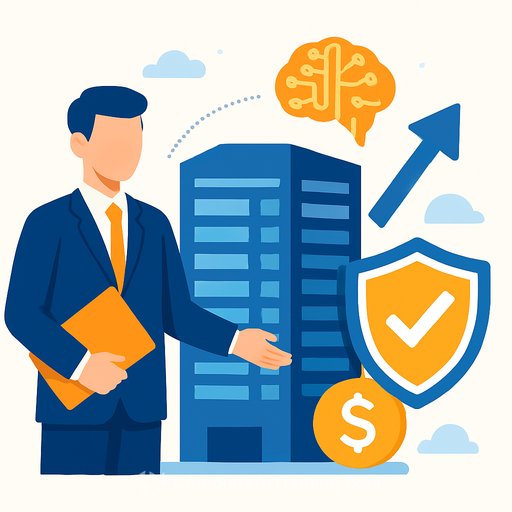
The Fidelis Partnership (TFP) has formed a construction consortium aimed at the growing wave of AI data center builds. The group targets a clear capacity gap in excess layers for construction risk, with the sector expected to generate billions in new premiums each year.
Backed by TFP's allocator model, the consortium combines capacity from Fidelis Insurance Group and Fidelis Syndicate 3123, creating a US$250 million facility for these projects. TFP plans to add further capacity from January 1, 2026, via its Blackstone-backed Syndicate 2126.
This launch sits alongside TFP's existing consortiums in Space, ECAT, and Contingency-effectively bringing more market capacity online where placements have been tight.
Why this matters now
AI compute growth is driving a new class of high-spec data centers. These are high-value, high-complexity builds with long-lead equipment and schedule sensitivity-prime candidates for CAR/EAR with meaningful DSU exposure. For context on the infrastructure boom and energy demand, see the IEA's overview of data centers and networks here.
In short: owners and EPCs need large limits, clear wordings, and dependable excess layers. Brokers need consistent follow capacity. The consortium addresses all three.
What the facility brings
- Excess-layer capacity for CAR/EAR placements on hyperscale and AI-focused campuses.
- Support for testing and commissioning, including specialized MEP and cooling systems.
- Stronger options for DSU/ALOP where long-lead gear (transformers, switchgear, chiller plants, HPC hardware) drives delay risk.
- Better stacking for single-site TIVs north of US$1 billion and multi-phase programs.
- Ability to bundle with related lines: terrorism, marine cargo, project finance, surety, renewables, liability, and operational property.
TFP's positioning
"The number and size of AI data centers is growing at pace, and it is essential that the right insurance capacity is available to support the construction of what are high complexity and high value projects," said Michael Davern, UK CUO and group head of D&F property and energy at TFP. He added that the new capacity complements TFP's existing offerings for data center clients and creates new opportunities to deliver customized client solutions.
TFP has also been building its specialty bench. Peter Welton joined as head of specialty to grow aviation, space, and energy lines with emphasis on renewables, while Andrew Sleeman was appointed head of investor relations to deepen capital relationships and support growth.
Underwriting checkpoints for AI data center projects
- Contracting and delivery: EPC structure, contract form (e.g., FIDIC/NEC), LDs, float, and interface risk across civil, MEP, and IT fit-out.
- Electrical supply: Grid interconnect timelines, on-site generation or backup, battery systems, step-up transformers, and utility permits.
- Cooling and water: Water availability, heat-rejection strategy (air/water/immersion), plume management, and environmental approvals.
- Supply chain: Lead times for transformers, switchgear, generators, chillers, and HPC racks; single points of failure; spares strategy.
- Testing & commissioning: Phasing, burn-in plans, isolation procedures, and criteria for mechanical completion vs. substantial completion.
- Security and controls: Site access, OT/IT segregation during works, change control, and vendor oversight.
- Nat cat and site design: Flood elevation, drainage, wind and hail hardening, wildfire defensible design, and seismic anchorage.
- DSU/ALOP: Trigger clarity, soft costs, revenue model (colocation vs. single-tenant), realistic COD dates, and sublimit adequacy.
- Interface with ops covers: Handover dates, warranties, service agreements, and overlap with operational property and cyber.
- Risk engineering: On-site presence, QA/QC, hot works management, commissioning oversight, and adherence to FM/insurer data sheets.
Market outlook
With multi-billion premium potential and a heavy new-build pipeline, construction placements for AI data centers will test capacity and wording discipline. Expect greater emphasis on DSU modeling, realistic schedules, and enforceable testing warranties.
This consortium may help set reference points on pricing and terms while bringing steadier follow capacity to brokers. Additional syndicates and facilities are likely as owners and cloud providers scale build programs. For broader sector research, see Uptime Institute's reports here.
Action for market participants
- Brokers: Build submissions with detailed MEP schematics, grid agreements, lead-time evidence, commissioning plans, and DSU scenarios. Map layer structures that make use of the new facility.
- Underwriters: Refresh EML/PML assumptions for high-density compute and site utilities. Tighten commissioning and hot works warranties. Set DSU sublimits against realistic energization and practical completion dates.
- Owners/EPCs: Engage early to coordinate CAR/EAR, marine cargo, terrorism, surety, and operational property. Lock in critical equipment orders and document schedule buffers.
If your team needs a fast primer on AI concepts driving these builds, explore curated AI courses by job to speed up internal training.
Your membership also unlocks: