Figma Leans On AI To Become An Enterprise Product Development Hub
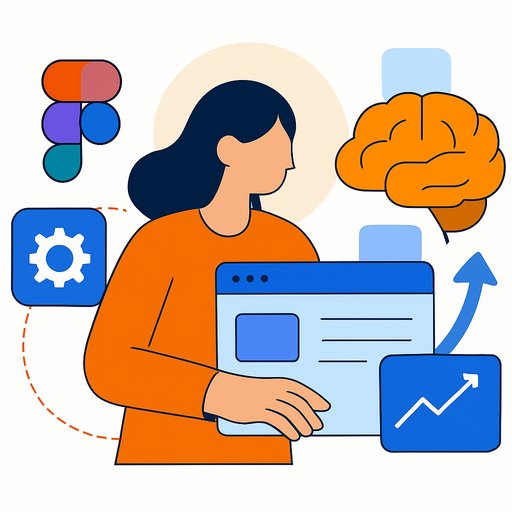
Figma reported standout Q4 2025 results and used the moment to reposition itself: from a design tool to a product development operating system powered by AI. The new releases-Figma Make and Figma Weave-are built to pull design, product, content, and engineering into one workflow. The intent is simple: close gaps, cut handoffs, and align decisions where work actually happens.
For product development teams, this shift matters. It pushes planning, content, and engineering context closer to design artifacts, which can reduce cycle time and misalignment. It also sets up Figma to compete more directly with platform players that are threading AI into collaboration suites.
What Changed
- Figma Make: AI-assisted planning and creation that ties product requirements, content, and early design into a shared canvas.
- Figma Weave: AI-supported collaboration that keeps specs, feedback, and decisions connected to the actual work, not lost in docs or chat threads.
- Enterprise-first posture: A platform pitch aimed at cross-functional adoption, not just design teams.
Why Product Teams Should Care
- Fewer tool hops: Planning, content, design, and engineering conversations live closer together. Less copy-paste, more context.
- Cleaner handoffs: Decisions, assumptions, and requirements sit next to components, not in separate docs.
- Stronger budget story: A tool used across PM, design, and engineering is easier to justify and scale.
- Competitive heat: Adobe, Atlassian, and Microsoft are racing to infuse AI into teamwork suites. Expect fast iteration across the category.
Two Things Going Right For Figma
- Broader user base and deeper workflows: Make and Weave invite PMs, engineers, and content teams into the same environment as designers, expanding seats and use cases.
- Expansion momentum: With a 136% net dollar retention rate, customers are already growing spend. If AI features become essential to planning and collaboration, that expansion could continue-especially in larger enterprises.
How This Fits The Narrative
The move supports a long-term shift from "design tool" to "product development hub." It extends Figma's reach to PMs, researchers, and developers-audiences that drive seat growth and stickiness. The bet: AI-centric collaboration cements Figma at the center of work, including ties into ecosystems like ChatGPT and GitHub.
The caveat: heavy AI investment needs adoption to match. If costs outpace uptake, margins could stay under pressure longer than expected.
Risks And Rewards To Weigh
- Caution: Figma is unprofitable and analysts don't expect profitability over the next 3 years; AI bets may extend earnings pressure.
- Caution: Significant insider selling over the last 3 months could give some buyers pause.
- Positive: Revenue grew 41% over the past year, supported by deeper enterprise usage.
- Positive: Revenue is forecast to grow ~17.9% per year, with AI-driven, cross-functional workflows helping Figma stay competitive.
What To Watch Next
- Adoption breadth: Are Make and Weave used by full product teams, not just designers? Look for seat expansion across PM, eng, and content.
- Usage signals: Management commentary on AI workload growth, daily active usage, and acceptance rates of AI suggestions.
- Cost profile: AI infrastructure and inference costs versus gross margin trends.
- Competitive responses: Moves from Adobe, Atlassian, Microsoft, and others that overlap Figma's collaboration surface.
Quick Pilot Playbook For Your Org (60-90 Days)
- Pick one product or initiative: Feature launch, rebrand work, or a net-new module.
- Define success upfront: Target a 15-25% improvement in at least two metrics (see KPIs below).
- Wire up integrations: Connect issue tracking (e.g., Jira), code (e.g., GitHub), and communications (e.g., Slack) to keep context fluid.
- Establish governance: Data permissions, design tokens, component libraries, and prompt standards for AI-generated content.
- Run the cadence: Weekly async reviews in Weave, decisions logged next to the work, PRDs and specs generated/updated via Make.
- Compare before/after: Baseline vs. end-of-pilot on cycle time, rework, and review latency. If it clears your threshold, expand.
Execution KPIs That Actually Matter
- PRD-to-design cycle time and variance by team.
- Design-to-dev handoff rework rate (bugs or change requests tied to unclear specs).
- Async decision latency (time from proposal to approved decision in the shared workspace).
- Content throughput per sprint (updates to UI text, help, and release notes).
- AI suggestion acceptance rate and edit distance (how much teams change AI-generated outputs).
- Seat expansion vs. cost: Net new seats and cost per active user with weekly active usage thresholds.
Procurement And Architecture Notes
- Consolidation story: If Figma covers planning + design + collaboration, pressure redundant tools and renegotiate contracts.
- Security: Confirm data residency, encryption, model training policies, and role-based access before scaling sensitive work.
- Change management: Treat Make and Weave like a process change, not just another feature. Provide templates, prompts, and review checklists.
Competitive Context
The field is crowding. Adobe, Atlassian, and Microsoft are pushing AI into their collaboration stacks. If your stack is already anchored to these vendors, build a short decision matrix comparing handoff quality, AI-assisted planning, governance controls, and total cost. The best choice is the one that shortens cycles and reduces rework for your team, not the one with the longest feature list.
Bottom Line
Figma's pivot places AI in the path of work for entire product teams. If Make and Weave deliver measurable gains in speed and clarity, Figma earns more seats and a bigger slice of the product budget. Run a focused pilot, track the right KPIs, and scale only if the data proves it.
Further Resources
Your membership also unlocks: