How will finance fare in 2026? AI will generate the answer
AI is still the big unknown for this year. If firms can show clear returns, we keep the momentum. If they can't, prepare for a correction as hype meets earnings calls.
The question that matters: ROI
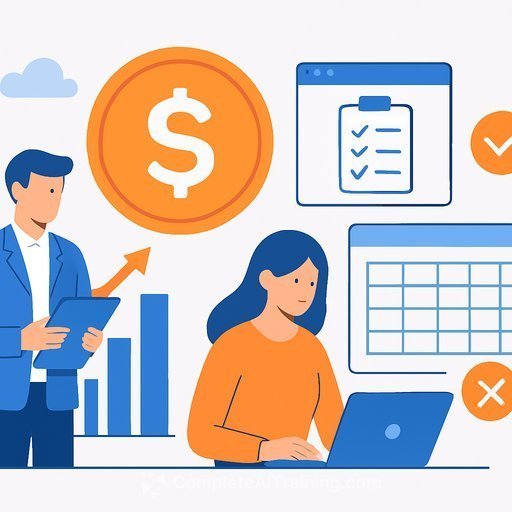
Last year's verdict on generative AI was mixed. Some teams saw faster cycles and lower costs; others struggled to get pilots into production. 2026 will reward firms that can prove dollars saved or dollars earned - not slideware.
Early research shows knowledge workers finish tasks faster with AI support, especially on writing and analysis. See the NBER study on generative AI in the workplace for a useful baseline here.
Where ROI is starting to show up
- Front office: Faster pitch books, sharper client notes, better idea flow from large document sets. A few desks report higher hit rates from more consistent follow-ups.
- Markets: Research summarization, event dashboards, trader copilots for prep and replay. No one is handing trade execution to a chatbot, but prep time is down.
- Asset management: Screening, draft PM commentary, attribution write-ups. Gains show up as time back to think and meet clients.
- Risk and compliance: Policy assistants, alert triage, model documentation drafts. Less noise, faster investigations.
- Ops and finance: KYC refresh, claims handling, reconciliations. Straight-through processing rates inch up, exception queues shrink.
Signals that set the tone
Recent headlines point to where money is flowing. Market makers boosting tech spend, hedge funds posting strong returns, law firms lifting partner pay, banks hiring senior dealmakers - all suggest capital is rotating to firms that convert tech investment into production capacity.
The read-through: budgets will favor teams that can link AI to P&L, while vanity pilots get cut.
Your H1 2026 plan
- Pick three use cases with a clear owner and a 90-day metric. Examples: cost per ticket, pitch cycle time, sales hit rate, VaR utilization, STR rate.
- Fix data first: mask PII, set a retrieval layer, track lineage. Most model issues trace back to messy data, not clever prompts.
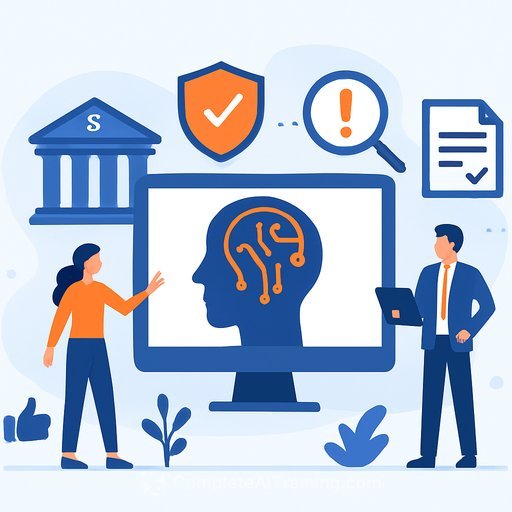
- Controls: human-in-the-loop, pre-release checks, MRM tests, red-team prompts, incident logs. Write it down or regulators will write it for you.
- Infra discipline: GPU budgets, vendor mix (API vs. self-hosted), prompt caching, batch jobs. Treat tokens like basis points.
- Change management: small guild of AI champions, short playbooks, weekly office hours. Tie bonuses to adoption and outcomes, not pilot counts.
Regulation you can plan around
Expect tighter expectations on documentation, data use, conflicts, and third-party risk. The EU's work on AI rules gives a direction of travel - worth a refresher straight from the source here. For global firms, align controls to your strictest jurisdiction and roll down - cheaper than retrofitting later.
What could break the trade
- Compute and power constraints lift unit costs and delay projects.
- Data licensing fights limit access to high-value content.
- A headline model failure triggers legal risk and budget freezes.
- Macro slowdown exposes weak business cases and inflated promises.
Brief playbook by function
- IBD: Auto-draft comps, industry overviews, diligence checklists. Track hours saved and pitch win rates.
- Sales and trading: Pre-market briefs, client cues, post-trade notes. Keep strict separation from execution and latency-sensitive flows.
- Asset management: Idea funnels, PM notebooks, client reporting. Enforce audit trails and data entitlements.
- Risk/compliance: Policy bots, surveillance triage, third-party reviews. Add bias and fairness tests to model reviews.
- Ops/treasury/finance: Exceptions handling, reconciliations, liquidity reporting summaries. Set straight-through targets per process.
- Legal/tax: Clause extraction, precedent search, scenario notes. Human sign-off every time.
Skills and tooling
Upskill deal teams, PMs, and risk leads on prompt patterns, retrieval, and model limits. Two hours of training can save dozens later. For teams focused on evaluation and data practices, see AI Research Courses for deeper, research-oriented material.
If you need a starting point for finance-focused tools and training, see this curated list of AI tools for finance here and role-based course options here.
Bottom line
2026 favors operators. Treat models like junior analysts: give them the right data, clear tasks, and supervision - then grade their work. If the returns show up, multiples hold. If they don't, expect a reset and a smarter second act.
Your membership also unlocks: