
AI news ·
Finance AI stays stuck in pilot mode as agentic systems outpace governance frameworks
Finance AI pilots work - then stall when quarterly pressure hits, according to MIT Sloan researchers. The real barrier isn't the technology; it's how finance teams are structured around control and auditability.
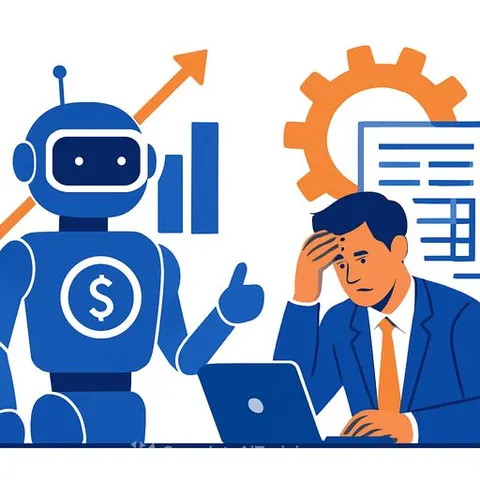
Finance Teams Are Stuck in the AI Sandbox Problem
The model worked in the pilot. It surfaced patterns analysts had missed for years. Then the quarter hit, deadlines compressed, and the dashboard sat open in a browser tab nobody checked. That moment, repeated across hundreds of finance functions at banks, insurers, and asset managers, defines enterprise AI in 2026.
It's not failure. It's friction.
MIT Sloan Management Review researchers spent years working directly with CFOs and their teams. They found that proofs of concept rarely leave their sandboxes. Models that looked promising in pilots sit unused when quarterly pressure hits. Dashboards get refreshed but rarely shape decisions that matter.
The technology itself isn't the problem. Finance functions have structured themselves in ways that prevent AI from influencing the work that matters.
Why Finance Treats AI Differently
Finance teams optimized for control and auditability treat AI outputs as inputs to human review rather than inputs to decision-making. That posture is what keeps the model in the sandbox.
Other corporate functions deploy similar AI technologies under comparable conditions and see different outcomes. The difference lies in how finance is organized. The need for control and auditability, while necessary, creates a structural barrier to AI influence.
Data quality, model trust, and vendor overpromise all play a role. But the deeper issue is governance structure itself.
Real Use Cases, Systemic Risks
Financial institutions are already deploying AI across credit underwriting, fraud detection, risk management and back-office automation. Large language models are expanding applications further into customer interaction, internal analysis and supervisory processes.
That operational progress is generating new systemic exposures. AI speeds up trading and portfolio adjustments, intensifying short-term price movements under stress. Most institutions now depend on a small number of specialized hardware providers, cloud services and pretrained models. A single operational disruption carries consequences well beyond the firm experiencing it.
When institutions run similar models trained on similar data, they respond to market shocks in the same way at the same moment. That synchronized response can amplify contagion across markets and jurisdictions faster than any human risk team can intervene.
The individual use cases work. The system they are collectively building is one regulators are still learning to read.
The Shift to Agent-Mediated Decisions
The governance gap becomes structural when agentic AI enters the picture. Payments are moving from human-initiated instructions to agent-mediated decisions, with AI systems interpreting objectives, breaking them into tasks and interacting with financial infrastructure with limited human input.
This creates a specific tension the current governance stack was not built for. Payment infrastructure was designed around deterministic logic: a transaction either meets the rule or it does not. Agentic AI is probabilistic. It produces outputs that are directionally correct most of the time. That is a different standard than the one a compliance team, regulator or network rule requires.
Regulators are calling for a shift from Know-Your-Customer frameworks to Know-Your-Agent requirements. Financial bots would need mandated verifiable identities linked to legal entities and authentication frameworks that verify both the agent's identity and the delegated authority behind it.
Finance professionals working with AI need to understand both the operational benefits and the governance requirements that will shape how these systems can actually be deployed. AI for Finance and the AI Learning Path for CFOs provide guidance on bridging the gap between proof of concept and production deployment.