Finance Leaders See 2026 As the Year to Scale AI
Finance teams are stepping into 2026 with higher confidence and a clearer plan for AI. New research from Aqilla shows 83% are optimistic about AI's impact on finance processes, and three-quarters plan to expand automation. That's a noticeable shift from 2024, when fewer than two-thirds believed AI could speed up accounting and reporting.
Fear is fading too. Only 8% now say they're fearful of AI, down from 20% last year who felt they didn't understand it. As familiarity grows, the question has moved from "Should we?" to "Where can it do real work without risking control?"
Why 2026 Looks Different
"The combination of rising confidence and falling fear suggests finance teams are no longer holding AI at arm's length," said Hugh Scantlebury, founder and CEO at Aqilla. Many teams are moving beyond pilots and proofs of concept into daily use.
There's also a practical driver: data entry and imports are still the biggest bottleneck for almost 40% of respondents. When the workload is rules-based, repetitive, and high volume, AI-enabled automation is a logical next step.
Where AI Fits Now
Automation is gaining traction in routine, rules-driven tasks: capturing data, routing items, and suggesting classifications. The emphasis is on speed and accuracy without losing oversight.
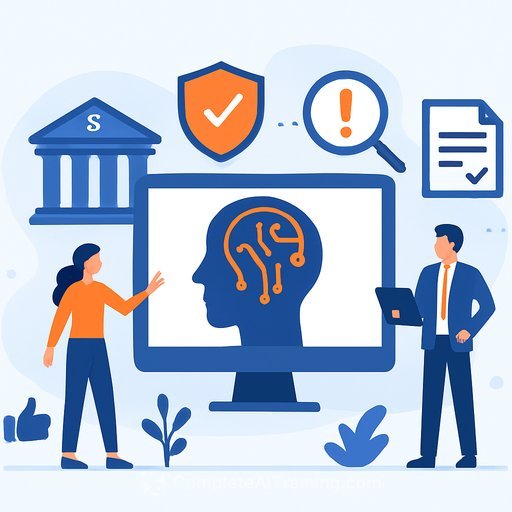
As Scantlebury notes, leaders want AI that preserves visibility, accountability, and human judgment. That balance matters in finance, where control frameworks and auditability are non-negotiable.
Guardrails Over Hype
Charis Thomas, Chief Product Officer at Aqilla, put it simply: customers want AI to remove repetitive work and improve accuracy-but they're not willing to sacrifice accountability. That's healthy for compliance and ethics.
In practice, that means AI that can be paused, overridden, or interrogated at any point. Think transparent logs, approval gates, and clear exception handling instead of "set and forget."
Practical First Moves for Finance Teams
- Target bottlenecks: invoice capture, bank feed matching, expense coding, and intercompany reconciliations.
- Add human-in-the-loop: keep approvals for material items, policy exceptions, and new vendor setups.
- Tighten controls: enforce audit trails, versioning, and role-based access for AI-driven changes.
- Standardize data: improve vendor/master data quality to boost classification accuracy.
- Pilot with purpose: define success metrics (touchless rates, cycle time, error rate) before scaling.
If your team is formalizing governance, the NIST AI Risk Management Framework offers a solid structure for risk, oversight, and accountability.
Metrics to Watch
- Touchless processing rate: % of transactions posted without manual intervention.
- Cycle time: lead time from receipt to posting/approval.
- Accuracy: corrections per 1,000 transactions and root-cause trends.
- Exception rate: % of items flagged and resolved within SLA.
- Audit readiness: evidence completeness and time-to-produce.
What "Good" Looks Like in 2026
AI takes the strain of repetitive work, but people keep control of policy and judgment. Users can slow down, override, or drill into decisions at any time. Governance, skills, and responsible application get as much attention as the tech itself.
As Scantlebury concludes, this approach helps teams make better decisions even when pressure spikes and deadlines loom. That's the point: fewer clicks, fewer errors, tighter controls.
Next Steps
- Explore practical tools for finance teams: AI tools for finance.
- Build team capability with role-based training: Courses by job.
- For finance leaders, consider a targeted program: AI Learning Path for Vice Presidents of Finance.
2026 is the year to move from experiments to everyday use-on your terms, with your controls, and with clear ROI.
Your membership also unlocks: