Two Years After Firing 80% for Resisting AI: What Executives Should Learn
Few decisions test a leadership team like cutting the majority of a workforce. Two years ago, the CEO of IgniteTech did exactly that after internal pushback against artificial intelligence made progress stall. The result: profit margins near 75% and two patented AI products. You may disagree with the method, but the outcomes force a hard look at culture, speed, and conviction.
Why bet the company on AI?
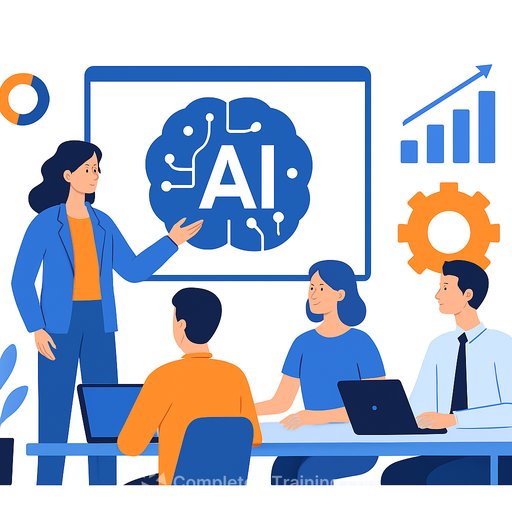
In 2023, while many firms hesitated, IgniteTech committed. The company reframed AI from "interesting tool" to non-negotiable operating principle. They built urgency into the calendar: every Monday became "AI Monday," where regular tasks paused and teams worked on AI projects, training, and experiments.
Employees attended sessions on prompt engineering, got hands-on with new systems, and were expected to apply what they learned. The ask was simple: adopt new methods fast or fall behind. Some leaned in. Others resisted quietly-showing up, but not moving.
Inside "AI Mondays"
The cadence set a clear standard. Time was carved out, tools were provided, and performance was judged on output, not attendance. That transparency exposed gaps in mindset more than gaps in skill. And that set up the most controversial move.
The reset: 80% turnover to align on direction
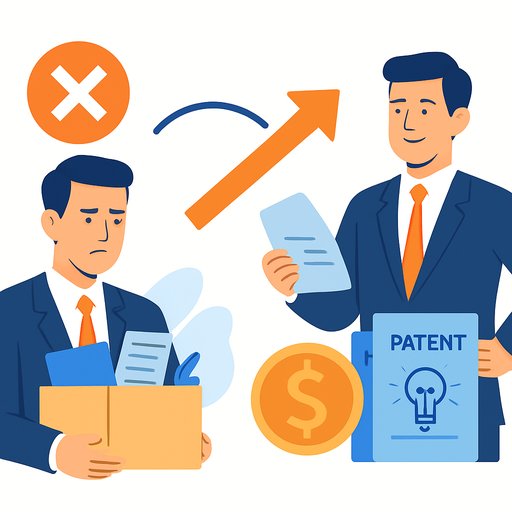
Within a year, 8 out of 10 team members left. Hiring criteria shifted to prioritize people who showed curiosity, speed of learning, and proof they'd work with AI, not around it. The transition was costly and tense. Losing institutional memory always is. But leadership concluded that mindset change was harder than skill acquisition-and acted accordingly.
- Initial discomfort from longstanding staff
- Years of corporate habits overturned quickly
- Accelerated hiring of talent comfortable with change
- Continuous investment in upskilling and infrastructure
The results after 24 months
Profit margins approached 75%. Internal teams shipped two patented AI solutions. Operationally, the company ran leaner with faster throughput and shorter cycle times. It wasn't smooth, but it was decisive-and measurable.
Context: This mirrors a broader shift
Across tech, leaders are restructuring around automation and AI. Companies that wait for perfect clarity usually pay for the delay later. Early data backs the direction: one study found measurable productivity gains when generative AI assisted knowledge work, especially for less-experienced employees. Source. For practical guides on improving outcomes, see Productivity with AI Tools.
Does prioritizing AI justify disruption?
It depends on your threat model and time horizon. Disruption without a system is reckless. But half-steps create drag that kills momentum. If AI will define cost structure and product velocity in your market, you need a culture that moves with it-on purpose, on a schedule, and with visible accountability.
A practical playbook for executives
- Set the doctrine: Publish a one-page AI thesis tied to strategy, cost, and product. Everyone should know the "why."
- Block the calendar: Create a weekly "AI build" window (2-4 hours minimum). Review outcomes publicly.
- Re-scope roles, not just tools: Redesign job descriptions around AI-assisted workflows and clear output metrics.
- Skill bar > résumé: Hire for curiosity, prompt fluency, and shipped examples. Test with live tasks.
- Measure what moves the P&L: Track cycle time, cost per task, release frequency, and contribution margin-monthly.
- Retrain with intent: Offer a structured, time-bound upskilling path. If outcomes lag, make the tough calls.
- Guardrails: Stand up data, privacy, and model-use policies. Assign a small review group with veto power.
- Portfolio approach: Split efforts: 70% efficiency gains, 20% new features, 10% bets that can become IP.
- Communicate like a metronome: Weekly updates on wins, misses, and next steps. Clarity beats hype.
How to compare approaches inside your company
- Hiring: Traditional = experience-only. AI-focused = adaptability + proof of applied AI.
- Upskilling: Traditional = sporadic workshops. AI-focused = mandatory, ongoing, output-reviewed.
- Daily work: Traditional = routine-first. AI-focused = protected project time with demos.
- Outcomes: Traditional = incremental gains. AI-focused = potential for patentable IP and margin expansion.
If you're ready to move
Start small, but start now. Pick two processes, run 90-day sprints, and judge by hard numbers. If the gains are real, scale the model and reset expectations company-wide.
If you need structured resources, explore role-specific programs and prompt practice libraries that keep teams current: role-specific AI courses and prompt engineering resources.
The bottom line
This CEO forced a culture change and got results that most firms talk about but rarely hit. The method won't fit every company. The principle will: set a clear bar, allocate time, measure outcomes, and mean it.
Your membership also unlocks: