EU launches first 14 EOSC nodes: a practical step toward a unified research data space
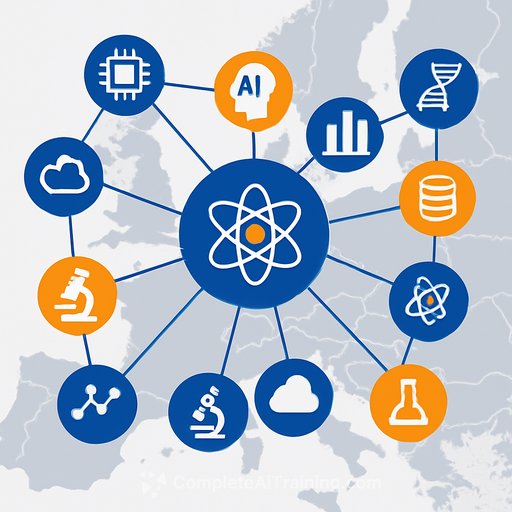
The European Open Science Cloud (EOSC) has launched the first 14 nodes of its data federation, marked by a collaborative memorandum signed on November 3. This is a concrete move toward a unified European research data space that supports cross-border, cross-institution, and cross-discipline collaboration.
As AI projects demand larger, higher-quality datasets, EOSC's approach gives researchers and AI teams a clearer path to discover, access, and reuse data without the usual silos. The focus is simple: make high-value datasets easier to find and use, while keeping them compliant and interoperable.
What a "node" means in practice
A node is an infrastructure system that provides services and resources. In this federation, access is decentralized: researchers reach datasets and services through individual nodes rather than a single central repository.
The agreement sets an operational framework to test, integrate, and scale cross-border services across these nodes. The intent is sustainable, interoperable data access that reduces duplication and friction.
Why this matters for scientists and research IT teams
- Faster discovery and access: standard entry points through nodes rather than scattered portals.
- Interdisciplinary reuse: shared protocols and interfaces reduce format and policy conflicts.
- Data stays governed: federated access respects institutional and national controls while enabling collaboration.
- Better fit for AI: consistent access patterns make model training and evaluation workflows more repeatable.
How to prepare your projects and data
- Map your priority datasets: sources, owners, formats, sensitivity, and expected access patterns.
- Adopt consistent metadata and PIDs: clear descriptions and persistent identifiers improve discovery and citation.
- Refresh data governance: clarify consent, licensing, and retention to support cross-border use.
- Containerize workflows: make your pipelines portable so they can run close to the data via node services.
- Plan for authentication and authorization: align with institutional identity systems to simplify researcher access.
- Pilot early: test access and performance with sample datasets on participating nodes to catch gaps.
What's next
With the first 14 nodes in place, the federation will expand and mature through integration and scale-up of services. Expect steady improvements to discovery, compute options, and policy alignment as more communities participate.
Learn more: See the initiative overview on the European Open Science Cloud.
If your lab is building AI skills for data-intensive research, explore curated training options at Complete AI Training, or browse Research for additional training resources related to data-intensive studies.
Your membership also unlocks: