Indonesia Blocks Grok AI: What Government Leaders Should Do Next
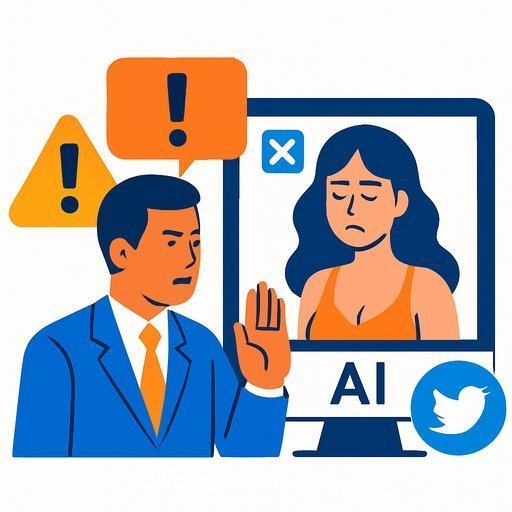
Indonesia has blocked access to Grok AI on X (Twitter) after reports it was used to turn user photos into pornographic images. The move aims to protect the public from fake sexual content and related harms. International coverage has highlighted Indonesia as the first to act decisively on this issue.
Experts welcome the decision. Iradat Wirid of CfDS UGM called it a necessary step to protect privacy and reduce harmful use. He pointed to a clear gap between platform business incentives and human values-and to weak ethical guardrails on the platform.
Why this matters for policymakers
AI-generated sexual images directly hit mental health, privacy, and safety. The risk is higher for women, who make up most victims in gender-based online abuse cases. This is not a "feature misused by a few"-it is a predictable misuse pattern that public policy must anticipate and curb.
Immediate actions the government can take
- Use existing legal authority. Enforce the Personal Data Protection Law and the Law on Sexual Violence Crimes to act on deepfake sexual content, unlawful data use, and distribution.
- Issue platform orders with deadlines. Require default-off image generation, strict age gates, user opt-out, watermarking/content provenance, and proactive detection for sexualized deepfakes. Non-compliance triggers fines, throttling, or blocking.
- Protect personal images. Ban training or fine-tuning on user-uploaded photos without explicit consent. Mandate clear, simple consent flows and easy opt-outs.
- Set fast takedown standards. Define service levels (e.g., removal within hours for flagged sexual content), a 24/7 contact point, and transparent appeal processes.
- Support victims. Provide a single reporting portal, evidence-preservation guidance, referral to psychosocial support, and fast case handover to cybercrime units.
Personal Data Protection Law (UU 27/2022) and Law on Sexual Violence Crimes (UU 12/2022)
Platform governance and oversight
- Stand up a cross-agency task force (Kominfo, Women's Empowerment and Child Protection, Police, AGO) to coordinate enforcement and victim services.
- Require 72-hour incident disclosures from platforms for any misuse involving sexual content or personal data leaks.
- Audit high-risk AI features quarterly. Demand local representatives with decision authority and a binding escalation path.
- Sign MoUs that set metrics: detection precision/recall for sexualized deepfakes, average takedown time, complaint resolution time, and repeat-offender rates.
Public education that actually changes behavior
Digital literacy must move with policy, not trail behind it. Focus on simple actions people can apply immediately.
- Reduce oversharing of faces and personal details; use private lists and tighter audience controls.
- How to report and remove images fast, including template messages and links to official reporting channels.
- Basic signals of manipulated images and where to verify content.
- Clear guidance for parents, schools, and creators on safer posting habits and consent.
Public-sector use of AI: set the bar higher
Before any agency adopts generative tools, run a risk and data review. Sensitive data stays out of public models unless there is a lawful basis and signed data processing terms.
- Vendor due diligence: data location, audit logs, model update policy, and red-teaming results.
- Explicit bans on image generation features without guardrails and traceability.
- Human review for outputs that affect rights, services, or benefits.
- Test environments for new features, isolated from production systems.
Measure what matters
- Average time to takedown harmful content.
- Share of complaints resolved within set timelines.
- Victim support metrics: time to first contact and referral completion.
- Platform compliance rate and penalties collected.
What happens next
The government should keep policy decisions independent and avoid leaning on external rules that do not fit local needs. If platforms add proper safeguards and meet clear targets, consider phased restoration. If they do not, maintain or escalate sanctions.
As Wirid noted, technology is built and run by people. Without responsibility, we push people out of the loop-and harm follows. Keep humans in charge, set firm lines, and enforce them.
For teams building internal skills to evaluate and deploy AI safely, consider the AI Learning Path for Production Coordinators.
Your membership also unlocks: