FIU convenes national research leaders to examine AI's role in health care
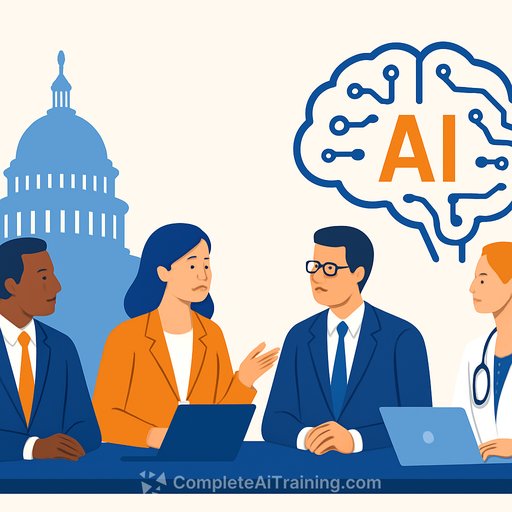
Florida International University hosted a panel discussion in Washington, D.C. on the future of artificial intelligence in health care, bringing together federal researchers, academics, and health technology leaders to discuss how AI should develop responsibly in clinical settings.
The panel included Diana Azzam, an associate professor at FIU's Robert Stempel College of Public Health & Social Work; Sunita Krishnan, senior program officer at the National Academy of Medicine; Sylvia Shabaya Gayle, scientific program director for bioinformatics and computational science at the National Cancer Institute; and Adam Aten of the health technology company Verily.
Human oversight remains essential
Panelists agreed that AI shows promise for clinical diagnosis and administrative tasks, but only with clear guardrails. Gayle said the National Cancer Institute is already implementing AI in procedural work and has seen success in diagnosing liver and prostate cancers, but stressed that "we still have to keep a human in the loop."
Trained professionals must validate AI tools to ensure accuracy and protect patient care, Gayle said. The U.S. needs established regulatory frameworks and defined standards to allow AI to scale without compromising safety.
Trust and transparency matter most
Krishnan emphasized that trust is foundational. "If there isn't trust in the tool, then you can't necessarily trust there won't be bias," she said.
Building that trust requires three things: strong frameworks for accountability, proper education and training for health care workers, and coordinated policy approaches. Krishnan also called for transparency with patients when AI is used in their care and maintaining human decision-making authority.
Current policy remains fragmented across agencies and sectors. Moving toward coordinated standards would help ensure consistent oversight.
Universities preparing the next generation
Azzam discussed FIU's role in AI research and education, including her own work on precision medicine for pediatric cancer patients using AI. The university is building interdisciplinary partnerships with national researchers and policymakers to connect science, medicine, policy, and education.
FIU Herbert Wertheim College of Medicine Dean Juan C. Cendan said the university is committed to preparing future leaders who understand both the potential and the complexities of AI in health care.
More than 20 FIU students participated in the event as part of a "Future of Artificial Intelligence" program in Washington, alongside members of the FIU Board of Trustees and university leadership. The gathering reflected FIU's expanding presence in national policy conversations.
For health care professionals seeking to understand how AI is being integrated into clinical practice and policy, AI for Healthcare resources and AI Research Courses offer structured learning on these topics.
Your membership also unlocks: