5 ways AI transformed health care in Europe in 2025
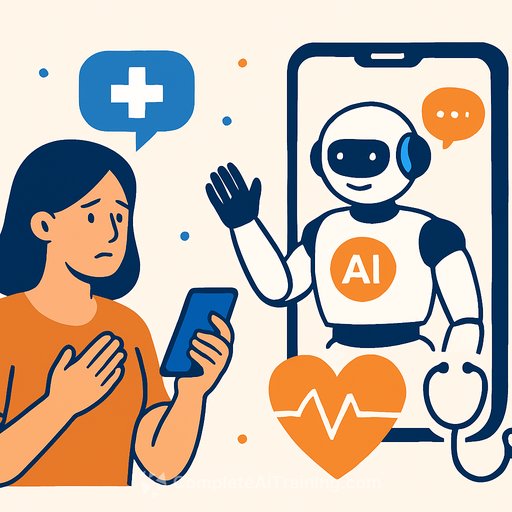
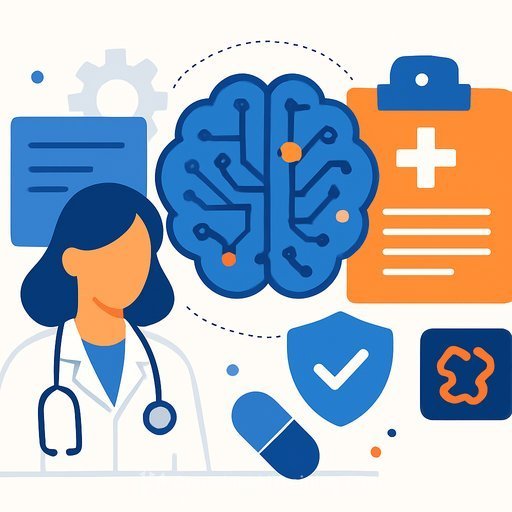
AI moved from pilots to practice across Europe this year. It showed promise in risk prediction, faster diagnoses, post-op monitoring, drug discovery, and the admin grind that burns out clinicians.
For work on methods and validation, see Research.
It also showed limits. Doctors still outperform AI in emergency settings, mental health chatbots can miss context and spread misinformation, and safety experts warn about potential misuse. The signal is clear: use AI to assist clinicians, not replace them.
1) Predicting health risks
Researchers built an AI model capable of forecasting more than 1,000 conditions-like certain cancers, heart attacks, and diabetes-up to a decade before diagnosis. It's not clinic-ready yet, but it offers a window into how disease develops over time.
Other tools launched to predict the impact of rare genetic mutations, estimate women's heart risk from mammograms, and spot biomarkers of chronic stress from routine scans. The practical upside is earlier stratification and more targeted follow-up, provided teams treat outputs as probabilistic-not definitive-signals.
- Use cases: long-term risk registries, prevention programs, and study recruitment.
- Guardrails: clear consent, bias checks across demographics, and plain-language patient communication.
2) Speeding disease diagnosis
In a European first, an AI assistant called Prof. Valmed was certified to support diagnosis and treatment planning using large-scale patient data. In the UK, an AI stethoscope flagged potential heart issues in 15 seconds-sensitive to a fault, but it also found cases that may have been missed.
Prostate cancer pathways also got a boost. AI triage on imaging pushed high-risk patients to the front of the queue for radiologist review, cutting wait times for those who need quick answers.
- Clinical fit: human-in-the-loop review, threshold tuning, and rapid feedback to reduce false positives.
- Workflow tip: measure impact with simple metrics-time to diagnosis, PPV/NPV, and downstream workload.
3) Monitoring patients after operations
A German team used AI to automate follow-up for patients with coronary stents. By analyzing vessel imaging, the algorithm identified healing patterns with accuracy on par with expert clinicians.
Standardizing this process could save time and cut complications linked to delayed intervention. It also creates a consistent dataset for continuous quality improvement.
- Implementation: define imaging protocols, escalation criteria, and clinician override rules.
- Value to track: complication rates, reintervention timing, and clinic visit reductions.
4) Fighting antibiotic resistance
Scientists are applying AI to design and test new compounds against drug-resistant bacteria and to study immune responses that inform vaccine efforts. This matters: antimicrobial resistance is a major and growing threat across Europe.
- Near-term impact: faster preclinical screening and smarter target selection.
- System need: surveillance data pipelines that feed back into model training.
For context on the public health burden, see the WHO overview of antimicrobial resistance and ECDC resources.
5) Freeing up doctors from admin work
Hospitals and clinics rolled out AI tools for note-taking, referrals, and routine documentation. Microsoft's clinical assistant went live in Ireland, and Sweden's Tandem Health deployed an AI medical scribe across Spain, Germany, the UK, Finland, the Netherlands, Norway, and Denmark.
The goal is simple: give clinicians time back with patients. Early adopters report faster notes and fewer after-hours charting sessions-when the tools are set up with strong privacy controls.
- Pilot smart: start in low-risk settings, define red lines (e.g., no autopopulated diagnoses), and run shadow mode before go-live.
- Cover the basics: explicit patient consent, secure data handling, and ongoing accuracy audits.
If your team is assessing AI scribing or triage tools, you can scan curated options and training by role here: AI courses by job.
What to watch in 2026
Data quality and interoperability will decide whether these tools scale or stall. Expect tighter governance, clearer audit trails, and more routine bias and safety evaluations; teams should follow Design best practices.
The most effective teams will pair AI with disciplined workflows: transparent model limits, clinician oversight, and simple metrics that show real patient benefit. Assist the clinician, keep the patient at the center, and make measurement non-negotiable.
Your membership also unlocks: