AI That Runs the Floor: How Flooring Liquidators Turned Data Into Daily Ops
Flooring Liquidators, a subsidiary of Live Ventures (Nasdaq: LIVE), embedded AI into its operations to move faster on inventory, delivery, and in-store availability. Instead of reports that show up after the fact, the system converts live transactional data into forward-looking decisions. The result: products placed closer to demand, fewer miles, and fewer touches.
From raw data to operational decisions
AI-driven forecasting blends real-time sales, inventory movement, and regional buying patterns. It positions the right SKUs near the customers who will need them-before the spike hits. As Dr. Thomas Price III, VP of Operations and Logistics, put it: "We can see what is selling, where it is accelerating, and how patterns are forming. That allows us to act early instead of reacting late."
Network and logistics impact
By forecasting locally, the company consolidates shipments and optimizes truckloads. Select stores now operate as regional pickup nodes, keeping inventory a short transfer away from installers and customers.
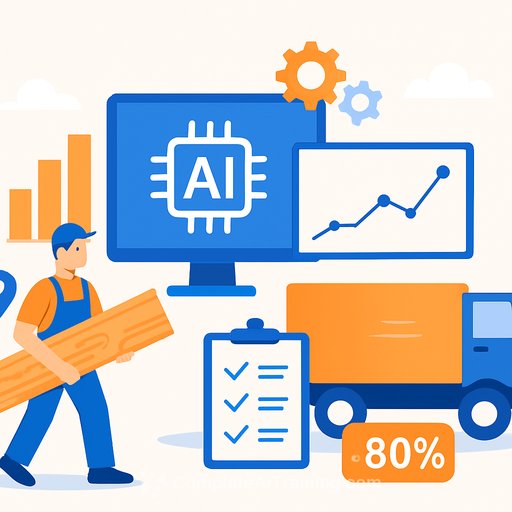
Better planning and sequencing have cut damage rates by more than 80% while increasing throughput. Fewer unnecessary moves means fewer claims, faster turns, and cleaner schedules.
No Excuses AI: performance management that sticks
Flooring Liquidators is rolling out an AI-driven performance system that monitors the business weekly across 30+ branches, flags anomalies, and engages managers with specific, actionable prompts. It goes beyond dashboards-into decisions and accountability.
- Phase 1: Intelligent alerts. The system reviews thousands of weekly transactions, including year-over-year sales by branch and product category, and issues prioritized alerts by severity.
- Phase 2: Guided interrogation. An AI program clarifies the problem, rejects generic answers, parses responses, and narrows on concrete causes and viable actions.
- Phase 3: Predictive coaching. The system will spot patterns before sales slip, suggest proven plays, track execution, and learn which fixes work under which conditions.
Why this matters to operations leaders
- Upstream positioning trims lead times and shortens delivery windows.
- Consolidated freight reduces cost, handling, and damages.
- Pickup nodes cut miles and improve installer availability.
- Exception-first management keeps attention on what moved and why, not static reports.
- Branch-level accountability scales without adding headcount.
The move isn't about another analytics layer. It's about putting intelligence where decisions are made-routing, replenishment, labor, and store-level execution.
How to apply this in your org
- Instrument the data. Unify POS, WMS, TMS, and inventory movement. Define a latency budget so forecasts and actions land in time to matter.
- Forecast locally. Start with weekly SKU x ZIP forecasts. Pre-position a limited set of SKUs based on confidence and margin impact.
- Build an alert ladder. Anchor on YOY by branch/category, add severity tags, owner, SLA, and next-best action templates.
- Standardize root cause. Require specific causes (assortment, promo, pricing, staffing, damage, vendor lead time) and banned vague labels. Keep a playbook of countermeasures with expected impact windows.
- Tighten the logistics loop. Design pickup nodes, consolidate loads, and track damage by lane, carrier, and packaging. Re-sequence to reduce touches.
- Close the loop weekly. Review alert precision, false positives, and KPI movement. Tie compliance to the scorecard.
Portfolio context
Live Ventures' leadership said they are applying AI where it creates immediate advantage across the portfolio. Flooring Liquidators shows how intelligent systems can improve a traditional retail and distribution business while keeping people at the center, with similar efforts underway across other companies.
Company snapshots
Founded in 1997 and based in Fairfield, California, Flooring Liquidators serves consumers, builders, and contractors across California, Nevada, and the Midwest with flooring, carpeting, and countertops.
Live Ventures is a diversified holding company focused on acquiring and operating domestic middle-market businesses with strong cash flows and durable positions. Portfolio operators use AI, robotics, and data-driven systems to make conventional operations more efficient and competitive.
Notes and disclosures
This update includes forward-looking statements subject to risks and uncertainties, including execution, market acceptance, and future performance. For filings and updates, see the company's reports on Forms 10-K, 10-Q, and 8-K available via SEC EDGAR.
Further learning
If you're building similar capabilities for an operations team and need structured, role-based upskilling, explore these learning paths: AI Learning Path for Training & Development Managers or AI Learning Path for Training Coordinators.
Your membership also unlocks: