Xu Yihan Honored at 2025 Forbes China Education Summit: What It Means for Schools
The 2025 Forbes China Education Summit recognized Xu Yihan, Senior Executive Vice President of Squirrel AI Intelligent Tutor, as an Influential Education Figure. The award signals sustained progress in AI-driven instruction and responsible adoption at scale.
It follows another milestone: Squirrel AI Intelligent Tutor's All-Subject Multimodal Adaptive Education Large Model appeared on Time Magazine's 2025 Best Inventions list. Together, these honors point to real outcomes in classrooms, not just headlines.
Why This Matters for Educators
Forbes China's evaluation emphasizes thought leadership, industry momentum, and social responsibility. Xu's work centers on pairing AI with classroom practice and building sustainable models schools can actually use.
Accepting the award, she shared: "This honor is an affirmation of long-term dedication to the AI education track and the philosophy of 'technology empowering educational equity.' The essence of education is to awaken growth potential, and AI gives us the ability to break down barriers in resource allocation so every child can receive appropriate support."
From Awards to Outcomes: The Model Behind the Work
Squirrel AI Intelligent Tutor's large model integrates more than 20 billion learning behavior data points with the teaching experience of hundreds of senior educators. The principle is simple: no two students are the same, so their learning paths shouldn't be either.
Using micro-granularity knowledge graphs and dynamic adaptation algorithms, the system reads signals like answer trajectories and facial expression changes. It runs a tight loop of diagnosis, planning, feedback, and optimization-translating learner data into timely instructional moves.
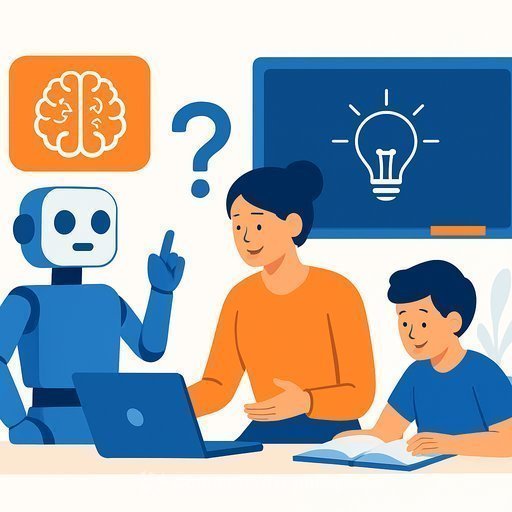
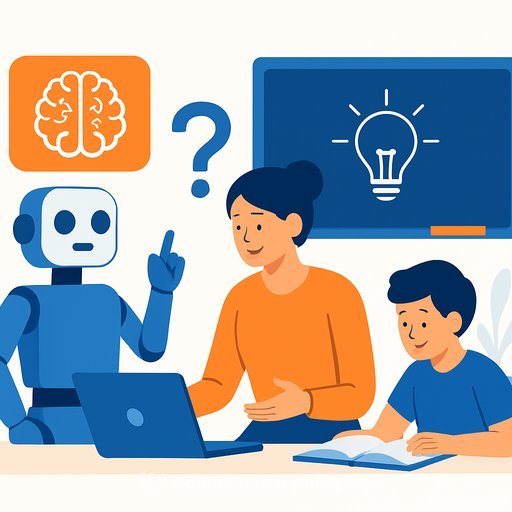
It also backs teachers where time disappears first: learning analysis and grading. Offloading repetitive tasks creates space for what matters-coaching deeper thinking, fostering curiosity, and giving precise feedback. The result is a practical "intelligent tutor + human teacher" model that improves learning quality and teaching efficiency.
Implementation at Scale
Technology only helps if it reaches students. Xu and her team built a cooperation model that aligns with real school needs and reduces adoption barriers.
According to the company, Squirrel AI Intelligent Tutor now works with over 60,000 public schools, serving more than 43 million students, and operates roughly 3,000 offline partner stores. That reach enables consistent rollouts, support, and measurable results across varied regions.
Equity Commitments That Go Beyond Pilots
To push educational equity, the company committed to offering the Squirrel AI Intelligent Tutor system free to children from the world's lowest-income 20% of families. The goal: reduce gaps driven by geography and family income so more learners can access adaptive resources.
This is where AI meets responsibility-making access part of the operating model, not an afterthought.
Global Validation and Standards Work
Xu previously received The CEO Views 2025 Thought Leadership Award. At the enterprise level, Squirrel AI Intelligent Tutor has been recognized by multiple organizations, including Time Magazine's Best Inventions, MIT Technology Review's TR50, UNESCO's AI Education Innovation Award, and the CB Insights AI 100 list. Founder Li Haoyang also serves as Chair of the IEEE Artificial Intelligence Education Large Model Standards Working Group.
For context on related initiatives, see Time's Best Inventions collection here and the IEEE Standards Association here.
What Educators Can Do Next
- Start with a defined pilot: one subject, one grade band, clear goals, and baseline data.
- Integrate with teacher workflow: keep grading, feedback, and progress checks inside existing routines.
- Make data useful: weekly checkpoints for misconceptions, pacing, and small-group targeting.
- Protect student wellbeing: set guardrails for privacy, consent, and screen-time balance.
- Measure what changes: learning growth, teacher time saved, student engagement, and equity of access.
- Invest in PD: short cycles, hands-on practice, and peer sharing to build confidence fast.
Roadmap Ahead
The company plans a dual track: deeper R&D on its all-subject multimodal adaptive model and steady global expansion with localized rollouts. The aim is consistent: turn proven AI teaching tools into daily classroom value.
As Xu put it, "We will continue to uphold the original intention of intelligent education, deepen technological innovation, and steadily promote practical implementation, allowing the actual value of AI education to enter more classrooms and benefit more teachers and students."
Helpful Resource for Educators
If you're mapping AI skills to education roles and responsibilities, explore role-focused learning paths: AI Learning Path for Teachers, AI Learning Path for Teaching Assistants, and AI Learning Path for Training & Development Managers.
Your membership also unlocks: