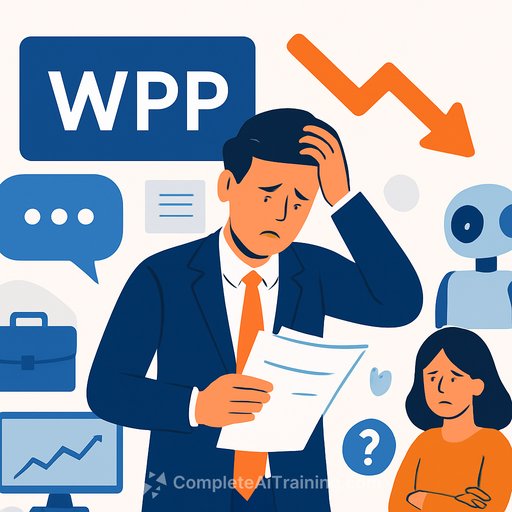
The PR Playbook Is Changing: Lessons From Ogilvy's Past, WPP's Present, and AI's Squeeze
Old-school Ogilvy leaders built empires on a few simple rules: win business, protect credibility, deliver results. No theater. No culture wars. No blacklists.
That clarity has gone missing inside parts of big holding-company PR. Critics point to selective media access, message policing, and a fixation on optics over outcomes-especially on sensitive tech accounts tied to China and struggling consumer electronics brands. The result: shrinking revenue, confused positioning, and frustrated clients.
What the originals taught-and why it still works
Kenneth Roman put it plainly: "The best lessons in business-and in life-often come from the pulpit: admit your mistakes, say you're sorry, and ask for help." That's crisis comms 101 and new-business 101 in one line.
Michael Ball on new business: "The pursuit of new business is like the pursuit of sex, it's often irrational, usually dangerous, inevitably expensive, terribly frustrating yet universally attractive." Translation for agency leaders: systematize prospecting or it will consume you.
Harold Burson on media relations: "Manage the media, build a brand and control the debate. But don't ever fall out with the media because the pen is mightier than the sword." Still true-maybe truer-when a trade outlet can move as much attention as mainstream press.
Where PR went sideways
Several large agencies have tried to sideline outlets that won't echo client talking points. That might win a quiet day. It always loses the long game. Trade publications now pull seven-figure monthly traffic and syndicate into AI systems your customers use every day.
Journalists aren't extensions of your launch calendar. Junkets and samples don't buy silence anymore, and withholding facts backfires fast. If your story can't stand scrutiny, fix the product, not the press list.
WPP's pressure test
Reports across recent quarters show declining PR revenue and heavier client churn inside the holding group, with Europe especially tough. Cost pressure is pushing agencies to bundle into "integrated marketing" and treat stand-alone PR as a commodity. That has consequences for craft, speed, and trust.
Leadership changes and restructuring are in motion. Investors have reacted to weak quarters, and rivals are picking off business. For a sense of the financial backdrop, see WPP's investor updates here.
China-linked accounts: risk isn't just political-it's brand oxygen
Work on Huawei/Honor and similar accounts carries unique scrutiny. Even with a spin-off, skepticism persists: national security questions, ownership transparency, and policy risk don't vanish with a nameplate change. Several countries restricted Huawei from core networks-Australia included, as widely reported by national media (for example, ABC News).
For PR teams, the takeaway is simple: disclose, document, and prepare for forensic questions. If a media outlet has a critical track record, engage anyway. Earned trust beats managed silence.
AI is squeezing the middle of the PR market
Meta, Amazon, and others are building AI marketing stacks that automate creative, targeting, and reporting. That compresses margins on "press release + coverage report" retainers. The value shifts to strategy, issues counsel, distribution architecture, and first-party audience assets.
If your team can't ship AI-assisted research, message testing, and content operations at speed, you'll feel the pinch. If you can, you'll take share while competitors cut rates. For teams leveling up skills, see practical programs for comms and marketing pros here.
The modern PR playbook (no fluff, just what works)
Media relations that age well
- Don't blacklist. If you think a publication is "hostile," schedule the briefing anyway and bring receipts.
- Treat trade media like macro media. Their readers are your buyers-and their stories feed search and AI summaries.
- Offer evidence, not adjectives: data cuts, third-party audits, on-the-record SMEs, and product access.
- If you misspeak, correct it publicly and fast. Credibility compounds.
Client selection and account hygiene
- Score risks upfront: governance, supply chain ties, regulatory heat, and past enforcement actions.
- Demand transparent terms. If the commercial model is upside-down, PR will be asked to fix what pricing broke.
- Write a media-access pact with every client: no retaliation for critical coverage, no "friendly only" lists.
- Pre-mortem every launch: list five likely headlines you don't want to see, then prepare answers and proof.
AI-enabled delivery (without the buzzwords)
- Research: use AI to map stakeholders, sentiment drift, and claim substantiation. Human-check everything.
- Content: atomize one core narrative into formats for search, social, trade, and analyst notes in a single sprint.
- Measurement: build a living dashboard that tracks story pick-up, share of voice by topic, and "problem solved" mentions-not just clip counts.
- Crisis drills: simulate hostile interviews and misinformation scenarios with AI to harden spokespeople.
New business that doesn't burn the house down
- Qualify hard: category heat, CEO involvement, decision horizon, and willingness to show product.
- Pitch with a test: a two-week pilot that proves one KPI. If they won't do it, walk.
- Price for outcomes and access, not hours. Keep a "no-go" list and use it.
Back to first principles
The best agencies still live by three rules: tell the truth, bring proof, and keep the press on side. The names on the door don't guarantee that behavior-you do, in every briefing and every client meeting.
As Harold Burson warned, the pen beats the sword. In 2025, it also trains the models your buyers consult before they ever speak to sales. Make sure those models see your best work, not your attempts to control the story.
Admit mistakes. Say you're sorry. Ask for help. Then show the receipts and win the next cycle.
Your membership also unlocks: