
AI news ·
Former OpenAI CTO Mira Murati says AI will eliminate creative jobs that produced low-quality content
Former OpenAI CTO Mira Murati says AI will eliminate low-quality creative jobs. This shift follows a collapsed $1 billion OpenAI and Disney deal over AI video tools.
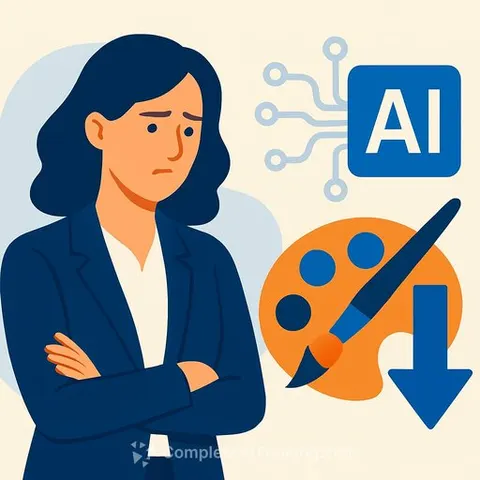
Former OpenAI Chief Technology Officer Mira Murati said generative AI will eliminate some creative roles, arguing that low-quality work does not warrant protection. Speaking at Dartmouth College, the executive, who now leads the startup Thinking Machine Labs, warned that AI tools are actively lowering the barrier to entry across global creative industries.
The displacement of low-quality work
Murati framed this shift not as a crisis, but as an inevitable market correction. She suggested that automation could ultimately raise the standard of output in fields like scriptwriting and visualization.
"Some creative jobs maybe will go away, but maybe they shouldn't have been there in the first place if the content that comes out of it is not very high quality," Murati said during the discussion.
Industry adoption and resistance
Creative professionals already see mixed results from these technologies. According to McKinsey, studios use AI for practical tasks like dubbing and accelerating tedious workflows.
However, integrating it directly into core content creation faces heavy pushback from human creators. The friction is evident in recent corporate setbacks, such as the collapsed $1 billion agreement between OpenAI and Disney following the shuttering of the Sora Generative Video tool.
As companies weigh these tools, AI for Creatives remains a heavily debated topic regarding workflow integration and long-term job security.
Why this matters for creatives
Professionals in design, writing, and production must anticipate that routine or low-tier content generation will be automated first. The surviving roles will likely demand higher strategic oversight, human curation, and original conceptualization.
Adapting to this shift requires focusing on the unique value that human perspective brings to high-quality projects, rather than competing with machines on volume.