
AI news ·
Former US technology adviser warns ignoring artificial intelligence in schools poses a major risk
Ignoring AI in schools is riskier than integrating it, as 62% of Scottish business leaders rate their AI literacy as moderate or low. Educators must proactively shape its use.
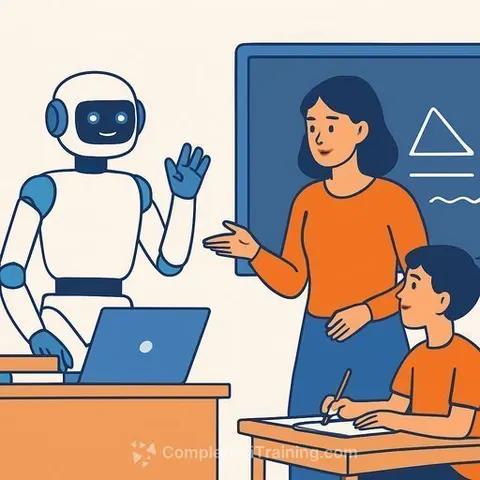
Former US Deputy Chief Technology Officer Beth Simone Noveck and researchers from the University of Edinburgh warn that ignoring artificial intelligence in schools poses a greater risk than integrating it. They argue that decision-makers and educators must actively shape how AI is used in classrooms before the technology outpaces their understanding.
Moving beyond the extremes of AI adoption
The debate around artificial intelligence often splits into two camps: either a great liberator or a herald of disaster. Noveck, now a professor at Northeastern University, argues that both views miss the practical reality. She calls this the "messy middle," where educators and policymakers must actually do the work of integrating these tools. "What's often missing is what's in between," she said during a recent visit to Edinburgh.
Building AI literacy in the curriculum
A recent University of Edinburgh report urges the Scottish Government to treat data and AI skills as an industrial strategy commitment rather than a discretionary education spend. The report notes that 62% of Scottish business leaders rate their organisations' data and AI literacy as moderate or low. Training teachers to use and teach these tools equips students for the modern workplace while helping them understand the technology's risks. For educators looking to build this competence, structured AI Learning Path for Teachers resources can provide the foundational knowledge needed to guide students effectively.
Noveck points to projects like AIEP in California, which uses AI to translate dense Individual Education Plans for parents who do not read English. The tool downloads directly to a parent's computer rather than storing data in the cloud. While human translators remain ideal, this tool bridges a critical gap when immediate support is unavailable.
Practical tools for the classroom
In Scotland, the University of Glasgow is trialling the Deliberative Instructional Agent (DIA). Developed by Dr Thomas Cowhitt and Dr Matt Gibson, the tool records and transcribes classroom discussions. Within 100 seconds, it provides teachers with a dashboard highlighting four to six critical moments where their response shaped the conversation.
"A lot of educational technology is developed by software developers without the input of educators, and that is the opposite of what should be happening," Cowhitt said. Gibson added that the goal is "channelling human reflection," keeping the teacher in charge rather than replacing them.
Why this matters for education professionals
Excluding AI from schools does not stop students from using it. Noveck warned that ignoring the technology risks repeating past mistakes made with the internet and social media. "For us as adults to put our head in the sand and just say 'no, this is bad', means we make bad decisions about how to use them in schools," she said.
Educators who proactively learn about these tools can ensure they are used to support learning rather than disrupt it. Staying informed about broader AI for Education trends allows professionals to advocate for tools that prioritize student privacy and pedagogical value.