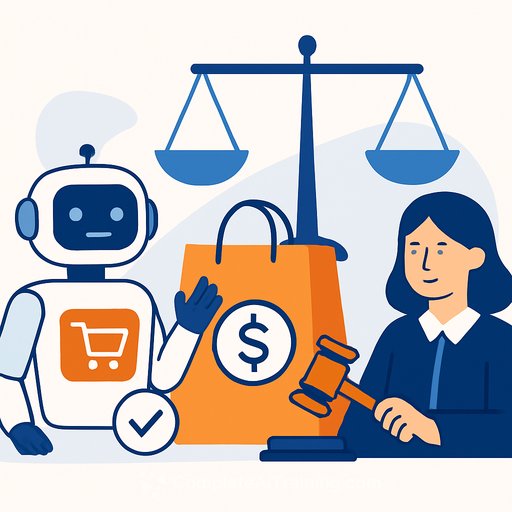
What consumer AI really costs law firms
The $10,000 wake-up call came fast. A California attorney used a free chatbot to draft a brief and paid the price for made-up citations. That's the hidden math of "free" AI - the bill shows up later as sanctions, security incidents, or client churn.
If your practice handles sensitive data, the tool you choose is part of your risk posture. Sticker price is easy to see. The real costs hide in compliance gaps, reputation hits, rework, and breach fallout.
The true cost framework: Beyond the price tag
Consumer tools optimize for access. Law firms need precision, privacy, and auditability. Professional-grade platforms like CoCounsel Legal are built around risk reduction and long-term value, not weekend tinkering.
Here are the five hidden costs that turn "free" into expensive - and how professional-grade AI avoids them.
1) Regulatory fines and compliance violations
Process protected health information through a consumer chatbot and you're flirting with HIPAA violations. Serve international clients and unclear data ownership can run afoul of GDPR. Add ABA ethics issues for mishandling client confidences, and new state-level AI rules for public-sector matters, and the exposure multiplies.
CoCounsel Legal addresses this head-on with enterprise security certifications (ISO/IEC 42001:2023, FedRAMP, SOC 2 Type 2), clear data ownership, and business associate agreements where needed. That's the difference between "trust us" and verifiable compliance.
2) Reputational damage and client trust erosion
Law is a trust business. One public misstep with a consumer AI tool can undo years of credibility and ripple through directories, rankings, and referrals.
Professional-grade platforms send a different message. CoCounsel Legal is built on trusted Westlaw and Practical Law content and signals a firm's commitment to confidentiality and accuracy - a real edge in competitive pitches.
3) Professional liability and insurance implications
Courts have sanctioned lawyers for filing briefs with fictitious citations generated by consumer chatbots. Insurers notice. Some policies may exclude losses tied to non-professional AI tools, and claim history can affect premiums and coverage.
CoCounsel Legal is built for legal precision. It grounds responses in Westlaw and Practical Law content and provides citations for every output. Used by 80% of the Am Law 100, it's engineered to meet the standards your clients - and carriers - expect.
4) Opportunity costs and efficiency losses
Free tools look fast until you factor in verification, rework, and staff retraining across multiple interfaces. IT ends up troubleshooting and QA becomes a full-time job. That's time not spent on clients, strategy, or business development.
CoCounsel Legal helps teams review documents, draft contracts, and surface key information faster than traditional methods. Those gains compound, turning efficiency into a lasting competitive moat.
5) Data security breach consequences
Consumer platforms often retain prompts, allow internal review of user inputs, and hold data indefinitely. That can expose confidential information and jeopardize privilege. If there's a breach, response costs, forensic work, client notifications, and monitoring can run into six figures - with higher cyber premiums to follow.
CoCounsel Legal protects sensitive matters with enterprise-grade encryption, clear retention policies, and security controls aligned to preserving attorney-client privilege.
Trustworthy AI is a team sport
Thomson Reuters is advancing secure AI through the Trust in AI Alliance - a collaboration with Anthropic, Google, OpenAI, and AWS - focused on systems that are trustworthy, accountable, and built for high-stakes professional work. That's the ecosystem your firm needs behind its tools.
For teams building expertise and staying current on methodologies and evaluations, see AI Research.
Can you afford the wrong AI solution?
Consumer-grade AI feels convenient. The liabilities show up later - in fines, write-offs, churned clients, and sleepless nights. Professional-grade AI takes investment, but it pays you back in security, precision, and predictable outcomes.
Want a deeper breakdown? Download our white paper, "Security as strategy: Why the legal AI tool you choose matters for data security," and see why leading firms choose CoCounsel Legal for secure, reliable assistance that protects both clients and margins.
Practical checklist: Vet any legal AI tool before rollout
- Compliance: HIPAA support (BAA availability), GDPR posture, SOC 2 Type 2, ISO/IEC 42001:2023, FedRAMP where applicable.
- Data governance: Clear ownership, retention limits, no training on your prompts, logs for audits, admin controls.
- Accuracy: Source-grounded outputs with citations, legal-specific training, documented evaluation results.
- Insurance: Confirm policy coverage for AI-assisted work and vendor suitability with your carrier.
- Security: Encryption in transit/at rest, incident response commitments, breach notification terms.
- Workflow: Time-to-value, integration into research and drafting, user management, and support.
Level up your team's AI fluency
If your firm is building internal standards for safe, efficient AI use, explore role-specific training to speed adoption without adding risk. See curated options at AI for Legal.
Your membership also unlocks: