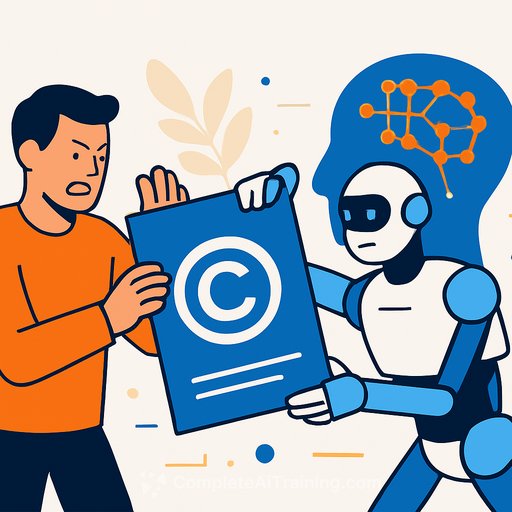
AI's free ride on creative labor is undermining the marketplace
Free markets run on a simple rule: you can't take what isn't yours and sell it. Some AI companies are testing that boundary by training models on massive libraries of films, shows, images, and music - without a clear yes from the people who made them.
Tools like "Sora 2" can spin up movie-quality video from a sentence. Impressive tech, sure. But if the fuel is copyrighted work scraped at scale, that's not innovation - it's creative arbitrage. Pay nothing for inputs, monetize the outputs, and let the makers fight for scraps.
Charles Rivkin of the Motion Picture Association said it well: "You can't build a new business model on stolen property." Property rights aren't old-fashioned; they're the engine that makes creative careers possible. Remove consent and compensation, and you don't get a smarter market - you get a free-for-all.
"It's learning, not copying" misses the point
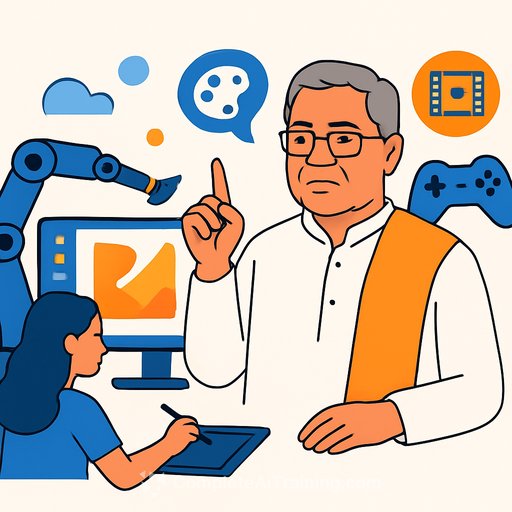
Some argue models are "learning style," not lifting content. That's convenient if you're sitting on data centers, not day rates. When systems ingest millions of copyrighted works to replicate look, feel, pacing, and voice, the effect is the same for the artist: your work trains your replacement, and you never saw a contract.
The harm is here, not hypothetical
Major agencies have warned clients about AI video risks. Independent filmmakers, editors, and writers see their ideas duplicated in seconds, stripped of context, and monetized elsewhere. Small studios can't compete with companies that didn't pay to create the training data - or the art - in the first place.
It goes beyond Hollywood. The same tech that can mimic a star's face or voice can imitate anyone. A jealous ex, a bad actor at work, or a troll can fabricate believable media and torch a reputation. That's why lawmakers need to protect both creative property and every person's right to their image and identity.
Markets break when ownership gets fuzzy
Fair exchange is the deal: create, own, sell. If your catalog is vacuumed into a dataset without consent, that deal collapses. Quality follows incentive, and incentive dries up when ownership is optional.
We'd never allow a pharma company to copy a competitor's formula and call it "learning chemistry." We'd never let a startup lift a carmaker's blueprints and shrug "fair use." Why should creative labor be treated differently?
What creators can do right now
- Put AI clauses in your contracts: no training on your work without written consent, clear attribution, and fair compensation.
- Register your works and keep receipts: timestamps, project files, drafts, call sheets, and edit logs strengthen your claims.
- Use provenance tech: embed Content Credentials (C2PA) and visible/invisible watermarks on final deliveries and previews.
- Control distribution: host reels and cuts where you can set terms, protect originals, and share low-res or branded previews publicly.
- Opt out where possible: apply "noAI" metadata/robots rules on sites you control; set explicit licenses on portfolios.
- Join forces: coordinate with unions, guilds, and collectives to report misuse and push for enforceable standards.
- Adopt ethical AI on your terms: choose tools that license data, track sources, and pay creators - and put that in your client pitch.
What platforms and policymakers should require
- Consent, credit, and compensation for training on copyrighted and identity data.
- Training-set transparency and data provenance by default, with Content Credentials on synthetic media.
- Clear labeling and traceable watermarks for AI-generated audio, video, and images - with penalties for deceptive use.
- Enforceable rights of publicity and fast remedies for impersonation and deepfake abuse.
We can have useful AI and healthy creative markets. The path is simple: respect ownership, price the inputs, and keep humans in the loop. No artist should have to compete with their unpaid clone.
If the United States wants real leadership in AI, it needs integrity as much as compute. Celebrate the tools, fix the incentives, and stop pretending that "learning from everything" is a right. That shortcut doesn't lead to prosperity - it leads to monopoly.
Creativity isn't infinite. It runs on human effort, investment, and the expectation of reward. Protect that, and you get better art, stronger studios, and a future worth building.
U.S. Copyright Office: AI Initiative
Content Authenticity Initiative (C2PA)
Want to work with AI without giving away your edge? Explore practical, creator-friendly tools and training here: Complete AI Training - Courses by Job
Your membership also unlocks: