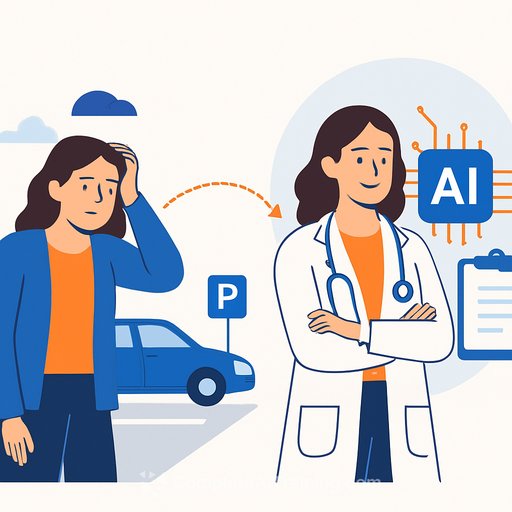
From a Hospital Car Park to the Clinic: My Path to AI Advocacy in Irish Healthcare
You never know what life will hand you. When I found myself on paid 'gardening leave' from the HSE, I had no idea how much my life was about to change. My 21-year-old son had just been diagnosed with severe aplastic anaemia, a serious illness requiring constant care.
In the early days of the pandemic, I spent countless hours in the car park of St James's Hospital while he received treatments. With clinics stripped back and the city on lockdown, there was nothing to do. So, I turned to online courses, starting with one on Artificial Intelligence in Healthcare from Stanford University.
That decision, made in a bleak car park, was the beginning of a new path. Today, I lecture on AI at the Royal College of Surgeons, have founded companies that use AI, and apply it daily in my clinical practice. What started as a distraction became a professional mission: to understand this technology and help clinicians use it safely.
A Brief History of Medical AI
The idea of 'thinking machines' in medicine isn't new. Formal efforts began in the 1970s with systems like MYCIN, which tried to copy clinical reasoning. They were promising but ultimately failed because they were rigid and couldn't handle the messiness of real-world medicine.
The field came back to life with machine learning in the 2000s and, more recently, deep learning. These advances allow AI to interpret complex data like notes and images, extending its use from diagnosis to imaging, risk prediction, and workflow automation.
Why This Matters for Irish Healthcare
Irish healthcare is under immense pressure from workforce shortages and the administrative burden. Carefully integrated AI can help ease some of this strain.
- Digital Scribes: Generative AI tools can drastically reduce time spent on referral letters, follow-up notes, and chronic disease reviews.
- Decision Support: Machine learning models can help identify patients at risk of early deterioration and support preventive care.
- Diagnostics: In fertility medicine, we already use non-invasive AI to assess embryos. Similar tools are on the horizon for general practice.
The Regulatory Reality You Can't Ignore
Under the European Union AI Act, most AI systems used in healthcare are classified as 'high-risk'. This classification demands strict standards for traceability, transparency, human oversight, and explainability.
Many commercial AI tools currently marketed to clinicians are "black-box" systems that do not meet these legal requirements. The Act is clear: systems that cannot be audited or interpreted are not permitted in high-risk settings like medicine.
This isn't just bureaucracy. It's a clinical safety and medico-legal issue. The legislation also requires training for professionals using high-risk AI. Ultimately, clinicians will be held responsible for the algorithmic tools they choose to use.
The Case for AI Literacy in Medicine
AI literacy is no longer optional; it is fundamental to patient safety. Healthcare staff must have a baseline understanding of what these systems can and cannot do, where the risks are, and how to operate within ethical and regulatory limits.
Developing this competence is essential before widespread deployment happens. To build this foundation, professionals should seek out practical training that prepares them for these new responsibilities. You can find relevant AI courses based on job roles to get started.
Looking Ahead
This column will explore the reality of AI in Irish healthcare. We'll look at what works, what doesn't, what's safe, and what's just hype. The goal is to provide clear, clinically grounded guidance for the profession.
If a car park in Dublin could launch one clinician's journey into AI advocacy, perhaps this column can help guide the wider profession through its next chapter.
Your membership also unlocks: