El-Sisi calls for higher education quality and real adoption of programming and AI
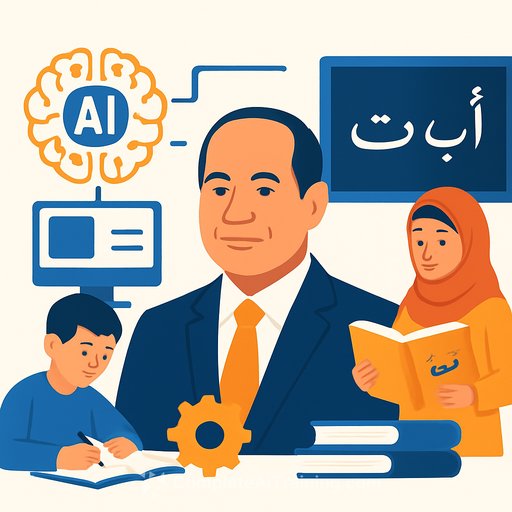
Cairo - 22 February 2026: President Abdel Fattah El-Sisi met with Prime Minister Mostafa Madbouly and Minister of Education and Technical Education Mohamed Abdel Latif to tighten the focus on education quality. He urged schools to keep pace with advances in programming and artificial intelligence and make them accessible to students in line with international standards.
The minister outlined steps to embed modern technology across curricula, including teaching programming and AI in cooperation with Japan. For educators, this sets a clear direction: build pathways where students code, analyze data, and apply AI concepts in real projects.
Programming and AI across curricula
The ministry is expanding programming and AI teaching with international partners, using Japan's experience to raise the bar. Schools will need curriculum maps, assessment rubrics, and teacher support so these subjects move from pilots to core learning.
For policy context, see UNESCO's AI in Education guidance. For practical classroom tools and examples, explore AI for Education.
Upgrading technical education
Plans include distributing tablets to technical education students and teaching AI and programming within technical tracks. Egypt is moving to a system that matches international practice through cooperation with several countries, led by Italy.
Under the plan, 103 technical schools will be upgraded and start service at the beginning of the next academic year. Negotiations are also underway with the British side to establish 100 new technical schools. El-Sisi asked for maximum effort to raise the scientific and professional level of graduates so programs feed directly into labor market needs.
Building digital finance skills
The meeting reviewed progress on equipping students with digital financial skills, tied to a protocol between the ministry and the Financial Regulatory Authority. The aim is to instill financial awareness early, teach practical money management and project financing, and protect students from illegal financial practices.
This aligns with global moves to teach finance from school age; see the OECD's student financial literacy framework for reference points schools can adapt.
Reading and writing in Arabic
Improving literacy remains a priority. The president stressed the importance of a strong command of the Arabic language and motivating students to excel in it through focused reading and writing practice.
Thanaweya Amma 2025/2026: integrity and governance
Officials reviewed preparations for the 2025/2026 Thanaweya Amma exams, alongside measures to govern the system and protect its integrity. El-Sisi called for firm, deterrent penalties for violations to ensure equal opportunity and preserve the credibility of results.
Enhancing human resources and international partnerships
The discussion covered proposals to qualify and train school staff, starting with 100 schools in cooperation with a Japanese university. Broader partnerships with friendly countries in general and technical education are also in scope.
To upskill teams on practical AI use, see the AI Learning Path for Teachers. Pair formal training with coaching cycles and classroom observation to translate learning into student outcomes.
What school leaders can do now
- Map where programming and AI fit by grade and subject. Start pilots with clear outcomes, rubrics, and teacher PD.
- Prepare technical schools for tablet rollout: device management, connectivity, content curation, and on-site support.
- Co-develop modules with industry partners so labs, internships, and capstones connect to real roles.
- Embed financial literacy across grades with scenario-based tasks and simple project budgeting. Align checkpoints with national guidance.
- Strengthen Arabic literacy through daily reading blocks, writing workshops, and frequent formative checks.
- Tighten exam security for Thanaweya Amma: clear proctor training, item handling protocols, secure tech, and a public incident response plan.
- Stand up teacher training cohorts in the first 100 schools, supported by peer coaching and lightweight impact tracking.
The agenda is clear: raise quality, make programming and AI standard, and graduate students ready for work and further study. Schools that organize early around curriculum, teacher capability, and assessment will move fastest.
Your membership also unlocks: